
Galaxy A16 5G Vs Galaxy A23 5G

Galaxy A16 5G
Galaxy A16 5G
Starting at

Refurbished price:£103.00

Versus £205.87 new

See options
Galaxy A23 5G
Galaxy A23 5G
Starting at

Refurbished price:£100.00

Versus £300.00 new

See options

Ratings

The Samsung Galaxy A16 5G (released in late 2024) and the Samsung Galaxy A23 5G (released in mid-2022) are both mid-range smartphones designed to offer a balance of features and accessibility. While sharing the common Android operating system with Samsung's One UI, these devices present distinct differences in their display technology, software longevity, and camera capabilities, catering to varying user preferences.

Scores

Durability

When considering the long-term usability of these devices, their release timelines and software support policies are key differentiators.

  • Release Timeline: The Galaxy A16 5G, launched in late 2024, is a newer device compared to the Galaxy A23 5G, which was released in mid-2022. This difference in launch date inherently provides the A16 5G with a longer potential lifespan for receiving future updates.
  • Software Longevity: The Galaxy A16 5G is notable for its extended software commitment, guaranteed to receive six years of major OS and security updates, with support expected to cease around October 2030. The Galaxy A23 5G, having launched earlier, has a shorter remaining update window, typically receiving fewer major OS updates compared to its newer counterpart.
  • Physical Durability: The Galaxy A16 5G features an IP54 rating, offering a degree of protection against dust and splashes. The Galaxy A23 5G, while lacking an official IP rating, incorporates Corning Gorilla Glass 5 for screen protection against scratches and minor drops.

Year of Release

2024

2022

Compatible with latest Update

Yes

Yes

OS

Android

Android

Foldable

No

No

Performance

Both smartphones are equipped to handle daily tasks and provide a responsive user experience, though they utilize different internal components.

  • Processing Power: The Galaxy A16 5G is powered by a newer generation octa-core processor, which contributes to smoother multitasking and more efficient handling of demanding applications. The Galaxy A23 5G features a capable octa-core processor that delivers reliable performance for everyday use, including web browsing, social media, and casual gaming.
  • Storage and Multitasking: Both devices offer various configurations for internal storage and RAM, typically ranging from 4GB to 8GB of RAM and 64GB to 256GB of internal storage, with the option to expand storage using a microSD card. This allows for ample space for applications and media, and sufficient RAM for switching between multiple apps without significant slowdowns.
  • Battery Endurance: Each phone is equipped with a 5000 mAh battery, designed to provide extended usage on a single charge. Users can expect over a full day of typical use from either device, with both supporting 25W fast charging for quicker power replenishment.

Memory (GB)

4 GB

4 GB

Screen quality

The visual experience on these two Galaxy phones is shaped by their differing display technologies and refresh rates.

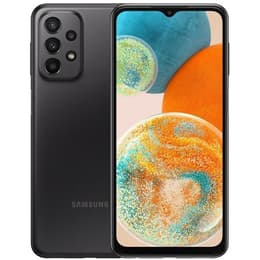
  • Display Technology and Clarity: The Galaxy A16 5G features a 6.7-inch Super AMOLED display, known for its vibrant colors, deep blacks, and high contrast ratio, providing an immersive viewing experience. In contrast, the Galaxy A23 5G utilizes a 6.6-inch PLS LCD panel, which offers good viewing angles and accurate colors. Both displays offer Full HD+ resolution, ensuring sharp and clear visuals for content consumption.
  • Smoothness and Brightness: The Galaxy A16 5G has a 90Hz refresh rate, contributing to smoother scrolling and a more fluid feel during navigation. The Galaxy A23 5G offers an even higher 120Hz refresh rate, which can result in a noticeably smoother experience, particularly in fast-paced content or gaming. The A16 5G's Super AMOLED display can reach up to 800 nits of peak brightness, which aids in outdoor visibility.
  • Screen Protection: The Galaxy A23 5G benefits from Corning Gorilla Glass 5, offering enhanced durability against scratches and accidental drops.

Resolution

1080 x 2340

1080 x 2408

Screen type

Super AMOLED

PLS LCD

Audiovisual

Both devices offer versatile camera systems, but with key differences in their capabilities and features.

  • Rear Camera Systems: The Galaxy A16 5G is equipped with a triple rear camera setup, including a 50MP main sensor, a 5MP ultrawide lens, and a 2MP macro lens. The Galaxy A23 5G features a quad-camera array, also with a 50MP main sensor, a 5MP ultrawide, a 2MP macro, and an additional 2MP depth sensor. A significant advantage for the A23 5G is the inclusion of Optical Image Stabilization (OIS) on its main camera, which helps in capturing sharper photos and more stable videos, especially in challenging lighting conditions.
  • Photography Performance: In good lighting, both phones can capture detailed and colorful images with their main sensors. The A16 5G's photos may sometimes exhibit cooler tones. The ultrawide cameras on both are suitable for capturing broader scenes, though the 5MP resolution means less detail compared to the main sensor.
  • Video Recording and Front Camera: The Galaxy A16 5G can record video at 1080p at 30 frames per second, with some reports indicating 4K video capability, though with cooler colors and electronic image stabilization. The A23 5G also records at 1080p at 30 frames per second, benefiting from OIS for smoother footage. For selfies, the A16 5G has a 13MP front camera, offering more detail than the A23 5G's 8MP front camera.

Main camera

50 megapixels

50 megapixels

Front camera

13 megapixels

8 megapixels

Miscellaneous

Beyond core performance and display, several practical features contribute to the overall user experience of these smartphones.

  • Connectivity and Ports: Both the Galaxy A16 5G and A23 5G support 5G connectivity for faster mobile data speeds. They include Wi-Fi 5 (802.11 a/b/g/n/ac) and NFC for contactless payments. Both devices feature a USB Type-C 2.0 port for charging and data transfer. The A23 5G consistently includes a 3.5mm headphone jack, while information for the A16 5G is mixed, with some sources indicating its absence.
  • Biometrics and Design: Both phones typically offer fingerprint sensors for secure unlocking. The Galaxy A16 5G has a slim profile at 7.9mm thick and weighs 200g, featuring a matte finish. The Galaxy A23 5G is slightly thicker at 8.4mm and weighs 197g, with an Ambient Edge design.
  • Build Materials: Both devices generally feature a plastic build, which contributes to their lighter weight and overall durability.

Weight

200 g

197 g

Screen size (in)

6.7

6.6

Mobile network

5G

5G

SIM card

Dual Physical SIM

Dual Physical SIM

Carrier compatibility

Unlocked

Unlocked

Connector

USB-C

USB-C + Jack 3.5mm

User sentiment for the Galaxy A16 5G often highlights its impressive software update commitment, providing long-term value and security. Its Super AMOLED display is also frequently praised for its vibrant visuals. Some users, however, note that its camera performance, particularly in low light, could be improved, and the lack of OIS is a common point of discussion. The Galaxy A23 5G receives positive feedback for its main camera's OIS, which significantly enhances photo and video stability, and its 120Hz display for smooth interactions. Criticisms sometimes point to its PLS LCD panel not being as vibrant as AMOLED alternatives and its shorter software support window compared to newer models.

Users prioritizing extended software support and a vibrant Super AMOLED display may find the Galaxy A16 5G to be a more suitable choice. Its newer release also means it will remain current for a longer period. Conversely, individuals who place a higher value on camera stability, particularly for photography and video recording, and prefer a higher display refresh rate, might lean towards the Galaxy A23 5G. Both devices offer a robust experience for everyday tasks, and considering a quality-assured refurbished option for either model can be a sustainable choice for consumers.


See all articles

Our recent comparisons