
Galaxy S25 Vs Google Pixel 8 Pro

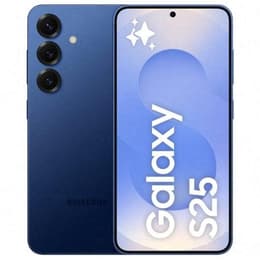
Galaxy S25
Galaxy S25
Starting at

Refurbished price:£435.00

Versus £766.13 new

See options
Google Pixel 8 Pro
Google Pixel 8 Pro
Starting at

Refurbished price:£253.00

Versus £960.91 new

See options

Ratings

The Samsung Galaxy S25, released in early 2025, and the Google Pixel 8 Pro, launched in late 2023, are both high-end Android smartphones offering distinct user experiences. While the Galaxy S25 benefits from newer hardware and software optimizations, the Pixel 8 Pro emphasizes advanced computational photography and a streamlined Android interface. Both devices run on the Android operating system, with each manufacturer providing their own unique software overlay and feature sets.

Scores

Durability

When considering the long-term usability of a smartphone, factors like software support, build quality, and repairability are key. The Galaxy S25, being a newer device, naturally offers a longer period of guaranteed software updates compared to the Pixel 8 Pro.

  • Software Longevity: The Samsung Galaxy S25 launched with Android 15 and is promised 7 years of OS and security updates, extending support until around 2032. The Google Pixel 8 Pro, released with Android 14, also offers an impressive 7 years of software and security updates, ensuring a long functional lifespan.
  • Build Materials: The Galaxy S25 features Gorilla Glass Victus 2 on the front and an Armor Aluminum frame, contributing to its durability. The Pixel 8 Pro utilizes Gorilla Glass Victus 2 for both its front and back panels, paired with an aluminum frame.
  • Repairability: Both devices carry an IP68 rating for dust and water resistance, indicating a similar level of protection against environmental elements.

Year of Release

2025

2023

Foldable

No

No

Performance

The core processing power and memory configuration significantly influence a smartphone's responsiveness and ability to handle demanding applications. Both devices are equipped with powerful chipsets designed for high performance.

  • Processing Power: The Galaxy S25 is powered by a current-generation processor, optimized for demanding tasks and AI features, ensuring smooth operation across various applications and multitasking scenarios. The Pixel 8 Pro features Google's Tensor G3 chip, which is specifically designed to enhance on-device AI capabilities and computational photography, providing a fluid user experience for everyday tasks and Google's unique software features.
  • Multitasking Capability: Both the Galaxy S25 and the Pixel 8 Pro come with 12 GB of RAM, allowing for efficient multitasking and smooth transitions between numerous open applications.
  • Storage Options: The Galaxy S25 offers storage options starting from 128 GB, while the Pixel 8 Pro provides a wider range of choices, including 128 GB, 256 GB, 512 GB, and a 1 TB option.

Memory (GB)

12 GB

12 GB

Screen quality

The display is a primary interface for smartphone interaction, and both the Galaxy S25 and Pixel 8 Pro offer high-quality viewing experiences with distinct characteristics.

  • Display Technology and Clarity: The Galaxy S25 features a 6.2-inch Dynamic LTPO AMOLED 2X display with a Full HD+ resolution (2340x1080 pixels), providing sharp visuals and vibrant colors. The Pixel 8 Pro boasts a larger 6.7-inch QHD+ LTPO OLED display, referred to as a Super Actua Display, with a higher resolution (2992x1344 pixels), resulting in a slightly higher pixel density for finer detail.
  • Brightness and Smoothness: Both devices offer excellent brightness for outdoor visibility, with the Galaxy S25 reaching a peak of 2600 nits and the Pixel 8 Pro achieving a peak of 2400 nits. Both phones also feature adaptive refresh rates up to 120 Hz, ensuring smooth scrolling and responsive interactions, with the Pixel 8 Pro capable of scaling down to 1 Hz for power efficiency.
  • Viewing Experience: The Galaxy S25's display is known for its vibrant colors and high contrast ratio, while the Pixel 8 Pro's display is praised for its punchy colors and deep blacks, offering an immersive viewing experience for media consumption.

Resolution

1080x2340

1344 x 2992

Screen type

Dynamic LTPO AMOLED 2X

LTPO OLED

Audiovisual

Both the Samsung Galaxy S25 and the Google Pixel 8 Pro are equipped with advanced camera systems, though they approach photography with slightly different philosophies.

  • Rear Camera System: The Galaxy S25 features a versatile triple-camera setup, including a 50 MP main sensor, a 12 MP ultrawide lens, and a 10 MP telephoto lens with 3x optical zoom, designed for capturing detailed and vibrant photos across various scenarios. The Pixel 8 Pro also offers a triple-camera system, comprising a 50 MP wide lens, a 48 MP ultrawide lens, and a 48 MP telephoto lens with 5x optical zoom, excelling in computational photography and AI-enhanced image processing.
  • Photography Performance: The Galaxy S25 benefits from Samsung's ProVisual Engine, which enhances natural skin tones, textures, and color accuracy, particularly in low-light conditions. The Pixel 8 Pro is renowned for its computational photography, delivering consistent image quality and advanced features like Magic Eraser and Best Take, though some users have noted occasional delays in processing high-resolution images.
  • Video Capabilities: The Galaxy S25 supports video recording up to 8K resolution at 30 frames per second, providing high-resolution video capture. The Pixel 8 Pro records video at up to 4K resolution at 60 frames per second, with strong stabilization and audio recording capabilities.

Miscellaneous

Beyond the core specifications, several practical elements contribute to the overall user experience and daily functionality of these smartphones.

  • Connectivity and Ports: The Galaxy S25 supports Bluetooth 5.4, while the Pixel 8 Pro features Wi-Fi 7 and Bluetooth 5.3, along with a USB-C 3.2 port for data transfer and charging. Both devices offer modern connectivity standards for fast wireless communication.
  • Biometric Security: The Galaxy S25 includes an ultrasonic in-screen fingerprint sensor for secure unlocking. The Pixel 8 Pro features an optical in-display fingerprint scanner and an improved Face Unlock system that supports secure biometric authentication for payments.
  • Design and Handling: The Galaxy S25 is designed to be a compact device, measuring 5.78 by 2.78 by 0.28 inches and weighing 5.71 ounces, making it comfortable to hold and carry. The Pixel 8 Pro is a larger device, with dimensions of 6.4 by 3.01 by 0.35 inches and a weight of 7.5 ounces, featuring a distinctive camera bar across the back.

Weight

162 g

213 g

Screen size (in)

6.2

6.7

Mobile network

5G

5G

SIM card

Physical SIM + eSIM

Physical SIM + eSIM

Carrier compatibility

Unlocked

Unlocked

Choosing between the Samsung Galaxy S25 and the Google Pixel 8 Pro involves weighing their respective strengths and how they align with individual user needs. Users often praise the Galaxy S25 for its refined design, vibrant display, and powerful, all-around performance, particularly with its newer processor and extended software support. Some users, however, might find the battery life, while improved, still not the strongest in its segment.

The Google Pixel 8 Pro is frequently lauded for its exceptional camera capabilities, driven by Google's advanced computational photography and AI features, as well as its commitment to long-term software updates. Its clean Android experience and unique AI tools are also strong points. Conversely, some users have noted that its processor performance, while capable for daily use, might not match the raw power of some rivals, and its battery life has received mixed reviews.

Users prioritizing a compact form factor, a slightly newer processor, and a comprehensive camera system with 8K video recording may prefer the Samsung Galaxy S25. Those who value cutting-edge computational photography, a larger, higher-resolution display, and a pure Android experience with unique AI integrations might lean towards the Google Pixel 8 Pro. Both devices represent excellent choices in the premium smartphone market, and considering a quality-assured refurbished option for either model can be a sustainable choice for consumers.

See all articles

Our recent comparisons