
Galaxy A23 5G Vs iPhone SE (2020)

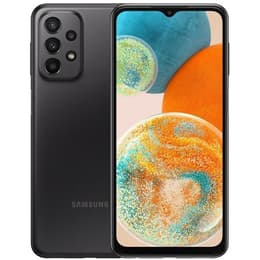
Galaxy A23 5G
Galaxy A23 5G
Starting at

Refurbished price:£100.00

Versus £300.00 new

See options
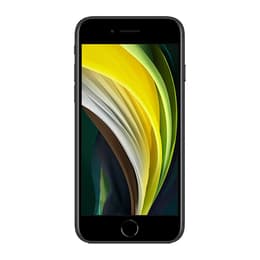
iPhone SE (2020)
iPhone SE (2020)
Starting at

Refurbished price:£67.00

Versus £289.00 new

See options

Ratings

The Samsung Galaxy A23 5G, released in late 2022, and the iPhone SE 2020, launched in April 2020, represent distinct approaches to smartphone design and functionality. While the Galaxy A23 5G offers a larger display and multi-camera system, the iPhone SE 2020 prioritizes a compact form factor and a powerful internal processor. Both devices operate on their respective ecosystems, Android for the Galaxy A23 5G and iOS for the iPhone SE 2020, offering different user experiences and software update policies.

Scores

Durability

The longevity of a smartphone is influenced by its release timeline, software support, and physical resilience.

  • Release Timeline: The iPhone SE 2020, released in April 2020, is an older model compared to the Samsung Galaxy A23 5G, which launched in August/September 2022. This difference in release date impacts their respective software support cycles and overall practical lifespan.
  • Software Longevity: Apple is known for extended software support, with the iPhone SE 2020 having received updates to iOS 26.3.1 as of March 2026, demonstrating over six years of updates. Apple typically provides 5-7 years of major OS upgrades. The Galaxy A23 5G, which shipped with Android 12, has been updated to Android 15 as of July 2025 and is expected to receive two major Android OS upgrades and four years of security updates from its release.
  • Repairability and Durability: The iPhone SE 2020 has an iFixit repairability score of 6 out of 10, with common components like the display and battery being relatively straightforward to replace, though the glass back is considered impractical to repair. It features an IP67 rating for dust and water resistance. The Galaxy A23 5G boasts a higher repairability index score of 8.1 out of 10, indicating good availability of parts and ease of disassembly, though battery removal can be challenging due to strong adhesive. It has a Gorilla Glass 5 front but lacks an official IP rating for water and dust resistance.

Year of Release

2022

2020

Compatible with latest Update

Yes

Yes

OS

Android

iOS

Foldable

No

No

Performance

Performance is a key differentiator, affecting how smoothly applications run and how responsive the device feels during daily use.

  • Overall System Responsiveness: The iPhone SE 2020 offers a very fluid and responsive user experience, handling demanding applications and multitasking with ease due to its powerful internal components. Users report smooth operation even with intensive tasks. The Galaxy A23 5G provides solid performance for everyday tasks, app loading, and gaming, though some users have noted occasional minor delays or hiccups, particularly with the 4GB RAM variants.
  • Multitasking and Storage: The iPhone SE 2020 comes with 3GB of RAM and storage options up to 256GB, which is not expandable. The Galaxy A23 5G offers more flexible storage with options for 4GB, 6GB, or 8GB of RAM and up to 128GB of internal storage, which can be expanded significantly via a microSD card up to 1TB.
  • Battery Behavior: The Galaxy A23 5G is equipped with a large 5000mAh battery, which users consistently praise for its long life, often lasting a full day or even two for moderate use. It also supports 25W fast charging. In contrast, the iPhone SE 2020 has a smaller 1821mAh battery, and its battery life is frequently cited as a limitation, often requiring more frequent charging for heavy users. It supports Qi wireless charging.

Memory (GB)

4 GB

3 GB

Screen quality

The display is the primary interface, and differences in technology and specifications can significantly impact the visual experience.

  • Display Technology and Size: The Galaxy A23 5G features a larger 6.6-inch PLS LCD display, providing ample screen real estate for media consumption and multitasking. The iPhone SE 2020 has a more compact 4.7-inch IPS LCD Retina HD display, which is preferred by users who favor one-handed use and a traditional iPhone aesthetic.
  • Resolution and Clarity: Both devices offer good clarity for their respective screen sizes. The Galaxy A23 5G has a 2408x1080 pixel resolution (FHD+), resulting in a pixel density of approximately 400 PPI. The iPhone SE 2020 features a 1334x750 pixel resolution, with a pixel density of 326 PPI.
  • Refresh Rate and Brightness: A notable difference is the refresh rate; the Galaxy A23 5G offers a smoother 120Hz refresh rate, which enhances the fluidity of scrolling and animations. The iPhone SE 2020 maintains a standard 60Hz refresh rate. In terms of brightness, the iPhone SE 2020 can reach a peak brightness of 625 nits, while the Galaxy A23 5G typically reaches around 430 nits, boosting to about 510 nits in auto mode.

Resolution

1080 x 2408

750 x 1334

Screen type

PLS LCD

Retina IPS LCD

Audiovisual

Camera capabilities are a significant factor for many users, influencing the quality of photos and videos captured.

  • Rear Camera System: The Galaxy A23 5G features a versatile quad-camera setup on the rear, including a 50MP main sensor with optical image stabilization (OIS), a 5MP ultrawide lens, a 2MP macro lens, and a 2MP depth sensor. The iPhone SE 2020 relies on a single 12MP wide-angle camera with OIS.
  • Photography Performance: The Galaxy A23 5G's main 50MP camera is praised for taking sharp photos with good detail and accurate colors in well-lit conditions. Its night mode can improve low-light shots, though the ultrawide and macro lenses are considered more basic. The iPhone SE 2020's single 12MP camera, enhanced by its internal processing, produces impressive pictures in most scenarios with good lighting. However, it lacks a dedicated Night Mode, which impacts its low-light performance compared to more modern devices.
  • Video Recording and Front Camera: Both devices offer good video quality. The iPhone SE 2020 can record 4K video at up to 60 frames per second, and its 7MP front camera is suitable for selfies and video calls. The Galaxy A23 5G records video up to 1080p, as its processor does not support 4K capture, and features an 8MP front camera.

Main camera

50 megapixels

12 megapixels

Front camera

8 megapixels

7 megapixels

Miscellaneous

Beyond core features, practical elements like connectivity, ports, and physical design contribute to the overall user experience.

  • Connectivity and Ports: The Galaxy A23 5G supports 5G connectivity, Wi-Fi 802.11 a/b/g/n/ac, Bluetooth v5.10, and features a USB Type-C port. It also retains a 3.5mm headphone jack. The iPhone SE 2020 offers Gigabit-class LTE (but not 5G), Wi-Fi, Bluetooth, and uses Apple's proprietary Lightning port. It does not include a headphone jack.
  • Biometric Security and Design: The Galaxy A23 5G incorporates a side-mounted fingerprint sensor, often integrated into the power button. The iPhone SE 2020 features a traditional home button with Touch ID for fingerprint recognition, which many users find reliable. The iPhone SE 2020 has a glass front and back with an aluminum frame, while the Galaxy A23 5G typically features a plastic back.
  • Dimensions and Handling: The iPhone SE 2020 is significantly more compact and lighter, measuring 138.4 x 67.3 x 7.3 mm and weighing 148g, making it ideal for one-handed use. The Galaxy A23 5G is larger and heavier at 167.2 x 76.4 x 9.0 mm and 197g, offering a more expansive viewing experience.

Weight

197 g

148 g

Screen size (in)

6.6

4.7

Mobile network

5G

4G

SIM card

Dual Physical SIM

Physical SIM + eSIM

Carrier compatibility

Unlocked

Unlocked

Connector

USB-C + Jack 3.5mm

Lightning

User feedback for the Samsung Galaxy A23 5G frequently highlights its strong battery life, smooth 120Hz display, and capable main camera as significant advantages. Many users appreciate its expandable storage and the inclusion of a headphone jack. However, some criticisms point to occasional performance hiccups, especially with lower RAM configurations, and the basic quality of its ultrawide and macro cameras. The lack of 4K video recording is also a noted limitation.

For the iPhone SE 2020, common praise centers on its powerful internal processor, which ensures a consistently fast and fluid experience, and its compact, familiar design with Touch ID. Its camera performs well in good lighting conditions, and the device benefits from Apple's long-term software support. Conversely, frequent criticisms include its smaller screen size, dated design with large bezels, and notably shorter battery life, often requiring mid-day recharges for active users. The absence of a Night Mode for the camera is also a common point of concern.

Users prioritizing a large, high-refresh-rate display, extensive battery life, and expandable storage may find the Samsung Galaxy A23 5G better suited to their needs. Its versatile camera system and 5G connectivity also appeal to those seeking modern features. Conversely, individuals who value a compact, easily manageable device with robust processing power and a long software update lifespan may lean towards the iPhone SE 2020. Its consistent performance and familiar iOS ecosystem are strong draws for those already invested in Apple's services. Both devices offer compelling features for different user profiles, and considering a quality-assured refurbished option can be an eco-friendly alternative for either model.

See all articles

Our recent comparisons