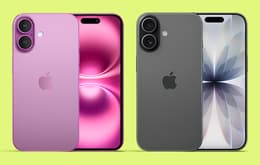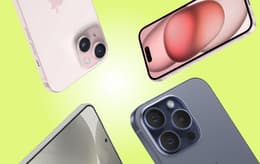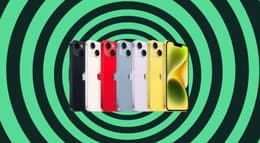
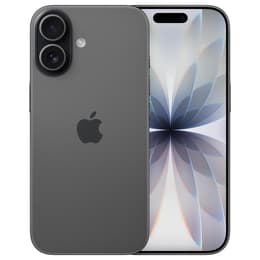
For the first time in a little while, Apple's current crop of iPhones is quite different. Although the base iPhone 17e and iPhone 17 are still quite familiar, the iPhone 17 Pro and Pro Max have a new design, and the new iPhone Air has a lot of people talking. Given that these models actually offer something new for users, it's understandable that you want to compare iPhone 17 models to determine which one best suits your needs, and that’s where we step in. At Back Market, today's guide explores everything you need to know so you can hop off the fence and into the yard of the iPhone that speaks to you most, with a clearer value proposition for what each model gives you for the money.
Which iPhone 17 fits you the best?
Question 1 of 3
What matters most when choosing a phone?
✨ Verdict: Which is the winner in the iPhone 17 vs 17 Pro vs 17 Pro Max vs iPhone Air debate?
At the end of the day, it comes down to what the user wants. The iPhone 17 is the best all-round choice for most users, while the iPhone 17e is the best budget option. The iPhone Air is ideal for those who value portability and want the lightest, thinnest model. The iPhone Pro works best for users looking for a pro-level camera and performance features, while the iPhone Pro Max is the best choice for the heavy hitters who want the most power, the biggest screen, and is the best iPhone 17 for battery life.
TL; DR
✨ For most people, the iPhone 17 base model is the best pick. It now has an Always-On Display, a 6.3-inch ProMotion display, Apple Intelligence support, up to 30 hours of video playback, and a dual 48MP rear camera setup.
However, if you care more about owning a lightweight, beautifully slim phone, the iPhone Air could be more your speed. That said, the iPhone 17 Pro is a good choice if you want the full Pro experience without going all the way to the Max. So, admittedly, the Pro Max is only really worthwhile if you care about zoom reach, display size, and want battery life that's a notch above decent. The iPhone Air is the ultra-lightweight version and suits users who value portability the most.
Why trust this iPhone 17 comparison?
You can trust our comparison because it's based on Apple's current official product pages, real-world insights from iPhone 17 owners, and our team's expertise at Back Market. With years of experience in the tech space, cleaning, repairing, and refurbishing Apple products, we know our way around an iPhone.
Although the iPhone 17 lineup might still be new, having only been released in September 2025, we’ve had months to test the waters with these phones. This has allowed us to develop a keen understanding of their capabilities across models, and we want to share everything we’ve gleaned.
iPhone 17 vs iPhone 17 Pro vs iPhone 17 Pro Max vs iPhone Air: Which is the best?
iPhone 17 vs iPhone 17 Pro vs iPhone 17 Pro Max vs iPhone Air: Which is the best?
Bottom line 💗💗💗💗🤍 (4/5)
The standard iPhone 17 stands out as the easiest recommendation, while the rest of the range makes more sense once you know exactly what you’re paying extra to get.
Apple’s iPhone 17 lineup is more differentiated than it first looks, with each model aimed at a distinct type of buyer.
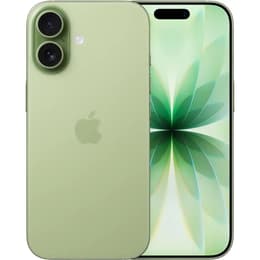
The iPhone 17 lineup offers a lot for Apple enthusiasts, but it's evident that each phone suits a certain type of person. For example, the iPhone 17 is the best all-rounder, ideally suited to everyday users who love access to Apple's impressive features at a less-than-outrageous price. Then there’s the iPhone Air, which is perfect for those who love a compact, lightweight phone that still offers the premium Apple features. Though, granted, its camera system is somewhat inferior.
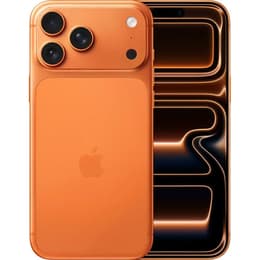
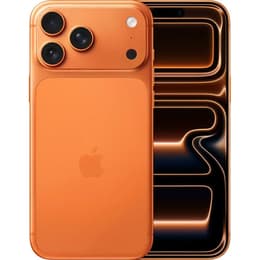
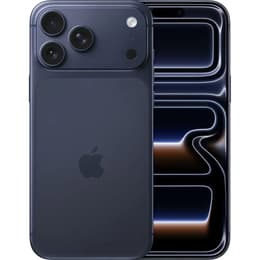
On the other end of the spectrum, the iPhone 17 Pro is more compact than the iPhone Pro Max, offers most of the same benefits, and is particularly well-suited for individuals interested in photography. The Pro Max is also good for those who care about the camera. It's just a little better for battery life, but this battery comes at the expense of a heavier and bulkier phone.

Which iPhone 17 is the true entry-level model?
The iPhone 17e is the entry-level model in Apple’s iPhone 17 generation and was introduced in 2026. It’s worth adding to this comparison because it offers a lower-cost route into the latest iPhone range while still using Apple’s A19 chip and supporting Apple Intelligence. It starts with 256 GB of storage, double the base storage of the previous iPhone 16e, and adds MagSafe charging.
There are some clear differences between the 17e and the standard iPhone 17. It has a 6.1-inch Super Retina XDR display without ProMotion, a notch rather than the Dynamic Island, and a single 48MP Fusion rear camera. It also uses a four-core GPU version of the A19 chip, compared with the five-core GPU in the iPhone 17.
For buyers who don't need the latest display features or a more advanced camera system, the 17e offers strong everyday performance and up to 26 hours of video playback.
iPhone 17 vs iPhone Air or 17 Pros: What are the key specs?
Before we get into the nitty-gritty comparison of each iPhone 17 vs Pro vs Pro Max vs Air, including storage configurations, here’s a quick snapshot comparison of the specs most people want to know before they buy:
iPhone 17
Display | 6.3-inch Super Retina XDR OLED, ProMotion up to 120Hz |
Chip | A19 |
Cameras | 48MP Fusion Main + 48MP Fusion Ultra Wide, 18MP Center Stage front camera |
Battery | Up to 30 hours video playback |
RAM | 8 GB |
Storage | 256 GB, 512 GB |
Weight | 177g |
IP rating | IP68 |
iPhone Air
Display | 6.5-inch Super Retina XDR OLED, ProMotion up to 120Hz |
Chip | A19 Pro |
Cameras | 48MP Fusion Main + 2x optical-quality Telephoto, 18MP Center Stage front camera |
Battery | Up to 27 hours video playback |
RAM | 12 GB |
Storage | 256 GB, 512 GB, 1 TB |
Weight | 165g |
IP rating | IP68 |
iPhone 17 Pro
Display | 6.3-inch Super Retina XDR OLED, ProMotion up to 120Hz |
Chip | A19 Pro |
Cameras | 48MP Fusion Main + 48MP Fusion Ultra Wide + 48MP Fusion Telephoto, 18MP Center Stage front camera |
Battery | Up to 31 hours video playback |
RAM | 12 GB |
Storage | 256 GB, 512 GB, 1 TB |
Weight | 204g |
IP rating | IP68 |
iPhone 17 Pro Max
Display | 6.9-inch Super Retina XDR OLED, ProMotion up to 120Hz |
Chip | A19 Pro |
Cameras | 48MP Fusion Main + 48MP Fusion Ultra Wide + 48MP Fusion Telephoto, 18MP Center Stage front camera |
Battery | Up to 37 hours video playback |
RAM | 12 GB |
Storage | 256 GB, 512 GB, 1 TB, 2 TB |
Weight | 231g |
IP rating | IP68 |
iPhone 17e
Display | 6.1-inch Super Retina XDR OLED |
Chip | A19 |
Cameras | 48MP Fusion Main with 2x Telephoto, 12MP TrueDepth front camera |
Battery | Up to 26 hours video playback |
RAM | 8 GB |
Storage | 256 GB, 512 GB |
Weight | 170g |
IP rating | IP68 |
Is the iPhone 17 or the iPhone Air the best model for most users?

The standard iPhone 17 gives the best balance of price, display, battery life, and camera hardware.
✨ For most people, the iPhone 17 is the best model because it delivers the most useful upgrades without tipping into Pro-level pricing.
The biggest reason the iPhone 17 base model is the best choice for most people isn’t because of its lower price but because Apple moved more meaningful features into this model.
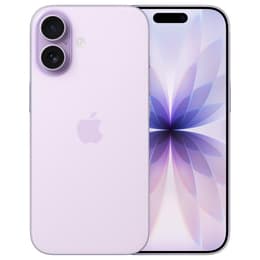
If you are reading this iPhone 17 comparison and wonder “which iPhone 17 should I buy?”, this is the model that makes the most sense for the widest range of users because it still gives you many of the features people actually notice in everyday use, including ProMotion, an Always-On display, USB-C support, and MagSafe compatibility, without pushing you into Pro-level prices. It also helps that features like Dynamic Island no longer feel like luxury-only talking points when buyers compare what they are actually getting at each price level. For this reason, there is no longer an obvious compromise pick.
One Redditor agreed with our take, saying:
“A great choice this year, honestly. Usually, the non-pro is lacking, but I think it checks all the boxes this year, especially with the high refresh display.”
It's also pretty impressive that it comes with up to 30 hours of video playback, an A19 chip, and Apple Intelligence, making it ‘premium enough’ given its price point.
Given these specs, we wouldn’t blame you if you stopped right here in the comparison and thought “Right… that's the one” and called it a day, because honestly…fair. It's not as flashy as the Pro or Pro Max, and it may not be as aesthetically good-looking as the Air, but by golly, it’s still magnificent.
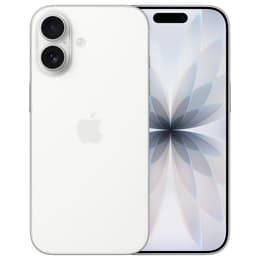
- (10,618)
Refurbished price:£694.00
Versus £899.00 new
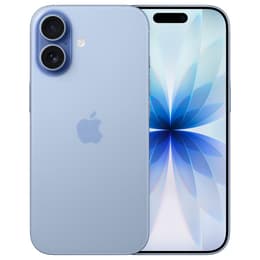
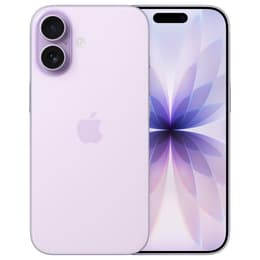
- (10,618)
Refurbished price:£724.00
Versus £899.00 new

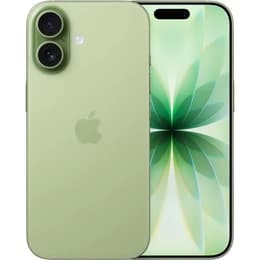

- (10,554)
Refurbished price:£889.00
Versus £1,099.00 new


- (10,504)
Refurbished price:£889.00
Versus £1,099.00 new

- (10,554)
Refurbished price:£993.65
Versus £1,099.00 new


Is the iPhone 17e or the iPhone 17 the better entry-level model?

Is the iPhone 17e or the iPhone 17 the better entry-level model?
✨If you’re looking for the best and most budget-friendly classic, the iPhone 17e is an ideal match, while content creators and heavier users might want to go for the iPhone 17.
The iPhone 17e is the more affordable entry point into Apple’s iPhone 17 range, with 256 GB of storage as standard. It uses the A19 chip and has a 48MP Fusion main camera, giving it strong performance for everyday use.
The iPhone 17 costs more but adds several features that make it a more complete choice. Its 6.3-inch display supports ProMotion up to 120Hz, while the 17e only has a standard refresh rate. It also has a 48MP Ultra Wide camera, an 18MP Center Stage front camera, and up to 30 hours of video playback, compared with 26 hours on the 17e. The 17e is ideal for buyers focused on value and core performance, while the iPhone 17 is better for users who want better scrolling, stronger cameras, and longer battery life.
"The iPhone 17e is the classic, practical iPhone we’ve been missing." - Reddit
Does the iPhone Pro Max have a better display than the iPhone Air?

Display differences now come down more to size, immersion, and positioning than simple refresh-rate gaps.
✨ Subjectively speaking, the iPhone Pro Max has the ‘best’ display because it's bigger, but across the board, all models feature the same refresh rate, peak brightness, and OLED.
This may come as a surprise to some, but the iPhone 17, 17 Pro, and iPhone Air feature the same OLED screen, which Apple calls the Super Retina XDR display. The only difference in the display is screen size, and the Pro Max offers the largest and most immersive viewing experience, with the Air coming in at a close second.
Across these models, this display offers a 120Hz ProMotion refresh rate, a huge leap over the iPhone 16s base model's 60Hz. This matters because one of the biggest differences between standard and Pro iPhones used to be buttery displays, and now that gap is much smaller in everyday use. When it comes to the iPhone 17 vs iPhone 16 debate, the updated models are going to be less glitchy.
One Redditor had nothing but praise to spout when talking about his upgrade:
“Years with the old iPhone 13 (a solid phone, don't get me wrong!), but I finally made the jump to the iPhone 17. And holy moly, the 120Hz ProMotion display is everything I was hoping for. No more feeling left out when my friends are scrolling and gaming on their high-refresh-rate screens! This upgrade feels huge. So worth it.”
Additionally, refresh rates are adaptive across all models, meaning they can drop as low as 1Hz when you’re not doing much on your phone, conserving battery life. It's also worth noting, for all you rough-and-tumble types (no hate), that the iPhone 17 models feature a new Ceramic Shield 2 front glass for added durability. That Ceramic Shield 2 durability upgrade matters because it is designed to better handle the kind of scratches and accidental drops that happen in everyday life. This is believed to be three times more scratch-resistant than before.
It also features a pretty cool new antireflective coating that reduces glare, and up to 3,000 nits of peak brightness. These features make reading the screen on sunny days less jarring and easier on the eyes.
- (2,311)
Refurbished price:£860.00
Versus £1,199.00 new
- (2,311)
Refurbished price:£860.00
Versus £1,199.00 new

- (2,286)
Refurbished price:£859.00
Versus £1,199.00 new

- (2,297)
Refurbished price:£1,055.00
Versus £1,399.00 new

- (2,297)
Refurbished price:£1,033.00
Versus £1,399.00 new

- (2,311)
Refurbished price:£1,067.00
Versus £1,399.00 new

- (2,297)
Refurbished price:£1,181.00
Versus £1,599.00 new

- (2,297)
Refurbished price:£1,129.99
Versus £1,199.00 new

- (1,885)
Refurbished price:£1,206.00
Versus £1,599.00 new

- (2,264)
Refurbished price:£1,261.00
Versus £1,599.00 new

- (2,002)
Refurbished price:£1,749.00
Versus £1,999.00 new
- (1,779)
Refurbished price:£1,013.00
Versus £1,199.00 new


- (2,297)
Refurbished price:£1,105.00
Versus £1,199.00 new

- (1,237)
Refurbished price:£1,164.00
Versus £1,999.00 new

Is the iPhone 17 Pro Max or the iPhone Air best for photography?

The biggest camera difference in the lineup is not image quality alone, but how much flexibility each model gives you.
✨ The iPhone 17 Pro Max has the best camera system because it combines the full Pro camera setup with the longest zoom reach in the lineup, while the iPhone 17 Pro delivers nearly the same flexibility in a smaller body.
Perhaps the most exciting part of owning an Apple iPhone is its camera system since the brand is renowned for creating some of the best phone cameras compared to the competition. However, this might be a little disappointing to learn, but across all four iPhone 17 models, the front-facing selfie camera is identical. That means every model gets the same front camera, including the Centre Stage selfie camera experience, which is useful not only for selfies but also for video calls, casual content creation, and everyday use.
That said, the models still have pretty decent camera systems worth writing home about, with features many love, as this Redditor said:
“I like how the action button can be customised, and we already have a separate camera control button in addition to it.”
That Action button is especially useful if you want faster access to the camera, voice memos, shortcuts, or other tools you use regularly, so it is not just a gimmick for power users.
Control buttons aside, the base model iPhone 17 has seen a significant improvement over older base iPhones, thanks to its 48MP main and 48MP ultrawide cameras. These give you plenty to work with when you want to take travel photos, pictures of food and your pets, or dabble in photographic landscapes and casual video. When it comes to the best iPhone for photos, the entry-level 17 is an excellent choice.
Then there is the Pro and Pro Max, which offer extra camera range, and this makes a huge difference. This is especially true if you’re someone who loves to photograph children's sporting events, pets from a distance, concerts, portraits, architecture, and really anything else that you want to memorialise in life through a lens. This flexibility comes from the Pro system’s dedicated 48MP telephoto lens, which offers up to 8x optical quality zoom. The Pro models also make a stronger case for people who care about advanced video tools like ProRes video, especially if content creation is part of how you use your phone.
So if your main question is which iPhone 17 to buy for photography, the Pro models still make the strongest case, as they offer more shooting flexibility without drastically changing the overall iPhone experience.
However, the most disappointing of the lot is the iPhone Air, which is more limited than the base, Pro, and Pro Max. The Air's camera system relies on a single main camera with 2x optical-quality zoom. It works well if you mostly point, capture, and move on, but it gives you far less freedom when you want clearer zoom options, wider framing, and more variety in how you can capture a scene.
iPhone 17 Pro vs Pro Max: Which has the best battery life?

Battery performance closely follows the lineup’s physical priorities, with thinness and size shaping the results.
✨ The iPhone 17 Pro Max has the best battery life in the lineup, followed by the iPhone 17 Pro, then the iPhone 17, with the iPhone Air coming in last because its thinner body naturally limits battery capacity.
Battery life matters, especially as applications become increasingly power-intensive, so it's a good thing the iPhone 17 series lineup isn’t too disappointing in this regard. In fact, many are finding these models to be pretty impressive.
For example, one Redditor said: “I was on the iPhone 17 Pro, surfing and watching videos for 6 hr straight while at the hospital, and it only got down to 57%.” Another Redditor stated: “My 17 has been lasting me from 4 am to 8 pm with battery still usually in 20/30% range. I use my phone a lot for work, and those times I’m always up.”
Considering real-world statements like these, it's safe to say the battery life holds up fairly well with day-to-day use across different models, but naturally, some perform better than others. For instance, the iPhone Air…performs the worst. This is to be expected, given that its thinness comes at the expense of battery capacity. It still holds up well for normal use, but it's not the best fit for people who hate charging or spend long stretches away from a plug.
Which iPhone has the best battery life, you ask? The base model can be thought of as the quiet overachiever. It does better than the Air but not as well as the Pro or Pro Max. However, to be fair, the Pro and Pro Max offer bigger battery capacities, especially the Pro Max, which is designed for endurance. If we had to choose, the Pro Max would be the best pick for those who perform battery-intensive tasks on their phones, like gaming or streaming, or for those with long workdays.
Though, we recognise that charging convenience matters too, and this is where MagSafe compatibility still plays an important role. If you like the ease of snapping your charger on at night or using magnetic accessories, MagSafe Charging Speeds and that added convenience can matter just as much as battery capacity in everyday use.
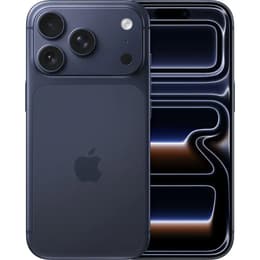
- (3,436)
Refurbished price:£795.00
Versus £1,099.00 new
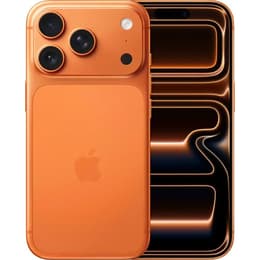
- (3,436)
Refurbished price:£798.00
Versus £1,099.00 new
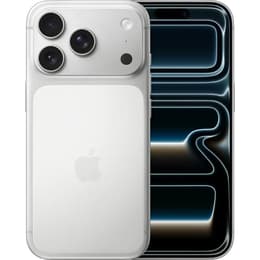
- (3,436)
Refurbished price:£847.00
Versus £1,099.00 new
- (3,393)
Refurbished price:£938.00
Versus £1,299.00 new

- (3,365)
Refurbished price:£958.00
Versus £1,299.00 new

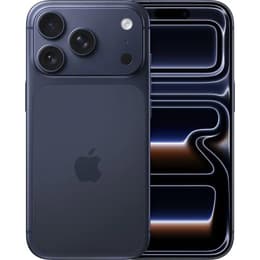
- (3,436)
Refurbished price:£963.00
Versus £1,299.00 new

- (3,393)
Refurbished price:£1,097.00
Versus £1,499.00 new


- (3,276)
Refurbished price:£1,104.25
Versus £1,499.00 new

- (3,080)
Refurbished price:£1,182.24
Versus £1,499.00 new


Is the iPhone 17 Pro or the iPhone Air the fastest?

Performance differences in this lineup are more about extra headroom and sustained workload strength than basic speed.
✨ The iPhone 17 Pro, iPhone 17 Pro Max, and iPhone Air are the fastest models because they use the A19 Pro chip, while the standard iPhone 17 uses the A19 chip, which is still more than powerful enough for most people.
On paper, the iPhone 17 Pro, Pro Max, and Air are the fastest because they share the A19 Pro chip, while the base model uses the A19 chip. In real-world use, the A19 vs A19 Pro chip differences are less about whether apps open quickly and more about graphics headroom, sustained performance, and how well the phone handles heavier workloads like gaming, advanced photo editing, and demanding multitasking over time.
Despite this, the base model is still good enough for most, where performance isn’t the utmost priority. Additionally, faster doesn’t really mean as much as you would expect, as the real performance indicator you should be looking at is performance headroom. In fact, one Redditor felt the same, saying:
“I loved my iPhone 6 back in the day, so I thought I'd pick up the new 17 and well…. In general, it runs smoother than my Samsung in terms of Animations and general speed, but the constant stutter when scrolling in Apps Like Reddit, Instagram, the game section in the App store, or even Spotify is really annoying me.”
But how does this relate to headroom, and is this stutter an issue? Well… most don’t find stuttering an issue, and in everyday use, it's safe to say that, for the most part, they all perform pretty well and will continue to for some time. Yet, the main performance difference lies between the Air and Pro models.
With the Air, you’ll get Pro-level speed in a much thinner package. Yet, the Pro and Pro Max pair this speed with hardware that makes more sense for heavier camera use, longer gaming sessions, and advanced editing. This matters even more with features like vapour chamber cooling helping Pro models better manage heat during longer, more demanding sessions. So, at the end of the day, you need to decide what performance means to you and match that to an iPhone 17 model.
Does the iPhone 17 or the iPhone Air have the best design?

Design differences in the iPhone 17 lineup are really about feel in the hand, not just appearance on paper.
✨ The iPhone Air has the most distinctive design because it is the thinnest and lightest model in the lineup, while the iPhone 17 offers the best traditional look, and the iPhone 17 Pro Max is clearly built for people who actively want a larger and heavier phone.
Looks aren’t everything, but no one wants an ugly-looking phone. Fortunately, with the iPhone 17 lineup, this is nary a concern. Every model from the base to the Pro Max looks good, but that doesn’t mean they look the same, and the iPhone 17 Air looks the most different when you pick it up. And design is no longer just about finishes, thickness, or weight. Features like USB-C and Dynamic Island also shape how modern and convenient a phone feels in daily use, especially if you care about easier charging and a more up-to-date overall experience. So what it lacks in features it makes up for in style.
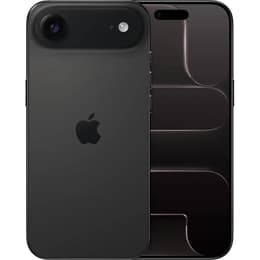
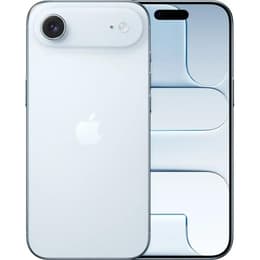
This model is noticeably thinner and lighter, and that’s the point, considering it's the lineup's design statement. It has an almost mirror-like finish and a polished titanium frame, giving it a more premium feel than the aluminium build used on the base model and the aluminium unibody design used on the Pro models.
Additionally, colour-wise, the Air leans into softer, lighter tones like light gold, sky blue, cloud white (shout-out to Pantone), and space black. These are intentionally more subtle in hue than the bolder, more varied colours seen on the base and Pro iPhone 17s.
Then, the base model is the most drab and traditional looking, but if you like that, you’ll love it. It features a lightweight aluminium frame and a colour-infused glass back, with a slightly thicker build than the Air but still thinner than the Pro Max.
The Pro and Pro Max lean into a more premium, performance-first design language. They both use an aluminium unibody design with a brushed or satin finish and are thicker and weightier than the base and Air. So they look and feel like ‘serious devices.’ However, between the two, the Pro feels more compact, while the Pro Max is far more imposing, with a ‘bigger is better’ design ethos.
Yet, one should know that if you don’t have a protective case for your iPhone 17 Pro, you may cause serious damage to it. One Redditor faced this sad reality: “I love my 17 Pro, but I'm waiting on a case to arrive, and I dropped it last week. Scraped and dented now and only dropped from a few feet. A little disappointed with its robustness.” So, do with that information what you will.


Which iPhone 17 has the best software longevity and AI features?

All four main iPhone 17 models support Apple Intelligence, so the long-term gap is more about hardware futureproofing than AI access.
✨ All four main iPhone 17 models support Apple Intelligence, meaning software longevity and AI access are no longer exclusive to the iPhone 17 Pro and iPhone 17 Pro Max.
If there’s one area where all four iPhone models are pretty evenly matched, it's with software longevity and AI features. This is likely because Apple decided to have all four models support Apple Intelligence. This means that the main AI features are shared across the lineup rather than reserved only for the Pro phones.
So, you can expect all four models to come equipped with Writing Tools, Live Translation, Smart Reply, Image playground, Clean Up, and Genmoji. Pretty cool, right?
However, there is a slight difference between the Air, Pro, and Pro Max. It’s that they give a little more headroom to continuously manage these features as they become more demanding over time and as updates roll in.
In an iPhone 17 comparison like this, that extra headroom is really what separates the faster models from the ones that are simply already good enough for most people.
iPhone Air vs iPhone 17 models: What are the pros and cons?
✨Each Apple iPhone 17 model has its perks and disadvantages, so the trick is making sure you buy the model where the pros outweigh the cons in your books.
iPhone 17e
✅Pros | ❌ Cons |
|---|---|
A19 chip delivers strong performance and supports Apple Intelligence. | No ProMotion, so the display doesn't offer the smoother 120Hz refresh rate found on the iPhone 17. |
256 GB starting storage gives you twice the base storage of the iPhone 16e. | Single rear camera, with no dedicated Ultra Wide camera. |
48MP Fusion camera offers a 2x optical-quality Telephoto option. | Lower wireless charging speed, with MagSafe and Qi2 limited to 15W. |
MagSafe support enables up to 15W wireless charging and compatibility with MagSafe accessories. | Display brightness is lower, reaching 1,200 nits peak HDR compared with the iPhone 17's higher peak brightness. |
iPhone 17
✅Pros | ❌ Cons |
|---|---|
ProMotion makes everyday use feel easier. | No dedicated telephoto camera. |
Comfortable size for most hands and pockets. | Standard design feels less distinctive. |
Strong battery life for the price. | Less camera flexibility than Pro models. |
ProMotion and Always-On display on the standard model | Fewer premium finish cues than the Air and Pro variants |
iPhone Air
✅Pros | ❌ Cons |
|---|---|
The thinnest and lightest model available. | Shorter battery life than the iPhone 17 Pro and Pro Max. |
Big 6.5-inch display in a slim body. | Thin design prioritises style over practicality. |
Feels noticeably sleeker in hand. | Costs more than the standard iPhone 17 |
A19 Pro adds extra performance headroom. | Less rear-camera flexibility than the iPhone 17 and Pro models. |
iPhone 17 Pro
✅Pros | ❌ Cons |
|---|---|
Best compact phone for serious photography. | Big price jump from iPhone 17. |
Feels purpose-built and premium. | Heavier than the standard model. |
Triple cameras add real shooting flexibility. | Harder to justify if you do not care about camera flexibility. |
Strong battery without Max size. | Features are overkill for casual users |
iPhone 17 Pro Max
✅Pros | ❌ Cons |
|---|---|
Best battery life in the lineup. | Heaviest and bulkiest to carry. |
Most complete camera experience with the best zoom reach. | Most expensive model. |
The biggest screen for media and gaming. | Too large for comfortable one-handed use. |
A large screen improves video editing and multitasking. | Overkill if you mainly use basic apps. |
Is it worth upgrading from the iPhone 16 to iPhone 17?
If you already own an iPhone 16, the iPhone 17 isn't an essential upgrade for everyone. The A18 chip in the iPhone 16 is still capable of running everyday apps, gaming, and Apple Intelligence. However, the iPhone 17 introduces several changes that you'll notice in regular use, particularly its display, cameras, storage, and battery life. iPhone 16 owners can hold on to their phones, but the iPhone 17 is the better choice for anyone buying a new device.
The biggest change is the display. The iPhone 16 has a 6.1-inch OLED display with a 60Hz refresh rate, while the iPhone 17 increases this to 6.3 inches and adds ProMotion with an adaptive refresh rate of up to 120Hz. The newer model also has an Always-On display and can reach 3,000 nits of outdoor brightness, compared with 2,000 nits on the iPhone 16. These changes make scrolling smoother and the screen easier to see outdoors.
Both phones have a 48MP main camera, but the iPhone 17 replaces the iPhone 16's 12MP Ultra Wide camera with a 48MP Ultra Wide camera. Battery life is another difference. Apple rates the iPhone 17 for up to 30 hours of video playback, compared with 22 hours for the iPhone 16. The iPhone 17 also starts with 256 GB of storage, while the iPhone 16 starts at 128 GB. These are all things to consider if you want an upgrade, but if there’s nothing wrong with your iPhone 16, it still does a fine job.
What are some smart ways to save when buying an iPhone 17?
✨ The smartest way to save money is to make sure you even need to upgrade and to decide which model actually suits your needs. If you do need an upgrade, choosing a refurbished over a new one is the better choice for the planet and your pocket.
Buying an iPhone 17 phone is an exciting experience, and it's always enticing to have access to the latest tech and features. However, it's not always a smart move to purchase the flashiest model like the Pro or Pro Max when the base model would do you just fine.
That’s why it's important to shop smarter, and it's easier than you might expect. Here’s how to go about things:
Decide on a model: You need to decide whether you even need to upgrade to Apple's latest and greatest. If you own a fairly recent iPhone like the 15 or 16, you might not need to upgrade or at least buy new. Often refurbished is a good choice if you want to upgrade simply because you’re salivating over the new features and design.
Consider features: It’s best to choose the model that offers what you’re looking for in a phone. Some want impressive camera capabilities or a sleek design with a stunning display, while others want battery life and performance to trump all else. When you know what you want, you can narrow down your top pick among the base, Air, Pro, and Pro Max models and avoid wasting money on the wrong one.
Choose between new and refurbished: On the one hand, new can be attractive because you’re the first to become intimately acquainted with your device, but it can be expensive and less environmentally friendly. On the other hand, verified-refurbished can be just as good as new, cheaper, and you’re keeping tech out of landfills.
If you go the refurbished route, you should also know that buying from a reputable seller gives you more protection than you might expect. For instance, at Back Market, our verified refurbished iPhone 17 models come with 30-day returns and a 1-year commercial warranty.
What does refurbished actually mean?
We get it. Before you drop your hard-earned cash on a refurbished iPhone model, you want to know what it actually means. This is smart thinking especially if you want tech that lasts. So, to put it simply, when you buy a refurbished iPhone 17 in the UK through Back Market, it means it's been inspected, tested, cleaned, repaired, and prepared for resale in near-new condition.
At Back Market, we take it a step further with our verified refurbished iPhones. They undergo an industry-leading, up to 100-point inspection by tech professionals. This system helps us ensure that the refurbished iPhones we sell are of the utmost quality and will give you years of use.
Trade-In: Can you turn your old phone into savings?
✨Trading in your old tech to get your hands on an iPhone 17 is a smart move, since you can use the cash or credit you get toward the phone you actually want to own.
If you want to take some sting out of stepping up to the iPhone 17, one of the best ways to do it is to trade in your old tech and get cash back or a credit. With the extra cash or credit, you can put it towards a refurbished iPhone 17 model, making it easier than ever to get your hands on new tech.
At Back Market, our trade-in program is simple and fast. You send us the condition of the tech you’re trading in; we give you a quote. Then, you ship it to us for free if you agree with our offer. Once we have our hands on it, we verify that the tech is in the condition you described and either pay you or credit you.
It might be a little less fun than impulse buying, but a trade-in can come in clutch, especially if you’re looking at the more expensive models like the Pro or Pro Max.
How do the iPhone 17, 17 Pro, 17 Pro Max, and Air compare in price?
Before you buy or set your heart on one particular model, take a look at the price comparison table below. It should help you determine which model might fit your pocket better:
Model | Price (New) | Price (Refurbished) | Price saved |
|---|---|---|---|
iPhone 17e (256 GB) | £899 | From £549* | [var: iPhone 17e| max_price_saved|62] |
iPhone 17 (256 GB) | £1,099 | From £679.99* | 17% |
iPhone Air (256 GB) | £1,699 | From [var:iPhone Air| cheapest_price|632]* | [var:iPhone Air| max_price_saved|367] |
iPhone 17 Pro (256 GB) | £1,499 | From £787* | 47.5% |
iPhone 17 Pro Max (512 GB) | £2,200 | From [var:iPhone 17 Pro Max|cheapest_price |1091]* | [var:iPhone 17 Pro Max|max_price_save| 108] |
*Prices are set by sellers and taken at the time of publishing and are subject to change.
iPhone 17 vs 17 Pro vs 17 Pro Max vs Air: Which iPhone 17 should I buy?
If you came to this guide looking for iPhone 17 models compared, to sum things up, the iPhone 17 is the best overall buy in the iPhone 17 lineup, while the iPhone 17e is the ideal buy for budget shoppers. However, the iPhone Air is the design-first choice, the iPhone 17 Pro is the best compact Pro phone, and the iPhone 17 Pro Max is the battery-and-camera king.
Based on your needs, think carefully about what you want and expect in a phone, then explore the lineup. If you’re still wondering which iPhone is the best for your needs, go read our expert review. If you want to see what we have to offer at Back Market, you can check out our refurbished iPhones. If you decide you want to look outside the Apple ecosystem, we offer verified refurbished Samsung devices, Google Pixel devices, and more.
And if you are already wondering to what's next, the iPhone 18, iPhone 18 Pro and iPhone 18 Pro Max might be worth the wait.