
Compare models
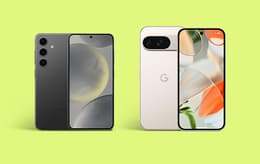
Google Pixel 9 Vs iPhone 17 Pro Max
- 1-year minimum warranty
- Free delivery on all items
- Free 30-day returns
Differences at a glance
The Google Pixel 9 (2024) and the iPhone 17 Pro Max (2025) represent distinct approaches to modern smartphone design, operating systems, and user ecosystems. While the Google Pixel 9 focuses on streamlined everyday utility and intuitive software integrations, the iPhone 17 Pro Max prioritizes advanced hardware performance and a large-scale multimedia experience. Operating on Android and iOS respectively, these devices cater to users with different platform preferences and workflow habits.
Available Models
Colour
Storage (GB)
Scores
Durability
When evaluating the long-term viability and physical endurance of these two devices, several structural and software elements influence their expected operational lifespans in daily use.
- Software support timelines: Both manufacturers provide extensive multi-year software and security update schedules, ensuring both operating systems remain current, secure, and compatible with modern applications for many years.
- Repairability and build durability: Each device features robust glass and metal construction alongside high-level water and dust resistance ratings, while component availability supports standardized repair pathways.
- Expected practical lifespan: Hardware longevity is well-balanced across both models, meaning that opting for a quality-assured refurbished option provides a reliable, sustainable choice that maintains high operational efficiency over time.
Year of Release
2024
2025
Compatible with latest Update
Yes
Yes
OS
Android
iOS
Foldable
No
No
Performance
Daily responsiveness, storage configurations, and energy management differ significantly between the two devices based on their underlying system architecture and hardware optimization.
- Storage and multitasking capacity: Both smartphones offer multiple storage tiers paired with sufficient memory architectures to handle simultaneous background applications and heavy multitasking without noticeable slowdowns.
- Battery behavior and endurance: Energy efficiency is optimized on both models to comfortably navigate a standard day of mixed messaging, browsing, and media consumption before requiring a recharge.
- System responsiveness: Everyday tasks such as app launching, web browsing, and demanding mobile games run smoothly and efficiently thanks to current-generation internal processing components.
Screen quality
Resolution
1080 x 2424
2868x1320
Screen type
OLED
Super Retina XDR
Audiovisual
Photography, video recording capabilities, and audio output options vary across the respective camera arrays and speaker configurations of each device.
- Camera system versatility: Both smartphones feature multi-lens configurations including main and ultra-wide sensors, with the iPhone 17 Pro Max additionally incorporating a dedicated long-range telephoto lens for distant subjects.
- Low-light and video performance: Advanced image processing algorithms on both devices capture detailed low-light photos and stable, high-definition video recordings with reliable autofocus tracking.
- Audio and media output: Integrated stereo speaker systems deliver clear sound for hands-free calls and casual media playback, complemented by responsive multi-microphone arrays for voice recording.
Main camera
50 megapixels
48 megapixels
Front camera
10.5 megapixels
18 megapixels
Miscellaneous
Connectivity standards, physical dimensions, and handling characteristics dictate how comfortably each smartphone integrates into everyday travel and professional workflows.
- Connectivity and ports: Both models support widespread 5G networks, modern Wi-Fi protocols, and Bluetooth standards, utilizing reversible USB-C ports for charging and wired data transfers.
- Authentication sensors: The Google Pixel 9 provides both under-display fingerprint recognition and facial scanning, while the iPhone 17 Pro Max relies exclusively on advanced facial authentication technology.
- Dimensions and physical handling: The Google Pixel 9 offers a lighter, more compact profile suited for single-handed use, whereas the iPhone 17 Pro Max features a larger, heavier chassis designed for maximum screen estate.
Weight
198 g
233 g
Screen size (in)
6.3
6.9
Mobile network
5G
5G
SIM card
Physical SIM + eSIM
Physical SIM + eSIM
Carrier compatibility
Unlocked
Unlocked
Connector
USB-C
USB-C
What the community thinks
User feedback from public forums and community discussions highlights several distinct preferences for each device. Owners of the Google Pixel 9 frequently praise its clean software interface, reliable everyday camera results, and comfortable physical dimensions that make single-handed operation straightforward. Conversely, users of the iPhone 17 Pro Max often emphasize appreciation for its expansive display workspace, robust build quality, and extended reach capabilities within its camera array. Common discussions occasionally point out that the larger footprint of the Pro Max model can feel heavy during prolonged one-handed use, while the Pixel 9 occasionally draws commentary regarding its more modest zoom hardware compared to larger dedicated alternatives.
Users prioritizing a compact form factor, clean interface design, and straightforward everyday functionality may find the Google Pixel 9 well-suited to their daily routines. Meanwhile, users prioritizing maximum screen area, advanced long-range photography options, and deep integration within specific software ecosystems will likely lean toward the iPhone 17 Pro Max. Evaluating these practical differences allows individuals to select the device that aligns most closely with their personal workflow requirements, while choosing a sustainably sourced, quality-assured refurbished model supports eco-friendly technology consumption.