
Compare models

iPhone 17 Pro Max Vs iPhone Air

  • 1-year minimum warranty
  • Free delivery on all items
  • Free 30-day returns
iPhone 17 Pro Max
Starting at

Refurbished price:£929.00

Versus £1,199.00 new

See options
iPhone Air
Starting at

Refurbished price:£606.00

Versus £1,099.00 new

See options

Differences at a glance

The iPhone 17 Pro Max (2025) and the iPhone Air (2025) represent two distinct visions for Apple's smartphone lineup, pairing contemporary operating systems with advanced hardware. While both devices deliver high-end processing power and extensive software support, they differ substantially in their physical form factor, camera versatility, and daily usability profiles. This comparison examines how these design choices translate to real-world experiences for different user needs.

Available Models

Colour

Storage

Scores

Durability

Both smartphones share a modern launch timeline and belong to the same hardware generation, ensuring a long window of software support and security updates from the manufacturer. Refurbished versions of these models provide a quality-assured, sustainable choice for users wanting modern longevity without compromise.

  • Software longevity: Both devices receive multi-year operating system upgrades and security patches, ensuring consistent software feature alignment over time.
  • Repairability and build: Both models utilize durable glass-ceramic compositions and structured frames, though internal layout differences mean professional repair procedures vary by physical thickness.
  • Expected lifespan: High-capacity internal components and robust processing headroom allow both models to maintain efficient operational performance across many years of daily use.

Year of Release

2025

2025

Compatible with latest Update

Yes

Yes

OS

iOS

iOS

Foldable

No

No

Performance

Equipped with advanced internal processors and substantial memory allocations, both devices handle demanding applications, multitasking workflows, and graphics-heavy tasks with fluid reliability.

  • Multitasking capacity: Large memory configurations on both models allow seamless switching between multiple background applications and heavy productivity tools without stutter.
  • App responsiveness: Current-generation processing architecture ensures rapid application launch times, smooth gaming frame rates, and efficient thermal management during extended tasks.
  • Battery behavior: The larger physical footprint of the Pro Max accommodates a higher-capacity battery for extended heavy use, whereas the ultra-slim profile of the iPhone Air delivers standard all-day battery life under typical conditions.

Screen quality

Both smartphones feature vibrant organic light-emitting diode displays with high peak brightness levels, adaptive refresh rates, and sharp pixel densities suitable for all lighting environments.

  • Display size and immersion: The iPhone 17 Pro Max provides an expansive 6.9-inch viewing area optimal for media consumption and split-screen tasks, while the iPhone Air offers a slightly more compact 6.5-inch panel.
  • Outdoor visibility: High peak luminance capabilities ensure sharp text and clear imagery remain legible under direct sunlight.
  • Motion smoothness: Adaptive refresh rate technology scales dynamically from low frequencies to high smoothness depending on the active on-screen content.

Resolution

2868x1320

2736x1260

Screen type

Super Retina XDR

Super Retina XDR

Audiovisual

The photographic systems cater to different priorities, contrasting a multi-lens professional setup with a streamlined single-lens approach housed within a slim profile.

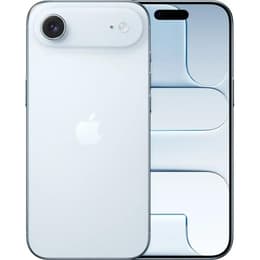
  • Lens versatility: The iPhone 17 Pro Max features a triple-lens array including an extended optical zoom telephoto option, whereas the iPhone Air relies on a versatile single 48-megapixel main lens with high-resolution cropping capabilities.
  • Low-light photography: Advanced computational photography engines on both devices capture balanced details and accurate colors in dim environments.
  • Video and audio: Both models record high-resolution video with stabilization features, paired with clear microphone arrays suitable for voice calls and media creation.

Main camera

48 megapixels

48 megapixels

Front camera

18 megapixels

18 megapixels

Miscellaneous

Physical dimensions and connectivity standards highlight the contrasting design philosophies of these two modern smartphones.

  • Handling and weight: The iPhone Air focuses on an ultra-thin, lightweight profile that minimizes pocket bulk, while the iPhone 17 Pro Max offers a heavier, more substantial build.
  • Connectivity suite: Both incorporate fast wireless networking standards, satellite communication capabilities, and universal USB-C charging ports.
  • Security sensors: Secure facial recognition hardware is integrated smoothly into the display layout of both handsets for authentication and secure transactions.

Weight

233 g

165 g

Screen size (in)

6.9

6.5

Mobile network

5G

5G

SIM card

Physical SIM + eSIM

eSIM

Carrier compatibility

Unlocked

Unlocked

Connector

USB-C

USB-C

What the community thinks

User discussions across community forums highlight distinct preferences for each device based on physical handling and feature priorities. Owners of the iPhone 17 Pro Max frequently praise its extended battery endurance and versatile multi-lens camera system, though some note its heavier weight and large physical footprint in daily pocket storage. Conversely, users favor the iPhone Air for its remarkably thin profile and lightweight handling, while noting that its single-lens setup and slimmer battery capacity require different compromises.

Users prioritizing maximum screen space, optical zoom versatility, and longer battery endurance between charges will find the iPhone 17 Pro Max well-suited to their needs. Meanwhile, users who value a lightweight, ultra-slim device footprint for everyday portability may lean toward the iPhone Air. Choosing a quality-assured refurbished model from Back Market offers an eco-friendly alternative that aligns advanced technology choices with sustainable purchasing habits.