
Compare models

iPhone 17e Vs iPhone Air

  • 1-year minimum warranty
  • Free delivery on all items
  • Free 30-day returns
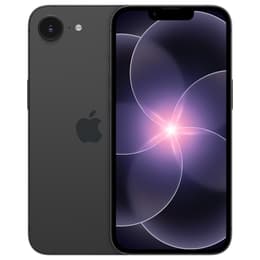
iPhone 17e
Starting at

Refurbished price:£572.00

Versus £699.00 new

See options
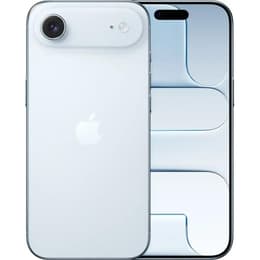
iPhone Air
Starting at

Refurbished price:£640.00

Versus £1,099.00 new

See options

Differences at a glance

The iPhone 17e (2026) and the iPhone Air (2015/2025) represent two distinct approaches to contemporary smartphone design within Apple's ecosystem. While the iPhone 17e provides a traditional, compact footprint with updated hardware, the iPhone Air prioritizes an ultra-thin profile and an expansive screen. Both devices run on current versions of iOS, yet they cater to different physical preferences and structural priorities.

Available Models

Colour

Storage (GB)

Scores

Durability

Both smartphones benefit from long-term software support cycles, though their hardware lifespans reflect their respective release schedules and design builds.

  • Software longevity: Both models receive multi-year operating system updates directly from Apple, ensuring identical security patch frequencies and feature additions.
  • Repairability and durability: The iPhone 17e features standard aluminum and glass construction with high water resistance, whereas the iPhone Air employs a titanium frame designed for rigidity in an exceptionally slim chassis.
  • Expected lifespan: Users can expect extended daily operational longevity from both units, with choice depending on whether a traditional build or a reinforced ultra-thin frame is preferred.

Year of Release

2026

2025

Performance

System responsiveness and multitasking capabilities vary based on internal hardware allocations and thermal design within each device's unique form factor.

  • Multitasking capacity: Both smartphones handle demanding applications, heavy multitasking, and modern mobile gaming smoothly, with higher memory configurations assisting in seamless background app switching.
  • Storage capacity: Generous baseline storage options are available on both models, accommodating large photo libraries, offline media, and substantial application files without requiring external cards.
  • Battery behavior: The traditional dimensions of the iPhone 17e allow for a robust battery capacity supporting full-day heavy usage, while the streamlined profile of the iPhone Air necessitates more mindful power management during intensive tasks.

Screen quality

Display characteristics differ primarily in physical dimensions and refresh rate capabilities, impacting day-to-day media consumption and visual fluidity.

  • Display technology: Both devices utilize vibrant OLED panels that deliver deep blacks, high contrast ratios, and sharp pixel densities for clear text and media rendering.
  • Refresh rate and smoothness: The iPhone Air offers a high refresh rate display for smoother scrolling and motion rendering, while the iPhone 17e utilizes a standard refresh rate suitable for everyday viewing tasks.
  • Viewing area: The iPhone Air provides a larger screen canvas well-suited for productivity and video playback, whereas the iPhone 17e offers a more compact 6.1-inch panel that facilitates easier one-handed navigation.

Audiovisual

Optics and audio output configurations reflect the physical constraints and engineering goals of each respective chassis design.

  • Camera capabilities: Both models utilize a single high-resolution rear camera system accompanied by advanced computational photography features for crisp everyday and low-light imagery.
  • Video and audio recording: High-definition video capture with integrated stabilization is standard on both units, supported by multi-microphone arrays for clear voice recording during calls.
  • Media audio output: The iPhone 17e features stereo speakers for balanced media playback, while the ultra-thin profile of the iPhone Air relies on a mono speaker setup, making headphones preferable for immersive audio.

Miscellaneous

Physical dimensions, connectivity standards, and daily handling characteristics highlight the practical differences between these two smartphone designs.

  • Build and handling: The iPhone Air focuses on a remarkably slim and lightweight profile that rests easily in pockets, while the iPhone 17e provides a familiar, slightly thicker grip with standard edge contours.
  • Connectivity options: Both models support fast 5G wireless networks, modern Wi-Fi standards, and Bluetooth connectivity for dependable accessory pairing.
  • Authentication and security: Secure facial recognition hardware is integrated into the display housing of both devices for quick unlocking and authorized transactions.

Screen size (in)

6.1

6.5

Mobile network

5G

5G

SIM card

eSIM

eSIM

Carrier compatibility

Unlocked

Unlocked

Connector

USB-C (USB 2)

USB-C

What the community thinks

Choosing between the iPhone 17e and the iPhone Air depends entirely on individual physical preferences and daily usage priorities. Users prioritizing a compact one-handed grip, robust battery endurance, and stereo audio output often lean toward the iPhone 17e. Conversely, users who value an expansive viewing area, a remarkably lightweight build, and a high refresh rate display tend to prefer the iPhone Air. For those seeking a quality-assured refurbished option that aligns with sustainable purchasing habits, exploring certified pre-owned models via Back Market provides an eco-friendly alternative without compromising on performance or reliability. Ultimately, evaluating how each device fits into your daily routine will guide your ideal selection.