Compare models

iPhone 15 Vs iPhone 17e

  • 1-year minimum warranty
  • Free delivery on all items
  • Free 30-day returns
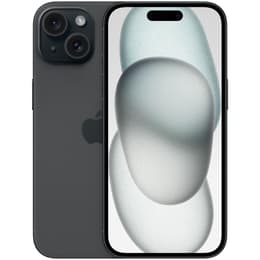
iPhone 15
Starting at

Refurbished price:£350.00

Versus £699.00 new

See options
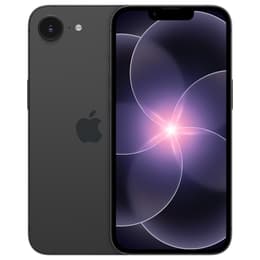
iPhone 17e
Starting at

Refurbished price:£572.00

Versus £699.00 new

See options

Differences at a glance

The iPhone 15 (2023) and iPhone 17e (2026) represent two different approaches to Apple's smartphone lineup, balancing established design standards with newer generational internals. While both devices feature a 6.1-inch form factor and run Apple's iOS ecosystem, they differ significantly in processing power, internal hardware capabilities, and release timelines. These technical distinctions shape their suitability for everyday tasks, long-term software support, and specific user preferences.

Available Models

Colour

Storage (GB)

Scores

Durability

The iPhone 15 and iPhone 17e occupy different positions in Apple's hardware lifecycle, influencing how long each device will remain fully supported by software updates. Selecting a quality-assured refurbished option provides an eco-friendly alternative that extends the operational lifespan of these electronics.

  • Release timeline and age: The iPhone 15 launched in late 2023, whereas the iPhone 17e arrived in early 2026, granting the newer model an extended hardware and software window.
  • Software longevity expectations: The iPhone 17e benefits from a newer processing foundation, ensuring it remains compatible with advanced software features and security patches further into the future than its predecessor.
  • Repairability and durability: Both models feature robust aluminium frames and water-resistant builds, supporting standard repair procedures through certified service channels for sustained long-term use.

Year of Release

2023

2026

OS

iOS

iOS

Foldable

No

No

Performance

Internal hardware configurations dictate how each smartphone handles multitasking, demanding applications, and power consumption during daily use. Users exploring a sustainable choice will find that both models manage routine workflows effectively while offering distinct hardware advantages.

  • Processor capabilities: The iPhone 15 handles everyday tasks and multitasking smoothly with its established multi-core architecture, while the iPhone 17e features a current-generation processor that executes intensive applications and complex graphics with greater thermal efficiency.
  • Memory and storage capacity: The iPhone 17e provides higher baseline storage and increased system memory compared to the standard base configuration of the iPhone 15, improving background app retention during heavy multitasking.
  • Battery behavior: The iPhone 17e incorporates a larger battery capacity, delivering extended endurance for full-day intensive workflows, while the iPhone 15 provides dependable daily power for moderate usage profiles.

Screen quality

Both smartphones utilize a 6.1-inch display format, yet subtle differences in panel technology and peak brightness levels influence outdoor visibility and media viewing. Each device delivers sharp text rendering and accurate color reproduction suited for daily multimedia consumption.

  • Display technology: Both models utilize OLED panel technology, providing deep black levels, high contrast ratios, and vibrant colors for photos and video content.
  • Outdoor visibility: The iPhone 15 reaches higher peak outdoor brightness levels for improved readability under direct sunlight, while the iPhone 17e offers consistent luminance suitable for typical daylight environments.
  • Refresh rate and smoothness: Both devices employ standard refresh rate panels, ensuring fluid standard navigation, smooth scrolling through web pages, and responsive touch interactions.

Resolution

1179 x 2556

2532 x 1170

Audiovisual

Camera system configurations vary noticeably between the two models, reflecting different design priorities for photography and media recording. Users will find distinct optical setups tailored to different recording preferences and everyday capture habits.

  • Camera system capabilities: The iPhone 15 features a dual-lens rear camera setup including a high-resolution main sensor and an ultra-wide lens, whereas the iPhone 17e utilizes a streamlined single-lens rear camera configuration focused on core high-resolution imagery.
  • Everyday and low-light photography: Both devices implement advanced computational photography processing to capture sharp details and balanced exposures in challenging lighting conditions.
  • Audio and media output: Stereo speaker configurations on both models deliver clear sound reproduction for hands-free calls, video playback, and casual music listening.

Front camera

12 megapixels

12 megapixels

Miscellaneous

Practical daily usability is shaped by physical dimensions, biometric security features, and connectivity standards built into each smartphone chassis. Both devices maintain streamlined profiles that fit comfortably in pockets and hands during travel or commuting.

  • Biometric security: Both models utilize advanced facial recognition technology for secure device unlocking, application authentication, and secure online transactions.
  • Physical dimensions and weight: The iPhone 17e is slightly lighter than the iPhone 15, though both share nearly identical length, width, and thickness measurements for standardized case compatibility.
  • Connectivity and ports: Both devices feature universal USB-C ports for charging and data synchronization, alongside fast wireless charging capabilities and modern cellular network connectivity.

Weight

171 g

169 g

Screen size (in)

6.1

6.1

Mobile network

5G

5G

SIM card

Physical SIM + eSIM

eSIM

Carrier compatibility

Unlocked

Unlocked

Connector

USB-C (USB 2)

USB-C (USB 2)

What the community thinks

User feedback from online communities highlights distinct praise and common criticisms for both devices. Owners of the iPhone 15 frequently commend its reliable dual-lens camera versatility and bright display, though some note that its battery requires daily recharging under heavy workloads. Conversely, users favor the iPhone 17e for its extended battery longevity, higher baseline storage capacity, and responsive processing speeds, while pointing out the absence of a secondary ultra-wide camera lens as a primary limitation.

Users prioritizing expanded storage capacity, extended software longevity, and heavy multitasking performance may prefer the iPhone 17e, while users prioritizing multi-lens camera versatility and high peak screen brightness will find the iPhone 15 well-suited to their needs. Evaluating these core differences helps ensure that your final choice aligns with your personal workflow requirements.