
iPhone 12 Pro Vs OnePlus 10 Pro

iPhone 12 Pro
iPhone 12 Pro
Starting at

Refurbished price:£204.00

Versus £879.00 new

See options
OnePlus 10 Pro
OnePlus 10 Pro
Starting at

Refurbished price:£391.00

Versus £769.39 new

See options

Ratings

The iPhone 12 Pro and the OnePlus 10 Pro are both high-end smartphones, yet they originate from different ecosystems and were released at different times, leading to distinct feature sets and user experiences. The iPhone 12 Pro, launched in October 2020, operates on Apple's iOS platform, while the OnePlus 10 Pro, released globally in March 2022, runs on Android. These devices offer varying approaches to design, display technology, and camera capabilities, catering to diverse user preferences. For those seeking an eco-friendly and quality-assured option, both models are available as refurbished devices.

Scores

Durability

When considering the practical lifespan of these devices, their release dates and software support policies are crucial.

  • Release Timeline: The iPhone 12 Pro was released in October 2020, making it an older model compared to the OnePlus 10 Pro, which launched globally in March 2022. This two-year difference impacts their remaining software support.
  • Software Longevity: Apple typically provides major iOS updates for 5-6 years from a device's release. The iPhone 12 Pro is expected to receive updates for a few more years, with iOS 26.1 released in November 2025. The OnePlus 10 Pro, being newer, will likely receive major Android and security updates for a longer period, typically 3 major OS updates and 4 years of security patches from its release.
  • Build Quality and Repairability: The iPhone 12 Pro features a stainless steel frame and a Ceramic Shield front cover, contributing to its robust feel and offering enhanced drop resistance. It has an IP68 rating for dust and water resistance. The iPhone 12 Pro received a repairability score of 6 out of 10 from iFixit, noting that many components are modular and accessible. The OnePlus 10 Pro uses an aluminum frame with Gorilla Glass Victus on the front and Gorilla Glass 5 on the back, and also carries an IP68 rating for dust and water resistance. However, some durability tests indicated that the OnePlus 10 Pro could be susceptible to bending under significant stress. Its repairability score is also around 6 out of 10, with some components being accessible but adhesive use making repairs more difficult.

Year of Release

2020

2022

Compatible with latest Update

Yes

Yes

OS

iOS

Android

Foldable

No

No

Performance

Performance is a key area where these devices offer different strengths, influenced by their respective hardware and software optimizations.

  • Processing Power: The iPhone 12 Pro handles demanding applications and multitasking smoothly, providing a fluid user experience across iOS. The OnePlus 10 Pro, with its newer generation processor, also offers strong performance for intensive tasks and gaming.
  • Multitasking and Storage: The iPhone 12 Pro typically comes with 6GB of RAM, while the OnePlus 10 Pro offers 8GB or 12GB of RAM, which can provide more headroom for extensive multitasking on the Android platform. Both devices offer various internal storage options, including 128GB, 256GB, and 512GB for the iPhone 12 Pro, and 128GB or 256GB for the OnePlus 10 Pro.
  • Battery Behavior: The iPhone 12 Pro's battery life is generally reported to last through a day of moderate use, with up to 17 hours of video playback. The OnePlus 10 Pro has a larger battery capacity (5000 mAh) and offers fast charging capabilities, with some regions supporting 80W fast charging, which can fully charge the device in about half an hour.

Memory (GB)

6 GB

8 GB

Screen quality

The visual experience on both smartphones is premium, though they differ in technology and specifications.

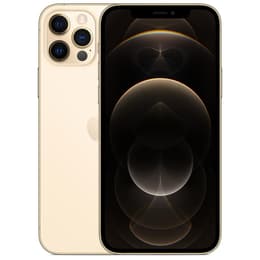
  • Display Technology and Size: The iPhone 12 Pro features a 6.1-inch Super Retina XDR OLED display, known for its deep blacks, excellent contrast, and accurate color reproduction. The OnePlus 10 Pro boasts a larger 6.7-inch Fluid AMOLED display with LTPO technology, offering vibrant colors and contrast.
  • Resolution and Clarity: The iPhone 12 Pro offers a resolution of 2532 x 1170 pixels at 460 ppi. The OnePlus 10 Pro has a higher QHD+ resolution of 3216 x 1440 pixels at 525 ppi, resulting in a slightly sharper image on its larger screen.
  • Brightness and Refresh Rate: Both displays offer good peak brightness levels, ensuring readability even in bright outdoor conditions, with the iPhone 12 Pro reaching up to 1200 nits peak brightness for HDR content. A notable difference is the refresh rate: the iPhone 12 Pro has a standard 60Hz refresh rate, while the OnePlus 10 Pro features an adaptive 120Hz refresh rate, which makes scrolling, animations, and gaming appear significantly smoother and more fluid.

Resolution

1170 x 2532

1440 x 3216

Screen type

Super Retina XDR OLED

LTPO2 Fluid AMOLED

Audiovisual

Both devices offer capable camera systems, but with different strengths and photographic characteristics.

  • Rear Camera System: The iPhone 12 Pro features a versatile triple 12-megapixel camera setup (wide, ultrawide, telephoto) complemented by a LiDAR scanner for improved autofocus in low light and enhanced augmented reality capabilities. The OnePlus 10 Pro comes with a triple camera system including a 48-megapixel main sensor, a 50-megapixel ultrawide, and an 8-megapixel telephoto lens, benefiting from Hasselblad color calibration.
  • Photography Performance: The iPhone 12 Pro excels in low-light photography with its Night mode and Smart HDR features, and offers advanced video recording capabilities including HDR video with Dolby Vision. The OnePlus 10 Pro's main camera captures good detail and accurate colors in daylight, and its ultrawide camera offers a very wide field of view. However, some users note inconsistencies across its multiple lenses and less effective low-light performance compared to some rivals.
  • Video Recording and Front Camera: The iPhone 12 Pro supports 4K video recording at up to 60 frames per second with Dolby Vision HDR. The OnePlus 10 Pro can record 4K video with good stabilization and also offers 8K video recording at 24 frames per second. For selfies, the iPhone 12 Pro has a 12MP front camera, while the OnePlus 10 Pro features a 32MP front camera.

Main camera

12 megapixels

48 megapixels

Front camera

12 megapixels

32 megapixels

Miscellaneous

Beyond core features, several practical elements differentiate these two smartphones.

  • Connectivity: Both devices support 5G cellular communications, offering faster download and upload speeds. They also include Wi-Fi 6 for faster wireless internet and Bluetooth 5.0 for connecting to accessories. The iPhone 12 Pro also features an Ultra Wideband chip for spatial awareness.
  • Ports and Biometrics: The iPhone 12 Pro uses a Lightning port for charging and data transfer. The OnePlus 10 Pro features a USB-C port, which is a more universal standard. For security, the iPhone 12 Pro relies on Face ID for facial recognition, while the OnePlus 10 Pro utilizes an in-display fingerprint sensor.
  • Design and Handling: The iPhone 12 Pro has a flat-edged design with a stainless steel band and weighs 189 grams. The OnePlus 10 Pro has a slightly larger form factor and weighs around 200 grams. Both designs aim for a premium feel, though the handling experience will differ due to their size and weight.

Weight

187 g

201 g

Screen size (in)

6.1

6.7

Mobile network

5G

5G

SIM card

Physical SIM + eSIM

Physical SIM

Carrier compatibility

Unlocked

Unlocked

Connector

Lightning

USB-C

User feedback for the iPhone 12 Pro often praises its consistent performance, robust build quality with the Ceramic Shield front cover, and the reliability of its iOS ecosystem. Users frequently highlight its strong camera performance, especially for video recording and low-light photography, and the longevity of software updates. Some common criticisms include its 60Hz display refresh rate, which feels less fluid compared to newer devices, and the continued use of the Lightning port.

The OnePlus 10 Pro is frequently lauded for its vibrant 120Hz AMOLED display, very fast charging speeds, and its capable main camera with Hasselblad tuning. Users appreciate the smooth Android experience and the overall performance for demanding applications. However, some users have noted inconsistencies in camera performance across its different lenses, particularly in low light, and some durability concerns regarding its structural integrity under specific stress.

Users prioritizing a highly optimized and long-supported software experience with consistent camera performance and a compact form factor may prefer the iPhone 12 Pro. Conversely, users who value a larger, smoother display with a high refresh rate, faster charging, and the flexibility of the Android operating system might lean toward the OnePlus 10 Pro. Both devices offer compelling features for different user needs, and considering a quality-assured refurbished option for either model can be a sustainable choice.
See all articles

Our recent comparisons