
Galaxy S10+ Vs Galaxy S9

Galaxy S10+
Galaxy S10+
Starting at

Refurbished price:£115.32

Versus £330.00 new

See options
Galaxy S9
Galaxy S9
Starting at

Refurbished price:£77.00

Versus £449.00 new

See options

Ratings

The Samsung Galaxy S9, released in March 2018, and the Samsung Galaxy S10 Plus, launched in March 2019, represent consecutive generations of Samsung's flagship smartphone line. While both devices offer a premium Android experience with Samsung's One UI, the Galaxy S10 Plus introduced several advancements, including a more expansive display, an enhanced camera system, and updated internal components. These differences cater to varying user preferences and needs.

Scores

Durability

The practical lifespan of a smartphone is influenced by its initial release, software support, and physical resilience. The Galaxy S9 and S10 Plus, while both robust, show differences in their long-term viability.

  • Release Timeline: The Galaxy S9 was released in March 2018, making it a year older than the Galaxy S10 Plus, which launched in March 2019. This age difference impacts their respective software support cycles.
  • Software Support: The Galaxy S9 shipped with Android 8.0 and received its last major operating system update to Android 10, with security updates concluding in April 2022. The Galaxy S10 Plus, starting with Android 9, received updates up to Android 12, with security updates for most models ending in March 2023. Both devices are now past their official software and security update periods, which can affect compatibility with newer applications and overall security.
  • Physical Durability: Both models feature an IP68 rating for water and dust resistance, indicating a high level of protection against environmental elements. The Galaxy S9 utilizes Corning Gorilla Glass 5 on both its front and back panels, while the Galaxy S10 Plus upgrades to Gorilla Glass 6 on the front for enhanced scratch and drop resistance, retaining Gorilla Glass 5 on the back.

Year of Release

2019

2018

Compatible with latest Update

No

No

OS

Android

Android

Foldable

No

No

Performance

Performance is a key differentiator, with the newer Galaxy S10 Plus offering a more capable experience for demanding tasks and multitasking.

  • Processing Power: The Galaxy S10 Plus features a newer generation processor, providing a noticeable boost in speed and efficiency compared to the Galaxy S9's processor. This translates to faster app loading times, smoother transitions, and more fluid performance in graphically intensive applications and games.
  • Multitasking Capability: The Galaxy S10 Plus typically comes with 8GB or 12GB of RAM, a significant increase over the Galaxy S9's 4GB of RAM. This larger memory capacity allows the S10 Plus to handle more applications simultaneously without slowdowns, making it better suited for users who frequently switch between apps.
  • Storage Options: The Galaxy S10 Plus offers more generous internal storage configurations, ranging from 128GB up to 1TB, compared to the Galaxy S9's options of 64GB, 128GB, or 256GB. Both devices support expandable storage via a microSD card, providing flexibility for users who need additional space for photos, videos, and applications.
  • Battery Capacity: The Galaxy S10 Plus is equipped with a larger 4100 mAh battery, offering extended usage times compared to the Galaxy S9's 3000 mAh battery. Users of the S9 often reported that its battery required more frequent charging, especially with heavy use.

Memory (GB)

8 GB

4 GB

Screen quality

The display is a central feature of any smartphone, and both devices offer vibrant viewing experiences, though with some key distinctions.

  • Display Technology: Both smartphones feature Samsung's Super AMOLED technology, known for its deep blacks and vibrant colors. The Galaxy S10 Plus, however, utilizes a Dynamic AMOLED panel, which offers improved color accuracy and HDR10+ support for a more dynamic viewing experience.
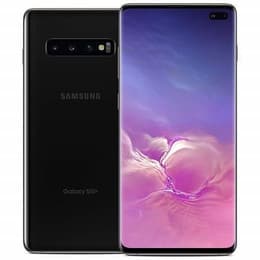
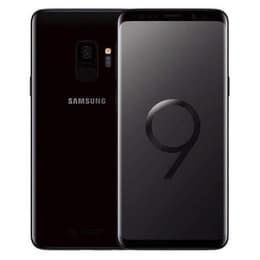
  • Size and Design: The Galaxy S9 features a 5.8-inch display with traditional bezels, while the Galaxy S10 Plus boasts a larger 6.4-inch display with a 'punch-hole' cutout for the front cameras. This design choice on the S10 Plus allows for a more immersive, edge-to-edge viewing experience with greater screen real estate.
  • Resolution and Clarity: Both devices offer Quad HD+ resolutions, providing sharp and detailed visuals. The Galaxy S9 has a resolution of 2960 x 1440 pixels, while the S10 Plus slightly increases this to 3040 x 1440 pixels. Both displays maintain a standard 60Hz refresh rate.
  • Brightness: The Galaxy S10 Plus offers higher peak brightness levels, which can improve visibility in bright outdoor conditions and enhance HDR content playback. The Galaxy S9 also features high peak brightness for its generation.

Resolution

1440 x 3040

1440 x 2960

Screen type

Dynamic AMOLED

Super AMOLED

Audiovisual

The camera systems on both devices were highlights at their respective launches, with the S10 Plus introducing a more versatile setup.

  • Rear Camera System: The Galaxy S9 features a single 12-megapixel rear camera with a variable aperture (f/1.5 and f/2.4), allowing it to adapt to different lighting conditions. The Galaxy S10 Plus significantly expands on this with a triple-lens rear camera system, including a 12-megapixel main sensor with variable aperture, a 12-megapixel telephoto lens for optical zoom, and a 16-megapixel ultra-wide lens for expansive shots.
  • Front Camera System: The Galaxy S9 is equipped with an 8-megapixel front-facing camera. The Galaxy S10 Plus features a dual front camera setup, comprising a 10-megapixel main sensor and an 8-megapixel depth sensor, which enhances portrait mode effects.
  • Photography and Video Features: Both phones are capable of recording 4K video. The S10 Plus introduces features like HDR10+ video recording and improved video stabilization, offering more advanced video capture capabilities. Both also include slow-motion video recording.
  • Audio Experience: Both the Galaxy S9 and S10 Plus come with stereo speakers tuned by AKG and support Dolby Atmos technology, providing an immersive audio experience for media consumption.

Main camera

12 megapixels

12 megapixels

Front camera

10 megapixels

8 megapixels

Miscellaneous

Beyond core features, several practical elements contribute to the overall user experience and differentiate these two models.

  • Biometric Security: The Galaxy S9 features a traditional rear-mounted fingerprint sensor, alongside an iris scanner and facial recognition for unlocking the device. The Galaxy S10 Plus introduces an ultrasonic in-display fingerprint sensor, offering a more modern and seamless unlocking experience, in addition to facial recognition.
  • Connectivity: The Galaxy S10 Plus supports Wi-Fi 6, offering faster and more efficient wireless internet connections compared to the Galaxy S9's Wi-Fi 5. Both devices include Bluetooth 5.0 for wireless accessory connections.
  • Ports and Charging: Both smartphones retain the 3.5mm headphone jack, a feature appreciated by many users, and utilize a USB-C port for charging and data transfer. The Galaxy S10 Plus also introduced Wireless PowerShare, allowing it to wirelessly charge other compatible devices.
  • Design and Handling: The Galaxy S10 Plus is slightly larger and heavier than the Galaxy S9, measuring 157.6 x 74.1 x 7.8 mm and weighing 175g, compared to the S9's 147.7 x 68.7 x 8.5 mm and 163g. This difference in size impacts one-handed usability, with the S9 offering a more compact form factor.

Weight

175 g

163 g

Screen size (in)

6.4

5.8

Mobile network

4G

4G

SIM card

Dual Physical SIM

Physical SIM

Carrier compatibility

Unlocked

Unlocked

The Samsung Galaxy S9 and Galaxy S10 Plus, while both once leading devices, cater to slightly different user priorities in today's market. User sentiment on platforms like Reddit often praises the Galaxy S10 Plus for its comprehensive feature set, with many considering it a 'peak Samsung' device due to its blend of design, innovation, and user-friendly features, including the headphone jack and microSD card slot. Common criticisms for the Galaxy S9 often revolved around its battery life, which some users found to be insufficient for a full day of heavy use.

For users prioritizing a more compact device with a traditional design and still capable core functions for everyday communication and media consumption, the Galaxy S9 could be a suitable option. Its smaller form factor might appeal to those who prefer easier one-handed operation. However, its older software support cycle means potential limitations with newer applications and security updates.

Conversely, users seeking a larger, more immersive display, a more versatile and advanced camera system, and better overall performance for demanding applications and multitasking will find the Galaxy S10 Plus better suited to their needs. Its in-display fingerprint sensor also offers a more modern unlocking experience. While both devices are no longer receiving official software updates, the S10 Plus benefits from being a year newer, potentially offering a slightly longer practical lifespan for general use.

When considering either of these models, exploring quality-assured refurbished options can provide an eco-friendly alternative, extending the life of these capable smartphones.


See all articles

Our recent comparisons