
Galaxy S9 Vs iPhone 12

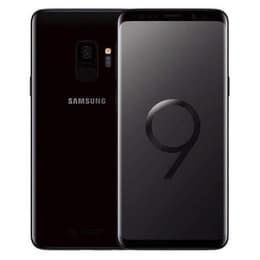
Galaxy S9
Galaxy S9
Starting at

Refurbished price:£77.00

Versus £449.00 new

See options
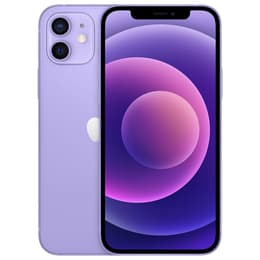
iPhone 12
iPhone 12
Starting at

Refurbished price:£139.00

Versus £649.00 new

See options

Ratings

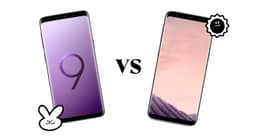
The Samsung Galaxy S9, released in March 2018, and the Apple iPhone 12, launched in October 2020, represent different generations and operating systems within the smartphone market. While the Galaxy S9 runs on the Android platform, the iPhone 12 operates on iOS. These devices offer distinct user experiences, primarily differing in their software ecosystems, camera capabilities, and overall performance due to their respective release timelines.

Scores

Durability

The longevity of a smartphone is influenced by its release timeline, software support, and repairability. The Galaxy S9 and iPhone 12, originating from different years, offer varying expectations in these areas.

  • Release Timeline and Software Support: The Galaxy S9, released in March 2018, launched with Android 8.0 and received its last official Android update to version 10. Its official software support concluded in April 2022, meaning it no longer receives new Android operating system updates or security patches from Samsung. In contrast, the iPhone 12, released in October 2020, launched with iOS 14 and is expected to receive software updates for several more years, typically around 5-6 years from its release date.
  • Repairability: The Galaxy S9 received an iFixit repairability score of 4 out of 10, indicating that it can be challenging to repair, particularly due to its glass construction and the use of adhesive, making battery and display replacements difficult. The iPhone 12, on the other hand, scored 6 out of 10 for repairability. While many of its components are modular, enhanced waterproofing measures can present some hindrances during repairs.
  • Practical Lifespan: Users of the Galaxy S9 have noted that while the device can still perform daily tasks smoothly, especially with custom ROMs, its official software support has ended, which can impact security and compatibility with newer applications over time. The iPhone 12, being a newer device with ongoing software support, offers a longer expected practical lifespan for users who prioritize the latest features and security updates.

Year of Release

2018

2020

Compatible with latest Update

No

Yes

OS

Android

iOS

Foldable

No

No

Performance

Performance in smartphones encompasses how smoothly applications run, the device's responsiveness, and its ability to handle demanding tasks, all of which are influenced by internal hardware and software optimization.

  • Processor Capabilities and Responsiveness: The Galaxy S9, with its internal processing unit, was considered a high-performance device at its release, capable of handling everyday tasks and even some demanding applications. Users have reported that it still runs smoothly for daily use, especially when optimized with custom software. The iPhone 12 features a more recent generation processor, which provides a noticeable boost in speed and efficiency. This allows for smoother multitasking, faster app loading times, and a more fluid experience with graphically intensive games and applications.
  • Storage Options: Both devices offer various internal storage configurations. The Galaxy S9 was available with 64GB, 128GB, or 256GB of internal storage, with the added flexibility of expandable storage via a microSD card. The iPhone 12 also comes in 64GB, 128GB, and 256GB options, but it does not support expandable storage.
  • Battery Behavior: The Galaxy S9 is equipped with a 3000 mAh battery. User experiences suggest that it typically requires daily charging, with some users finding its battery life to be average or less than ideal for heavy use. The iPhone 12 has a 2815 mAh battery. While its processor is more power-efficient, user feedback often points to its battery life as a concern, particularly when utilizing 5G connectivity, which can lead to more frequent charging.

Memory (GB)

4 GB

4 GB

Screen quality

The display is a primary interface for smartphone interaction, and both the Galaxy S9 and iPhone 12 offer high-quality viewing experiences with distinct characteristics.

  • Display Technology and Resolution: The Galaxy S9 features a 5.8-inch Super AMOLED display with a resolution of 2960 x 1440 pixels. This technology is known for producing deep blacks and vibrant colors. The iPhone 12 comes with a 6.1-inch Super Retina XDR OLED display, offering a resolution of 2532 x 1170 pixels. This OLED panel also delivers excellent contrast, deep blacks, and vibrant color reproduction.
  • Brightness and Clarity: Both devices provide clear and sharp visuals suitable for various content consumption. The iPhone 12's display generally offers higher peak brightness, which can improve visibility in bright outdoor conditions. The Galaxy S9's screen, while bright, may struggle slightly more in direct sunlight according to some user reports.
  • Refresh Rate and Viewing Experience: Both the Galaxy S9 and iPhone 12 feature a standard 60Hz refresh rate, providing a smooth experience for typical scrolling and video playback. The larger screen size of the iPhone 12 offers a slightly more expansive viewing area compared to the Galaxy S9.

Resolution

1440 x 2960

1170 x 2532

Screen type

Super AMOLED

Super Retina XDR OLED

Audiovisual

Camera capabilities are a significant factor for many smartphone users, and both the Galaxy S9 and iPhone 12 offer robust systems for capturing photos and videos, albeit with different strengths.

  • Camera System Capabilities: The Galaxy S9 features a single 12-megapixel rear camera with a variable aperture (f/1.5-f/2.4), allowing it to adjust to different lighting conditions. It also includes optical image stabilization (OIS). The front camera is 8 megapixels. The iPhone 12 is equipped with a dual 12-megapixel rear camera system, comprising a wide lens and an ultrawide lens, both with optical image stabilization on the wide lens. Its front camera is also 12 megapixels.
  • Low-Light and Everyday Photography: The Galaxy S9 was praised for its low-light performance at its release, thanks to its variable aperture, which helps capture more light in darker environments. The iPhone 12 shows significant improvements in low-light photography, featuring Night mode across all its cameras (wide, ultrawide, and front), which enhances detail and reduces noise in challenging lighting conditions. In good lighting, both phones produce detailed images with good color reproduction.
  • Video Recording and Audio: Both devices are capable of recording high-quality video. The iPhone 12 supports Dolby Vision HDR video recording, offering enhanced dynamic range and color in videos. User feedback for the Galaxy S9 indicates good sound quality from its stereo speakers.

Main camera

12 megapixels

12 megapixels

Front camera

8 megapixels

12 megapixels

Miscellaneous

Beyond core features, several practical elements contribute to the overall user experience and daily usability of these smartphones.

  • Connectivity Options: The Galaxy S9 supports 4G LTE, Wi-Fi 5, and Bluetooth 5.0. The iPhone 12 offers more advanced connectivity, including 5G capabilities, Wi-Fi 6, and Bluetooth 5.0, providing faster cellular data speeds where 5G networks are available.
  • Ports and Biometrics: The Galaxy S9 includes a USB-C port for charging and data transfer, along with a 3.5mm headphone jack, which is absent on the iPhone 12. For biometric security, the Galaxy S9 features a rear-mounted fingerprint sensor and an iris scanner, in addition to face recognition. The iPhone 12 relies solely on Face ID for secure authentication.
  • Build Materials and Durability Features: Both phones feature a glass front and back with an aluminum frame. The iPhone 12 introduces a Ceramic Shield front cover, which Apple claims offers improved drop performance. Both devices carry an IP68 rating for water and dust resistance. The Galaxy S9's durability was noted to be robust in bend and scratch tests, though its glass construction makes it susceptible to damage from hard falls.

Weight

163 g

164 g

Width

6,87 cm

7.15 cm

Height

14,77 cm

14.67 cm

Depth

0,85 cm

0.74 cm

Screen size (in)

5.8

6.1

Mobile network

4G

5G

SIM card

Physical SIM

Physical SIM + eSIM

Carrier compatibility

Unlocked

Unlocked

Connector

USB-C + Jack 3.5mm

Lightning

The Samsung Galaxy S9 and iPhone 12 cater to different user preferences, largely shaped by their operating systems and release dates. Users often praise the Galaxy S9 for its vibrant AMOLED display, the inclusion of a headphone jack, and expandable storage, which are features valued by those who prefer more hardware flexibility. Some common criticisms, particularly in later years, have revolved around its battery life and the cessation of official software updates, which can lead to concerns about long-term security and app compatibility.

The iPhone 12, on the other hand, is frequently lauded for its powerful processor, excellent camera system with enhanced low-light capabilities, and the consistent, long-term software support provided by Apple. However, user feedback often highlights its battery life, especially when 5G is actively used, as a point of concern. The absence of a headphone jack and expandable storage are also noted by some users accustomed to Android devices.

For users prioritizing an open ecosystem, expandable storage, and the convenience of a headphone jack, the Galaxy S9 could be a suitable choice, particularly if they are comfortable with custom software solutions for extended longevity. Conversely, individuals seeking a device with a more modern processor, superior camera performance, and guaranteed long-term software updates will find the iPhone 12 to be a compelling option. When considering either device, exploring quality-assured refurbished options can provide an eco-friendly alternative for making an informed and sustainable choice.

See all articles

Our recent comparisons