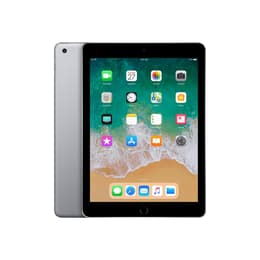
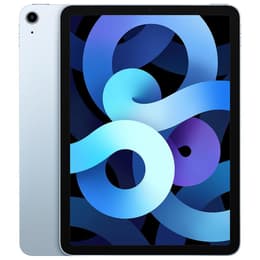

iPad 6 (2018, A10 series) Vs iPad Air 4 (2020, A14 series)

iPad 6 (2018, A10 series)
Starting at

Refurbished price:£55.00

Versus £399.00 new

See options
iPad Air 4 (2020, A14 series)
Starting at

Refurbished price:£215.00

Versus £579.00 new

See options

Ratings

The iPad 2018 (6th generation) and the iPad Air 2020 (4th generation) are two distinct tablet offerings from Apple, released in March 2018 and October 2020, respectively. While both run on Apple's iPadOS, the iPad Air 2020 introduces a more modern design, a significantly more powerful internal processor, and enhanced display technology compared to its predecessor. These differences cater to varying user needs, from casual use to more demanding creative and professional tasks.

Scores

Durability

The longevity of a tablet is influenced by its release timeline, software support, and physical durability. The iPad Air 2020, being a newer device, naturally benefits from a longer expected period of software updates and overall practical lifespan.

  • Release Timeline: The iPad 2018 was released in March 2018, while the iPad Air 2020 followed in October 2020, giving the Air a two-and-a-half-year advantage in its lifecycle.
  • OS Support: The iPad 2018 is expected to receive iPadOS updates up to iPadOS 17, with its last official update likely around August 2025. The iPad Air 2020, starting with iPadOS 14, is anticipated to support future iPadOS versions for a longer duration, potentially extending its usability for several more years.
  • Repairability: Both models generally present challenges for repair due to Apple's construction methods, often involving strong adhesives. The iPad 2018 received a low repairability score of 2 out of 10 from iFixit, primarily due to the extensive use of glue, though its non-laminated display can make screen repairs less complex. The iPad Air 2020, with its more integrated design, is likely to have similar repair complexities.

Year of Release

2018

2020

Compatible with latest Update

No

Yes

OS

iPadOS

iPadOS

Maximum Operating System supported

iPadOS 17

iPadOS 18

Performance

Performance is a key differentiator between these two tablets, largely driven by their respective internal components. The iPad Air 2020 offers a notable upgrade in processing power, impacting overall responsiveness and capability for demanding applications.

  • Processor Capabilities: The iPad 2018 is equipped with a processor that handles everyday tasks, web browsing, and most applications smoothly. The iPad Air 2020 features a more advanced processor, providing significantly faster CPU and GPU performance, which translates to quicker app loading, smoother multitasking, and enhanced capabilities for graphics-intensive games and professional applications.
  • Multitasking and Responsiveness: With 2 GB of RAM, the iPad 2018 is capable of basic multitasking, but may show limitations with numerous apps open or when switching between heavy applications. The iPad Air 2020, with 4 GB of RAM, offers a more fluid multitasking experience, allowing users to run more applications simultaneously without noticeable slowdowns.
  • Storage Options: The iPad 2018 was available with 32 GB or 128 GB of internal storage. The iPad Air 2020 offers larger base storage options, starting at 64 GB and going up to 256 GB, providing more space for apps, media, and documents.

Memory (GB)

2 GB

4 GB

Processor

Apple A10 Fusion

Apple A14 Bionic

Screen quality

The visual experience on a tablet is heavily influenced by its display technology, and here the iPad Air 2020 presents a more advanced screen compared to the iPad 2018.

  • Display Technology and Size: The iPad 2018 features a 9.7-inch LED-backlit IPS display. The iPad Air 2020 boasts a larger 10.9-inch Liquid Retina IPS LCD display, offering a more expansive viewing area within a similar physical footprint due to reduced bezels.
  • Resolution and Clarity: Both tablets offer a resolution of 264 pixels per inch (ppi), providing sharp text and clear images. The iPad 2018 has a 2048 x 1536 pixel resolution, while the iPad Air 2020 has a 2360 x 1640 pixel resolution, maintaining similar pixel density across their different screen sizes.
  • Advanced Display Features: The iPad Air 2020's Liquid Retina display includes True Tone technology for adaptive white balance and Wide Color (P3) for more vibrant and accurate colors. It also features a fully laminated display and an anti-reflective coating, which reduces glare and improves the viewing experience, especially in bright environments. The iPad 2018's display is not fully laminated and lacks an anti-reflective coating, which can result in a slight air gap between the glass and the display, and more reflections.

Resolution

2048 x 1536

2360 x 1640

True Tone

No

Yes

Pro-Motion

No

No

Screen type

Retina display

Liquid Retina display

Pixel density

264ppp

264ppp

Brightness

500 nits brightness

500 nits brightness

Sound quality

Speakers

Stereo speakers

Stereo speakers

Audiovisual

While tablets are not typically primary photography devices, their cameras are useful for video calls, scanning documents, and casual photography. The iPad Air 2020 offers a more capable camera system for both photos and video.

  • Rear Camera Performance: The iPad 2018 includes an 8-megapixel rear camera with an f/2.4 aperture, capable of recording 1080p video at 30 frames per second. The iPad Air 2020 features a 12-megapixel wide camera with a wider f/1.8 aperture, which improves low-light performance and captures more detail. It also supports 4K video recording at various frame rates (24, 30, or 60 fps).
  • Front Camera for Video Calls: For video conferencing, the iPad 2018 has a 1.2-megapixel front-facing camera that records 720p video. The iPad Air 2020 significantly upgrades this to a 7-megapixel front camera with an f/2.2 aperture, capable of 1080p video recording at 30 or 60 fps, providing clearer and sharper visuals for video calls.
  • Audio Experience: Both devices offer stereo speakers. The iPad Air 2020 features upgraded stereo speakers, providing a more immersive audio experience for media consumption.

Miscellaneous

Beyond core performance and display, several practical features contribute to the overall user experience, including connectivity, physical design, and accessory support.

  • Connectivity and Ports: The iPad 2018 supports Wi-Fi 802.11ac and Bluetooth 4.2, and uses a Lightning port for charging and accessories. The iPad Air 2020 upgrades to Wi-Fi 6 (802.11ax) and Bluetooth 5.0 for faster and more reliable wireless connections. Crucially, it adopts a USB-C port, offering broader compatibility with external accessories and faster data transfer speeds.
  • Design and Biometrics: The iPad 2018 retains the classic iPad design with a home button that integrates Touch ID. The iPad Air 2020 features a more modern, all-screen design with thinner bezels, and moves the Touch ID sensor to the power button on the top edge of the device.
  • Accessory Support: The iPad 2018 supports the first-generation Apple Pencil. The iPad Air 2020 supports the second-generation Apple Pencil, which attaches magnetically and charges wirelessly, and is also compatible with the Magic Keyboard for a more laptop-like experience.

Weight

469 g

458 g

Width

16.95 cm

17.85 cm

Height

24 cm

24.76 cm

Depth

0.75 cm

0.61 cm

Screen size (in)

9.7

10.9

Network

Wi-Fi

Wi-Fi

Carrier compatibility

Without SIM Port

Without SIM Port

Wi-Fi technology

Wi-Fi 6 802.11a/b/g/n/ac

Wi-Fi 6 802.11ax

Bluetooth Version

Bluetooth 4.2

Bluetooth 5.0

Face ID

No

No

Touch ID

Yes

Yes

Connector

Lightning connector

USB Type-C

User sentiment for the iPad 2018 often highlights its reliability and suitability for general use, especially for students or those new to the iPad ecosystem. It is frequently praised for offering a solid tablet experience for everyday tasks like web browsing, email, and media consumption. Criticisms sometimes point to its aging design and less vibrant display compared to newer models.

The iPad Air 2020, on the other hand, is widely lauded for its modern design, powerful performance, and enhanced display, often being seen as a more versatile device capable of handling more demanding creative and productivity workflows. Users appreciate its improved camera system and the convenience of USB-C connectivity. Some minor criticisms have occasionally touched upon its battery life in specific heavy-use scenarios, though overall it generally meets expectations for a full day of use.

Users prioritizing a straightforward, dependable tablet for basic tasks and note-taking with the first-generation Apple Pencil may find the iPad 2018 well-suited to their needs. Conversely, users who require more processing power for creative applications, a more immersive display, a modern design, and compatibility with the second-generation Apple Pencil and Magic Keyboard will likely lean toward the iPad Air 2020. Both models offer a reliable iPadOS experience, and considering a quality-assured refurbished option for either can be an eco-friendly alternative to purchasing new.


See all articles

Our recent comparisons