

iPad 6 (2018, A10 series) Vs iPad 7 (2019, A10 series)

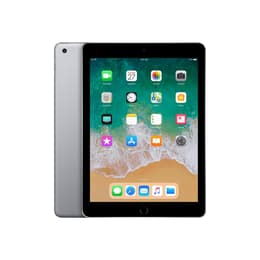
iPad 6 (2018, A10 series)
Starting at

Refurbished price:£55.00

Versus £399.00 new

See options
iPad 7 (2019, A10 series)
Starting at

Refurbished price:£78.00

Versus £349.00 new

See options

Ratings

The iPad 2018 (6th generation) and iPad 2019 (7th generation) are two consecutive iterations of Apple's entry-level tablet line, both featuring the A10 Fusion chip. While they share a similar design philosophy and core processing power, the iPad 2019 introduces a slightly larger display and increased RAM, alongside enhanced accessory compatibility. Both models run on Apple's iPadOS, offering a consistent user experience across the ecosystem.

Scores

Durability

When considering the practical lifespan of these tablets, their release timelines and software support are key factors.

  • Release Timeline: The iPad 2018 was released in March 2018, while the iPad 2019 followed in September 2019. This one-year difference directly impacts their software longevity. [4, 11]
  • OS Support Duration: The iPad 2018 received its last major operating system update with iPadOS 17. [5, 27] The iPad 2019, being a year newer, supports iPadOS 18, which is its final major OS version. [3, 6, 20, 34, 45] This means the iPad 2019 will continue to receive security updates and compatibility with newer applications for a longer period.
  • Expected Practical Lifespan: Users of the iPad 2018 may start to experience limitations with newer apps and features as of early 2026, while the iPad 2019 offers an extended window of full compatibility. Both models maintain a robust build quality, typical of Apple products, and their repairability is generally similar, though the lack of display lamination can make screen repairs less complex. [20]

Year of Release

2018

2019

Compatible with latest Update

No

Yes

OS

iPadOS

iPadOS

Maximum Operating System supported

iPadOS 17

iPadOS 18

Performance

Both the iPad 2018 and iPad 2019 are powered by the A10 Fusion chip, but a key internal difference affects their multitasking capabilities.

  • Processor Capabilities: Both tablets handle everyday tasks such as web browsing, email, and media consumption smoothly. The A10 Fusion chip provides sufficient power for light gaming and productivity applications. [13, 17, 32]
  • RAM Implications: The iPad 2018 features 2GB of RAM, which can lead to apps reloading more frequently when switching between them, especially with several applications open simultaneously. [5, 9, 33] The iPad 2019, however, includes 3GB of RAM, offering a noticeable improvement in multitasking efficiency and the ability to keep more apps active in the background without refreshing. [3, 6, 10, 15, 20, 33]
  • Battery Behavior: Both models are equipped with a 32.4-watt-hour battery, designed to provide up to 10 hours of web surfing, video watching, or music listening on a single charge. [1, 2, 10, 12, 16, 23] Real-world usage reports generally align with this, with many users experiencing a full day of moderate use. [17, 19, 24]

Memory (GB)

2 GB

3 GB

Processor

Apple A10 Fusion

Apple A10 Fusion

Screen quality

The display is a significant point of divergence between these two iPad models, primarily in size.

  • Display Technology and Size: The iPad 2018 features a 9.7-inch Retina LED-backlit Multi-Touch display, while the iPad 2019 upgrades to a 10.2-inch Retina LED-backlit Multi-Touch display. [4, 12, 15, 20, 25, 26, 32] Both utilise IPS technology, providing wide viewing angles.
  • Resolution and Clarity: Both displays maintain a pixel density of 264 pixels per inch (ppi), ensuring sharp text and clear images. The iPad 2018 has a resolution of 2048x1536 pixels, and the iPad 2019 has a resolution of 2160x1620 pixels, scaling up with the larger screen size to maintain the same clarity. [1, 2, 4]
  • Brightness and Features: Both models offer a typical brightness of 500 nits, which is adequate for indoor use and generally sufficient for outdoor viewing, though direct sunlight can still pose challenges. [2, 4, 12, 26, 39] Neither display is fully laminated, meaning there is a slight gap between the glass and the LCD panel, and they lack an anti-reflective coating. [10, 12, 15, 20, 43]

Resolution

2048 x 1536

2160 x 1620

True Tone

No

No

Pro-Motion

No

No

Screen type

Retina display

Retina display

Pixel density

264ppp

264ppp

Brightness

500 nits brightness

500 nits brightness

Sound quality

Speakers

Stereo speakers

Stereo speakers

Audiovisual

The camera systems on both the iPad 2018 and iPad 2019 are identical, offering functional capabilities for everyday use.

  • Camera System Capabilities: Both tablets feature an 8-megapixel rear camera capable of recording 1080p HD video at 30 frames per second. The front-facing camera on both is a 1.2-megapixel FaceTime HD camera, suitable for video calls and basic selfies, recording 720p video. [1, 2, 4, 10, 15, 25]
  • Photography Performance: In well-lit conditions, both cameras can capture clear photos and videos. However, their performance in low-light environments is limited, and they do not offer advanced photographic features found in more recent iPad models.
  • Audio Experience: Both devices include stereo speakers, providing a decent audio output for media consumption. [9, 10, 11, 39] The microphone quality is suitable for video calls and voice recordings.

Miscellaneous

Beyond core performance and display, several practical features differentiate these two iPad models.

  • Connectivity Options: Both iPads support Wi-Fi (802.11ac with dual-band 2.4GHz and 5GHz) and Bluetooth 4.2. Cellular models of both generations offer LTE connectivity, with the iPad 2019 supporting Gigabit-class LTE for potentially faster mobile data speeds in compatible areas. [1, 2, 10, 15, 20, 25]
  • Port Types and Sensors: Both devices retain the Lightning port for charging and data transfer, as well as a 3.5mm headphone jack. [5, 9, 10, 11, 39] They both feature a Touch ID fingerprint sensor integrated into the home button for secure authentication. [9, 25, 39]
  • Physical Design and Accessory Support: The iPad 2018 has dimensions of 240 x 169.5 x 7.5 mm and weighs around 469 grams (Wi-Fi model). [1, 4, 11] The iPad 2019 is slightly larger and heavier due to its increased screen size, measuring 250.6 x 174.1 x 7.5 mm and weighing approximately 483 grams (Wi-Fi model). [2, 4, 7, 12] A notable addition to the iPad 2019 is the Smart Connector, which allows for direct attachment and power of accessories like the Apple Smart Keyboard. [3, 6, 10, 13, 20, 24, 25] The iPad 2018 does not have this connector, relying solely on Bluetooth for external keyboards. [9, 33]

Weight

469 g

483 g

Width

16.95 cm

17.41 cm

Height

24 cm

25.06 cm

Depth

0.75 cm

0.75 cm

Screen size (in)

9.7

10.2

Network

Wi-Fi

Wi-Fi

Carrier compatibility

Without SIM Port

Without SIM Port

Wi-Fi technology

Wi-Fi 6 802.11a/b/g/n/ac

Wi-Fi 6 802.11a/b/g/n/ac

Bluetooth Version

Bluetooth 4.2

Bluetooth 4.2

Face ID

No

No

Touch ID

Yes

Yes

Connector

Lightning connector

Lightning connector

User feedback for both the iPad 2018 and iPad 2019 generally highlights their reliability for everyday tasks. The iPad 2018 is often praised for its solid performance for basic media consumption and web browsing, with many users finding it perfectly adequate for these purposes even years after its release. [18, 29, 37] However, some users have noted that its 2GB of RAM can lead to app reloads and a less fluid multitasking experience on newer iPadOS versions. [27, 33] The iPad 2019 receives similar praise for its general performance, with the added benefit of a larger screen and 3GB of RAM making multitasking smoother. [17, 21, 24] Criticisms for both models often revolve around the base storage option (32GB) being insufficient for many users, and the non-laminated display, which can create a slight visual gap between the glass and the screen. [13, 15, 20]

Users prioritizing a more compact form factor and who primarily use their tablet for content consumption, light browsing, and basic applications may find the iPad 2018 well-suited to their needs. Its slightly smaller screen makes it marginally more portable. Conversely, those who value a larger display for media, more efficient multitasking, or require compatibility with the Apple Smart Keyboard for productivity tasks will likely prefer the iPad 2019. The additional year of software support also makes the iPad 2019 a more future-proof choice for users seeking longer device longevity. Both models offer a dependable tablet experience, and opting for a quality-assured refurbished option can be an eco-friendly alternative for either device.

See all articles

Our recent comparisons