
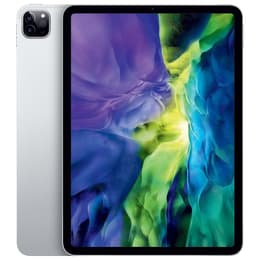

iPad mini 5 (2019, A12 series) Vs iPad Pro (2020, A12 series)

iPad mini 5 (2019, A12 series)
Starting at

Refurbished price:£104.00

Versus £529.00 new

See options
iPad Pro (2020, A12 series)
Starting at

Refurbished price:£296.00

Versus £769.00 new

See options

Ratings

The iPad Mini 2019 and the iPad Pro 2020 represent distinct approaches within Apple's tablet lineup, catering to different user needs and preferences. Released in March 2019, the iPad Mini 2019 offers a compact form factor, while the iPad Pro 2020, launched in March 2020, provides a larger, more powerful experience. Both devices run on Apple's iPadOS, ensuring a consistent software ecosystem, but they diverge significantly in design, display technology, and overall capabilities.

The primary differentiators lie in their physical size, display features, and processing power, with the iPad Pro 2020 offering a more advanced and expansive platform for demanding tasks, while the iPad Mini 2019 focuses on portability and ease of handling.

Scores

Durability

When considering the longevity of these tablets, their release timelines and Apple's typical software support cycles are key factors. The iPad Mini 2019 was released in March 2019, while the iPad Pro 2020 followed a year later in March 2020. Both devices are expected to receive iPadOS updates for several years from their respective launch dates, with the iPad Pro 2020 likely benefiting from an additional year of major software support due to its later release.

  • Software Support: The iPad Mini 2019 launched with iOS 12.2 and is upgradeable to iPadOS 26.3.1 as of March 2026, indicating a strong commitment to long-term software updates. The iPad Pro 2020, starting with iPadOS 13.4, also supports iPadOS 26.x, suggesting a similar, if not slightly longer, update lifespan.
  • Repairability: The iPad Pro 2020 received a repairability score of 3 out of 10 from iFixit, indicating that while generally repairable, it can be challenging. Information on the iPad Mini 2019's repairability is less explicit in public records, but Apple tablets typically share similar repair complexities.
  • Practical Lifespan: Both tablets are built with durable materials, but the iPad Pro 2020's more modern design and components may offer a slightly longer practical lifespan for users who push their devices with the latest applications.

Year of Release

2019

2020

Compatible with latest Update

Yes

Yes

OS

iPadOS

iPadOS

Maximum Operating System supported

iPadOS 18

iPadOS 18

Performance

The performance capabilities of these two tablets, while both robust, are tailored to different usage scenarios, primarily influenced by their respective processors and RAM configurations.

  • Processing Power: The iPad Mini 2019 is equipped with an A12 Bionic chip, featuring a hexa-core CPU (two high-performance and four high-efficiency cores) and 3GB of RAM. This configuration provides smooth performance for everyday tasks, web browsing, and most applications. The iPad Pro 2020, on the other hand, houses an A12Z Bionic chip, which includes an octa-core CPU (four high-performance and four high-efficiency cores) and a more powerful 8-core GPU, coupled with 6GB of RAM across all storage options. This enhanced hardware allows the iPad Pro 2020 to handle more demanding applications, complex multitasking, and graphics-intensive tasks with greater ease.
  • Multitasking and Responsiveness: Users will find the iPad Mini 2019 responsive for typical tablet use, but the iPad Pro 2020's increased RAM and more capable processor contribute to a noticeably smoother experience when switching between multiple heavy applications or engaging in professional-grade creative work.
  • Storage Options: The iPad Mini 2019 is available with 64GB or 256GB of internal storage. The iPad Pro 2020 offers more generous storage configurations, starting at 128GB and going up to 1TB, providing ample space for large files, extensive media libraries, and numerous applications.
  • Battery Behavior: The iPad Mini 2019, with its 5124 mAh battery, typically offers around 10-12 hours of usage for tasks like web surfing or video playback. The iPad Pro 2020, featuring a larger 9720 mAh battery, generally provides 8-10 hours of use, though this can decrease with intensive applications or high screen brightness.

Memory (GB)

3 GB

6 GB

Processor

Apple A12 Bionic

Apple A12Z Bionic

Screen quality

The visual experience is a significant differentiator between these two tablets, with each offering distinct display technologies and features.

  • Display Technology and Size: The iPad Mini 2019 features a 7.9-inch Retina IPS LCD display with a resolution of 2048x1536 pixels, resulting in a pixel density of 326 pixels per inch (ppi). This provides a clear and sharp image for reading and general content consumption. The iPad Pro 2020 comes in two sizes: an 11-inch and a 12.9-inch Liquid Retina IPS LCD display, both offering a resolution of 2732x2048 pixels (for the 12.9-inch model) or 2388x1668 pixels (for the 11-inch model) at 264 ppi.
  • Brightness and Color: Both tablets feature Wide Color (P3) and True Tone technology for accurate color reproduction and automatic white balance adjustment to ambient light. The iPad Mini 2019 offers a maximum brightness of 500 nits. The iPad Pro 2020 provides a higher peak brightness of 600 nits, which can be beneficial for outdoor use or in brightly lit environments.
  • Refresh Rate: A key distinction is the refresh rate. The iPad Mini 2019 has a standard 60Hz refresh rate. The iPad Pro 2020, however, features ProMotion technology, offering an adaptive refresh rate up to 120Hz. This results in smoother scrolling, more fluid animations, and a more responsive feel, particularly noticeable during gaming or when using the Apple Pencil.

Resolution

2048 x 1536

2388 x 1668

True Tone

Yes

Yes

Pro-Motion

No

Yes

Screen type

Retina display

Liquid Retina display

Pixel density

326ppp

264ppp

Brightness

500 nits brightness

600 nits brightness max

Sound quality

Speakers

Stereo speakers

Four speaker audio

Audiovisual

The camera systems on the iPad Mini 2019 and iPad Pro 2020 reflect their intended uses, with the Pro model offering a more advanced setup for creative and augmented reality applications.

  • Rear Camera System: The iPad Mini 2019 features a single 8-megapixel rear camera capable of recording 1080p video. This camera is suitable for document scanning and casual photography in good lighting conditions. The iPad Pro 2020 boasts a more versatile dual-camera system, including a 12-megapixel wide lens and a 10-megapixel ultra-wide lens, alongside a LiDAR scanner. This setup allows for higher quality photos, 4K video recording at up to 60 frames per second, and enhanced augmented reality (AR) experiences due to the LiDAR scanner's depth-sensing capabilities.
  • Front Camera and Video Calls: Both tablets include a 7-megapixel front-facing camera, which is well-suited for video calls and selfies. The iPad Mini 2019's front camera records 1080p video. The iPad Pro 2020's front camera also supports 1080p video and benefits from the Face ID sensors for improved depth information in portrait mode selfies.
  • Audio Experience: The iPad Mini 2019 has stereo speakers located at the bottom, which provide clear audio but may not offer a true stereo effect in landscape orientation. The iPad Pro 2020 features a quad-speaker system, delivering a more immersive and balanced audio experience, particularly for media consumption. Both devices include dual microphones for improved audio capture during calls and recordings.

Miscellaneous

Beyond core performance and display, several practical elements differentiate the user experience of these two tablets.

  • Connectivity: Both devices support Wi-Fi and Bluetooth 5.0. The iPad Mini 2019 supports Wi-Fi 802.11 a/b/g/n/ac. The iPad Pro 2020 features Wi-Fi 6 (802.11ax), offering potentially faster and more stable wireless connections in compatible environments. Both are available in Wi-Fi only and Wi-Fi + Cellular models.
  • Ports and Biometrics: The iPad Mini 2019 retains the traditional Lightning port and a 3.5mm headphone jack, along with a Touch ID fingerprint sensor integrated into the home button. The iPad Pro 2020 adopts a USB-C port, which offers greater versatility for connecting to external displays and accessories, but it lacks a headphone jack. For security, the iPad Pro 2020 utilizes Face ID for facial recognition.
  • Design and Handling: The iPad Mini 2019 is notably compact and lightweight, measuring 203.2 x 134.8 x 6.1 mm and weighing approximately 300.5g (Wi-Fi model), making it highly portable and easy to hold in one hand. The iPad Pro 2020, with its larger screen sizes (11-inch or 12.9-inch), has a more expansive, all-screen design. The 12.9-inch model weighs 641g and measures 280.6 x 214.9 x 5.9 mm, offering more screen real estate but being less suited for one-handed use.
  • Accessory Support: The iPad Mini 2019 supports the first-generation Apple Pencil. The iPad Pro 2020 supports the second-generation Apple Pencil, which attaches magnetically and charges wirelessly, and is also compatible with the Magic Keyboard, transforming it into a more laptop-like device.

Weight

300 g

471 g

Width

13.48 cm

17.85 cm

Height

23.32 cm

24.76 cm

Depth

0.61 cm

0.59 cm

Screen size (in)

7.9

11

Network

Wi-Fi

Wi-Fi

Carrier compatibility

Without SIM Port

Without SIM Port

Wi-Fi technology

Wi-Fi 6 802.11a/b/g/n/ac

Wi-Fi 6 802.11ax

Bluetooth Version

Bluetooth 5.0

Bluetooth 5.0

Face ID

No

Yes

Touch ID

Yes

No

Connector

Lightning connector

USB Type-C

User sentiment for the iPad Mini 2019 often highlights its exceptional portability and the convenience of its compact size, making it a preferred choice for reading, casual browsing, and note-taking on the go. Users frequently praise its sharp Retina display and solid battery life for its size, often exceeding Apple's stated 10 hours in typical use. Criticisms sometimes point to its dated design with larger bezels and the Lightning port, as well as the use of the first-generation Apple Pencil, which requires a less elegant charging method.

The iPad Pro 2020 is generally lauded for its powerful performance, especially for demanding creative tasks like video editing and graphic design, thanks to its A12Z Bionic chip and 6GB of RAM. Its Liquid Retina display with ProMotion (120Hz refresh rate) is a consistent highlight, offering a smooth and immersive visual experience. The USB-C port and support for the second-generation Apple Pencil and Magic Keyboard are also frequently cited as major advantages for productivity. Some users, however, note that its battery life, while good, can drain quickly under heavy load, and its larger size can be less convenient for casual, handheld use.

Users prioritizing a highly portable device for content consumption, reading, and light productivity, who appreciate a traditional home button and headphone jack, may prefer the iPad Mini 2019. Its smaller form factor makes it ideal for travel or quick access. Conversely, users who require a powerful tablet for professional applications, extensive multitasking, or a more immersive media and gaming experience will find the iPad Pro 2020 better suited to their needs. Its advanced display, superior processing power, and broader accessory support cater to those seeking a more versatile and capable device. Both models remain viable options, and considering a quality-assured refurbished option for either can be an eco-friendly alternative to purchasing new.

See all articles

Our recent comparisons