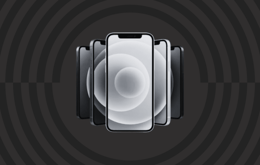
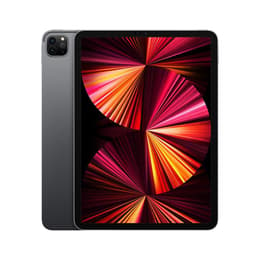

iPad 7 (2019, A10 series) Vs iPad Pro (2021, M1 series)

iPad 7 (2019, A10 series)
Starting at

Refurbished price:£78.00

Versus £349.00 new

See options
iPad Pro (2021, M1 series)
Starting at

Refurbished price:£359.00

Versus £749.00 new

See options

Ratings

The iPad 2019, also known as the 7th generation iPad, and the iPad Pro 2021 (M1 Series) are two distinct tablet offerings from Apple, released two years apart. While both run on Apple's iPadOS, they cater to different user needs, with the iPad Pro 2021 featuring significantly more advanced processing power, a superior display, and enhanced connectivity options compared to the more foundational iPad 2019.

Scores

Durability

When considering the longevity of these devices, their release timelines and hardware differences play a significant role in their expected practical lifespan and software support.

  • Release Timeline and OS Support: The iPad 2019 was released in September 2019, while the iPad Pro 2021 launched in May 2021. Given Apple's typical software support cycles, the iPad Pro 2021 is expected to receive major iPadOS updates for a longer period, likely extending its functional life by at least two years beyond the iPad 2019. The iPad 2019 originally shipped with iPadOS 13.1, and the iPad Pro 2021 with iPadOS 14.5.1.
  • Repairability and Practical Lifespan: Both devices are designed with Apple's build quality, but the iPad Pro 2021's more advanced components, particularly its powerful processor, mean it will handle demanding applications and future software features more effectively for a longer duration. While specific repairability scores can vary, the general expectation is that both can be repaired, though component costs differ. The iPad 2019's non-laminated display, for instance, might be less costly to replace if the glass breaks, as it doesn't necessitate a full screen replacement.
  • Hardware Durability: The iPad Pro 2021 models are generally built with more premium materials and offer a more robust design, though both are designed for daily use. The iPad Pro's more advanced internal architecture contributes to its ability to remain a capable device for professional tasks and intensive media consumption for many years.

Year of Release

2019

2021

Compatible with latest Update

Yes

Yes

OS

iPadOS

iPadOS

Maximum Operating System supported

iPadOS 18

iPadOS 18

Performance

The performance capabilities of these two iPads represent a significant generational leap, primarily due to their differing internal processing units.

  • Processor Capabilities: The iPad 2019 is powered by the A10 Fusion chip, which provides solid performance for everyday tasks, web browsing, and casual gaming. In contrast, the iPad Pro 2021 features the Apple M1 chip, a processor also used in some of Apple's desktop and laptop computers, delivering a substantial increase in speed and efficiency. This translates to much faster app loading, smoother multitasking with numerous applications open, and significantly more fluid performance in graphically intensive games and professional creative software.
  • Storage and RAM: The iPad 2019 offers storage options of 32GB and 128GB, paired with 3GB of RAM. The iPad Pro 2021 provides a wider range of storage, from 128GB up to 2TB, and comes with either 8GB or 16GB of RAM, depending on the storage configuration. The increased RAM in the Pro model allows for more complex workflows, handling larger files, and maintaining more applications in memory without needing to reload them.
  • Battery Behavior: Both models are rated for up to 10 hours of web browsing or video playback on a single charge. However, real-world usage can vary. The iPad Pro 2021, despite its powerful M1 chip, maintains this battery life due to the chip's efficiency, though some users report that intensive tasks can drain the battery faster than on A-series predecessors. The 11-inch iPad Pro 2021 has shown to have excellent battery life, sometimes outlasting the 12.9-inch model in web-browsing tests.

Memory (GB)

3 GB

8 GB

Processor

Apple A10 Fusion

Apple M1

Screen quality

The display is one of the most noticeable areas of difference between these two iPad models, impacting visual experience and professional use cases.

  • Display Technology and Clarity: The iPad 2019 features a 10.2-inch Retina IPS LCD display with a resolution of 2160x1620 pixels, resulting in a pixel density of 264 pixels per inch (ppi). The iPad Pro 2021 offers two sizes: an 11-inch Liquid Retina IPS display (2388x1668 pixels, 264 ppi) and a 12.9-inch Liquid Retina XDR mini-LED display (2732x2048 pixels, 264 ppi). The 12.9-inch Pro model's mini-LED technology provides significantly deeper blacks, higher contrast, and superior HDR content display, akin to OLED screens.
  • Brightness and Refresh Rate: The iPad 2019 has a maximum brightness of 500 nits. The 11-inch iPad Pro 2021 reaches 600 nits, while the 12.9-inch model boasts 1000 nits of full-screen brightness and a peak of 1600 nits for HDR content. The iPad Pro models also feature ProMotion technology, offering an adaptive refresh rate up to 120Hz, which makes scrolling and animations appear much smoother than the standard 60Hz refresh rate of the iPad 2019.
  • Lamination and Viewing Experience: The iPad 2019's display is not fully laminated, meaning there's a small air gap between the glass and the LCD panel, which can affect the perception of touch input and introduce reflections. Both iPad Pro 2021 models feature fully laminated displays with anti-reflective coatings, providing a more direct and immersive viewing experience, especially beneficial for tasks like drawing with a stylus.

Resolution

2160 x 1620

2388 x 1668

True Tone

No

Yes

Pro-Motion

No

Yes

Screen type

Retina display

Liquid Retina display

Pixel density

264ppp

264ppp

Brightness

500 nits brightness

600 nits brightness max

Sound quality

Speakers

Stereo speakers

Four speaker audio

Audiovisual

The camera systems on these two iPads reflect their intended uses, with the iPad Pro 2021 offering a more comprehensive and advanced setup.

  • Rear Camera Capabilities: The iPad 2019 is equipped with an 8MP wide rear camera with an f/2.4 aperture, capable of recording 1080p HD video at 30 frames per second. This camera is suitable for basic photography, document scanning, and augmented reality (AR) applications. The iPad Pro 2021 features a Pro camera system with a 12MP wide camera (f/1.8) and a 10MP ultra-wide camera (f/2.4, 125-degree field of view), along with a LiDAR Scanner for enhanced depth sensing and AR experiences. It can record 4K video at up to 60 frames per second.
  • Front Camera and Video Conferencing: For the front camera, the iPad 2019 has a 1.2MP sensor with an f/2.2 aperture, supporting 720p video calls. The iPad Pro 2021 significantly upgrades this with a 12MP ultra-wide TrueDepth camera (f/2.4, 122-degree field of view). This advanced front camera enables the 'Center Stage' feature, which automatically pans and zooms to keep the user centered during video calls, even as they move around.
  • Audio Quality: The iPad 2019 includes stereo speakers and dual microphones. The iPad Pro 2021 enhances the audio experience with a four-speaker audio system and five studio-quality microphones, providing richer sound output and clearer audio input for calls and recordings.

Miscellaneous

Beyond core performance and display, several practical elements differentiate these two tablets, impacting their versatility and user experience.

  • Connectivity Options: The iPad 2019 supports Wi-Fi and offers Gigabit-class LTE for cellular models. The iPad Pro 2021 steps up connectivity with Wi-Fi 6 and, for cellular models, 5G support, enabling faster wireless speeds and more reliable connections. Both support Bluetooth, with the iPad Pro 2021 featuring Bluetooth 5.0.
  • Port Types and Accessories: The iPad 2019 uses a Lightning port for charging and data transfer, and includes a Smart Connector for accessories like the Smart Keyboard. The iPad Pro 2021 adopts a more versatile Thunderbolt / USB 4 port, offering significantly faster data transfer speeds (up to 40Gb/s) and broader compatibility with external displays and high-speed accessories. It also features a Smart Connector for accessories.
  • Sensors and Biometrics: Both devices include Touch ID for secure authentication. The iPad Pro 2021, however, replaces Touch ID with Face ID, enabled by its TrueDepth camera system, offering facial recognition for unlocking and secure purchases. It also incorporates a LiDAR Scanner, which enhances augmented reality experiences and low-light photography.
  • Physical Design: The iPad 2019 has a 10.2-inch display and weighs around 483 grams. The iPad Pro 2021 comes in 11-inch (around 466-470 grams) and 12.9-inch (around 682-685 grams) variants, both featuring a thinner and lighter design than the standard iPad, with more uniform bezels.

Weight

483 g

466 g

Width

17.41 cm

17.85 cm

Height

25.06 cm

24.76 cm

Depth

0.75 cm

0.59 cm

Screen size (in)

10.2

11

Network

Wi-Fi

Wi-Fi

Carrier compatibility

Without SIM Port

Without SIM Port

Wi-Fi technology

Wi-Fi 6 802.11a/b/g/n/ac

Wi-Fi 6 802.11ax

Bluetooth Version

Bluetooth 4.2

Bluetooth 5.0

Face ID

No

Yes

Touch ID

Yes

No

Connector

Lightning connector

USB Type-C

The iPad 2019 and iPad Pro 2021 cater to different segments of the tablet market, with user feedback often reflecting these distinctions. The iPad 2019 is frequently praised for its reliability and suitability for general use, such as web browsing, email, media consumption, and light productivity tasks. Users appreciate its straightforward functionality and consistent performance for everyday needs. Criticisms sometimes point to its older processor and display technology, which, while perfectly adequate for many, can feel less responsive compared to newer models, particularly when running more demanding applications or multitasking extensively. The non-laminated screen is also a frequent point of discussion, with some users noting the visual difference compared to more premium displays.

The iPad Pro 2021, conversely, receives widespread acclaim for its exceptional performance, driven by the M1 chip, which users report makes it incredibly fast and capable for professional-grade tasks like video editing, graphic design, and advanced gaming. The Liquid Retina XDR display on the 12.9-inch model is particularly lauded for its vibrant colors, deep blacks, and high brightness, making it a favorite for creative professionals and media enthusiasts. The advanced camera system with Center Stage and the Thunderbolt port are also highly valued for enhancing productivity and connectivity. Some users, however, note that the full potential of the M1 chip can sometimes be limited by iPadOS, and that the battery life, while generally good, can be impacted by the intensive demands of the M1 chip during heavy use.

Users prioritizing a dependable tablet for essential tasks, casual entertainment, and basic productivity will find the iPad 2019 well-suited to their needs. It offers a solid foundation for the iPadOS ecosystem. For those who require top-tier performance for demanding creative work, extensive multitasking, or a superior visual experience, the iPad Pro 2021 is the more appropriate choice. Its advanced display, powerful processor, and enhanced connectivity are designed for users pushing the boundaries of tablet computing. Both models are available as quality-assured refurbished options, providing a sustainable choice for consumers looking to extend the life cycle of electronic devices.

See all articles

Our recent comparisons