
Galaxy Tab S9 (11.0", 2023) Vs iPad Pro (2024, M4 series)

Galaxy Tab S9 (11.0", 2023)
Starting at

Refurbished price:£370.00

Versus £1,060.32 new

See options
iPad Pro (2024, M4 series)
Starting at

Refurbished price:£639.00

Versus £999.00 new

See options

Ratings

The Samsung Galaxy Tab S9, released in August 2023, and the Apple iPad Pro M4 Series, launched in May 2024, represent two distinct approaches to premium tablet computing. While both offer high-end performance and vibrant displays, they differ significantly in their operating systems and core hardware philosophies. The Galaxy Tab S9 runs on Android, providing a versatile and open ecosystem, whereas the iPad Pro M4 operates on iPadOS, known for its optimized app experience and tight integration within the Apple ecosystem.

Scores

Durability

When considering the long-term usability of a tablet, factors like software support and physical resilience are key. The Galaxy Tab S9 and iPad Pro M4 offer different timelines and features in this regard.

  • Software Longevity: The iPad Pro M4, being a newer device, is expected to receive iPadOS updates for a longer period than the Galaxy Tab S9, which runs Android. Apple typically provides 5-7 years of major OS updates for its tablets, while Android tablets generally receive 3-4 years of major OS updates, followed by security updates.
  • Physical Durability: The Galaxy Tab S9 features an Armor Aluminum frame and an IP68 rating for water and dust resistance, offering robust protection against environmental elements. The iPad Pro M4, while featuring a durable aluminum alloy body, does not carry an official IP rating for water and dust resistance.
  • Repairability: Both devices are designed with a focus on slimness and premium materials, which can sometimes impact the ease of repair. Users seeking to extend the life of their device through repairs might find varying levels of accessibility for components, depending on regional service availability.

Year of Release

2023

2024

Compatible with latest Update

Yes

Yes

OS

Android

iPadOS

Performance

Both tablets deliver substantial processing power, designed to handle demanding applications and multitasking with ease, though their underlying architectures differ.

  • Processing Capabilities: The Galaxy Tab S9 is equipped with a powerful current-generation processor, enabling smooth performance across a wide range of applications, from productivity tasks to graphic-intensive games. The iPad Pro M4 introduces a new generation of Apple's custom silicon, offering enhanced performance for professional-grade applications, complex video editing, and advanced graphics rendering.
  • Multitasking and Responsiveness: The iPad Pro M4 offers configurations with up to 16GB of RAM, providing ample capacity for intensive multitasking and running numerous applications simultaneously without slowdowns. The Galaxy Tab S9 is available with up to 12GB of RAM, which also supports efficient multitasking within the Android environment.
  • Storage Options: The Galaxy Tab S9 offers internal storage options up to 256GB, with the added flexibility of expandable storage via a microSD card slot, which is beneficial for users with large media libraries or extensive document needs. The iPad Pro M4 provides a wider range of internal storage, from 256GB up to 2TB, catering to users who require vast amounts of onboard storage for large projects and applications, though it lacks expandable storage.

Memory (GB)

8 GB

8 GB

Screen quality

The visual experience on both tablets is a highlight, with each featuring advanced display technologies designed to offer clarity and vibrant colors.

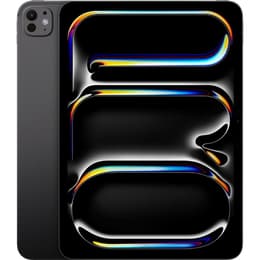
  • Display Technology: The Galaxy Tab S9 boasts an 11-inch Dynamic AMOLED 2X display, known for its deep blacks, high contrast, and vivid color reproduction. The iPad Pro M4 features an 11-inch Ultra Retina XDR display, which utilizes Tandem OLED technology to achieve exceptional brightness, precise color accuracy, and a high contrast ratio, particularly noticeable with HDR content.
  • Brightness and Clarity: The Galaxy Tab S9's display offers excellent brightness for indoor and outdoor viewing, with a resolution of 2560 x 1600 pixels. The iPad Pro M4's display can reach up to 1000 nits for SDR and HDR content, with a peak HDR brightness of 1600 nits, providing superior visibility in bright conditions and enhanced detail in high dynamic range media. Its resolution is 2420 x 1668 pixels.
  • Refresh Rate: Both tablets feature a 120Hz adaptive refresh rate, ensuring smooth scrolling, fluid animations, and responsive interactions. The iPad Pro M4's ProMotion technology can dynamically adjust its refresh rate down to 10Hz for power efficiency when static content is displayed.

Resolution

1600 x 2560

2420 x 1668

Screen type

Dynamic AMOLED 2X

Ultra Retina XDR display

Pixel density

280ppp

264ppp

Audiovisual

While tablets are not typically primary photography devices, both the Galaxy Tab S9 and iPad Pro M4 offer capable camera systems for video calls, document scanning, and casual photography.

  • Rear Camera System: The Galaxy Tab S9 includes a 13 MP rear camera, suitable for capturing clear photos and scanning documents. The iPad Pro M4 features a 12 MP wide rear camera with an f/1.8 aperture, which also supports advanced features like ProRes video recording and an improved True Tone flash.
  • Front Camera and Video Calls: Both tablets are equipped with a 12 MP front-facing camera. The Galaxy Tab S9's front camera is an ultrawide lens. The iPad Pro M4's 12 MP front camera is now positioned on the landscape edge, which is more practical for video conferencing and supports Center Stage for keeping subjects in frame.
  • Audio Experience: Both devices feature quad-speaker setups, delivering rich stereo sound for media consumption and video calls. The Galaxy Tab S9 has four stereo speakers. The iPad Pro M4 also offers a robust audio experience with its speaker system and improved microphones for clearer audio input.

Miscellaneous

Beyond core specifications, several practical features contribute to the overall user experience and versatility of these tablets.

  • Connectivity and Ports: The Galaxy Tab S9 supports Wi-Fi 6 and Bluetooth 5.3, with a USB Type-C 3.2 port for charging and data transfer. The iPad Pro M4 steps up with Wi-Fi 6E and Bluetooth 5.3, and its USB-C port supports Thunderbolt/USB 4, offering significantly faster data transfer speeds and broader peripheral compatibility. Both offer optional 5G cellular connectivity.
  • Biometric Security: The Galaxy Tab S9 typically uses an in-display fingerprint sensor for secure unlocking. The iPad Pro M4 relies on Face ID, Apple's facial recognition system, for secure authentication.
  • Design and Handling: The Galaxy Tab S9 has dimensions of 254.3 x 165.8 x 5.9 mm and weighs around 498g for the Wi-Fi model. The 11-inch iPad Pro M4 is notably thinner and lighter, measuring 249.7 x 177.5 x 5.3 mm and weighing approximately 444g for the Wi-Fi model, making it one of Apple's thinnest devices.

Weight

129 g

444 g

Screen size (in)

11.0

11

Network

Wi-Fi

Wi-Fi

Carrier compatibility

Unlocked

Without SIM Port

User feedback for the Galaxy Tab S9 often praises its vibrant AMOLED display, the inclusion of the S Pen, and the flexibility of the Android operating system, particularly for those who appreciate customization and expandable storage. Common criticisms sometimes point to the software update longevity compared to competitors. The iPad Pro M4 is frequently lauded for its exceptional performance, the stunning new Tandem OLED display, and its remarkably thin and light design. Users also appreciate the refined iPadOS experience and the ecosystem of professional applications. Some users, however, note the absence of an ultrawide rear camera and the lack of expandable storage.

Users prioritizing an open ecosystem, expandable storage, and robust physical durability with an IP68 rating may find the Galaxy Tab S9 well-suited to their needs. Its included S Pen makes it a strong contender for note-taking and creative tasks right out of the box. Conversely, users who prioritize cutting-edge processing power for demanding creative work, a highly optimized software experience, and a superior display for media consumption will likely lean towards the iPad Pro M4. Its thinner profile and advanced display technology offer a premium experience for professionals and enthusiasts alike. Both tablets are available as quality-assured refurbished options, providing an eco-friendly alternative for consumers.

See all articles

Our recent comparisons