iPad Pro (2021, M1 series) Vs iPad Pro (2024, M4 series)

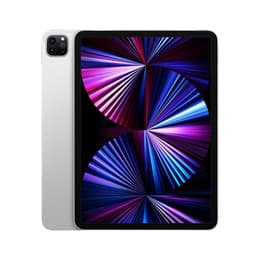
iPad Pro (2021, M1 series)
Starting at

Refurbished price:£359.00

Versus £749.00 new

See options
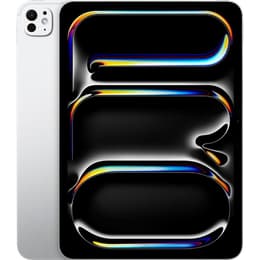
iPad Pro (2024, M4 series)
Starting at

Refurbished price:£642.00

Versus £999.00 new

See options

Ratings

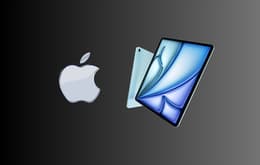
The iPad Pro 2021 M1 Series and the iPad Pro 2024 M4 Series represent distinct generations of Apple's high-performance tablets, released in 2021 and 2024, respectively. While both devices operate on iPadOS and offer a premium tablet experience, the M4 model introduces significant advancements in display technology, a more efficient processor, and a refined design. These differences cater to varying user priorities, from visual fidelity to raw processing power and portability.

Scores

Durability

When considering the longevity of these devices, several factors come into play, including their release timelines, software support, and repairability.

  • Release Timeline and OS Support: The iPad Pro M1 series, launched in 2021, has already received several major iPadOS updates. The M4 series, released in 2024, benefits from a newer starting point, meaning it will likely receive major iPadOS updates for a longer duration, potentially extending its software support by an additional two to three years compared to the M1. Apple typically provides 5-7 years of major OS updates and longer for security updates.
  • Software Longevity Expectations: Both models are designed to handle demanding applications, but the M4's newer architecture may be better optimized for future iPadOS features, especially those leveraging advanced machine learning capabilities. Users prioritizing the absolute longest possible software support and access to the latest features will find the M4 series more future-proof.
  • Repairability: Historically, iPads have presented challenges for repair. The M1 iPad Pro received a repairability score of 3 out of 10 from iFixit. The M4 iPad Pro shows some improvement, with a provisional iFixit score of 5 out of 10, partly due to Apple's self-service repair program. However, battery replacements remain complex due to the display's integration.

Year of Release

2021

2024

Compatible with latest Update

Yes

Yes

OS

iPadOS

iPadOS

Maximum Operating System supported

iPadOS 18

iPadOS 18

Performance

Both iPad Pro series offer robust performance, but the M4 model brings notable enhancements in processing efficiency and capability.

  • Processor Capabilities: The iPad Pro M1 series features a powerful processor that handles demanding applications, multitasking, and creative workflows smoothly. The M4 series, however, incorporates a next-generation processor designed for even greater efficiency and speed. While day-to-day tasks like browsing and app launching may feel similarly responsive on both, the M4 demonstrates faster performance in intensive tasks such as video export and complex 3D rendering.
  • RAM and Storage: Both generations offer configurations with 8GB or 16GB of unified memory, depending on the storage capacity. The M4's memory bandwidth is higher, contributing to overall system responsiveness, particularly in memory-intensive applications. Storage options range from 128GB up to 2TB for the M1, and from 256GB up to 2TB for the M4, providing ample space for various user needs.
  • Battery Behavior: Both models are designed to provide a full day of typical use. While the M4 iPad Pro features a slightly smaller battery capacity in the 13-inch model compared to the 12.9-inch M1, its more efficient processor often results in comparable or even slightly better battery endurance in real-world usage scenarios.

Memory (GB)

8 GB

8 GB

Processor

Apple M1

Apple M4

Screen quality

The display is a key differentiator between these two iPad Pro generations, offering distinct visual experiences.

  • Display Technology: The 11-inch M1 iPad Pro features an IPS LCD Liquid Retina display, while the 12.9-inch M1 model boasts a Mini-LED Liquid Retina XDR display, known for its deep blacks and high contrast. The M4 iPad Pro series, in both 11-inch and 13-inch sizes, introduces a Tandem OLED Ultra Retina XDR display. This advanced OLED technology provides superior contrast, true blacks, and vibrant colors across the entire screen.
  • Brightness and Clarity: The M1 models offer up to 600 nits of SDR brightness, with the 12.9-inch Mini-LED reaching 1600 nits peak for HDR content. The M4 models significantly boost SDR brightness to 1000 nits and maintain 1600 nits peak for HDR, making them noticeably brighter, especially in well-lit environments or outdoors.
  • Refresh Rate and Features: Both generations feature ProMotion technology, offering adaptive refresh rates up to 120Hz for smooth scrolling and responsive interactions. The M4 also offers an optional nano-texture display glass on higher storage configurations, which helps reduce glare in various lighting conditions.

Resolution

2388 x 1668

2420 x 1668

True Tone

Yes

Yes

Pro-Motion

Yes

Yes

Screen type

Liquid Retina display

Ultra Retina XDR display

Pixel density

264ppp

264ppp

Brightness

600 nits brightness max

1000 nits brightness max

Sound quality

Speakers

Four speaker audio

Four speaker audio

Audiovisual

The camera systems on both iPad Pro models are capable, with the M4 introducing some refinements and a shift in front camera placement.

  • Rear Camera System: The M1 iPad Pro features a dual-camera setup on the rear, including a 12MP Wide and a 10MP Ultra-Wide lens, alongside a LiDAR Scanner. The M4 iPad Pro simplifies this to a single 12MP Wide camera, retaining the LiDAR Scanner, but removing the Ultra-Wide lens. It compensates with an Adaptive True Tone Flash, which enhances document scanning by intelligently removing shadows.
  • Front Camera and Video: Both models include a 12MP Ultra-Wide front camera with Center Stage, which keeps subjects in frame during video calls. A notable ergonomic improvement on the M4 is the relocation of the front camera to the landscape edge, making it more natural for video conferencing when the tablet is used horizontally. Video recording quality is strong on both, with 4K capabilities.
  • Audio Experience: Both generations feature a four-speaker audio system and studio-quality microphones, providing a rich sound experience for media consumption and clear audio for calls and recordings.

Miscellaneous

Beyond core performance and display, several practical elements distinguish the M1 and M4 iPad Pro models.

  • Connectivity: The M1 iPad Pro supports Wi-Fi 6 and Bluetooth 5.0, while the M4 upgrades to Wi-Fi 6E and Bluetooth 5.3, offering potentially faster and more stable wireless connections with compatible networks and accessories. Both feature a USB-C port with Thunderbolt/USB 4 support for high-speed data transfer and external display connectivity.
  • Design and Portability: The M4 iPad Pro is notably thinner and lighter than its M1 predecessor, making it the thinnest Apple product ever. The 13-inch M4 model weighs 579g and is 5.1mm thin, compared to the 12.9-inch M1 at 682g and 6.4mm thin. This reduction in size and weight enhances portability and handling.
  • Accessories: The M4 iPad Pro introduces compatibility with the new Apple Pencil Pro, which offers additional features like a squeeze gesture and barrel roll, and a redesigned Magic Keyboard with an aluminum palm rest and function row. These new accessories are exclusively compatible with the M4 models.

Weight

466 g

444 g

Width

17.85 cm

17.7 cm

Height

24.76 cm

24.9 cm

Depth

0.59 cm

0.5 cm

Screen size (in)

11

11

Network

Wi-Fi

Wi-Fi

Carrier compatibility

Without SIM Port

Without SIM Port

Wi-Fi technology

Wi-Fi 6 802.11ax

Wi-Fi 6E 802.11ax

Bluetooth Version

Bluetooth 5.0

Bluetooth 5.3

Face ID

Yes

Yes

Touch ID

No

No

Connector

USB Type-C

USB Type-C

The iPad Pro 2021 M1 and iPad Pro 2024 M4 both stand as powerful and versatile tablets, yet they cater to slightly different user needs and expectations. User sentiment often highlights the M4's Tandem OLED display as a significant upgrade, offering deeper blacks and higher brightness, especially noticeable when viewed side-by-side with the M1's Mini-LED or LCD screens. The M4's thinner and lighter design is also frequently praised for improving portability and handling.

However, many users of the M1 iPad Pro report that its performance remains more than sufficient for daily tasks, creative work, and even demanding applications, with little perceived difference in speed for general use compared to the M4. Criticisms of the M4 often revolve around the removal of the rear ultra-wide camera, though this is generally not a major concern for most tablet users. Some M4 users have also reported varied experiences with battery life, though overall efficiency is improved.

Users prioritizing the absolute best display technology, enhanced portability, and the latest accessory compatibility (Apple Pencil Pro, new Magic Keyboard) will find the iPad Pro M4 series well-suited to their needs. This includes professionals in visual arts, content creation, or those who frequently use their tablet in varied lighting conditions. Conversely, users who already own an M1 iPad Pro and find its performance and display adequate for their current workflow may not experience a transformative upgrade with the M4 for everyday tasks. For those seeking a powerful and capable tablet without needing the very latest advancements, a quality-assured refurbished M1 iPad Pro remains a highly viable and eco-friendly alternative, offering excellent performance for a wide range of activities.

See all articles

Our recent comparisons