
Compare models

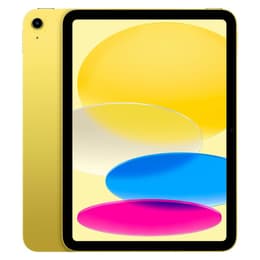
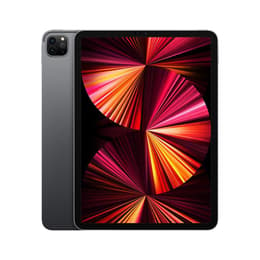
iPad 10 (2022, A14 series) Vs iPad Pro (2021, M1 series)

  • 1-year minimum warranty
  • Free delivery on all items
  • Free 30-day returns
iPad 10 (2022, A14 series)
Starting at

Refurbished price:£340.00

Versus £499.00 new

See options
iPad Pro (2021, M1 series)
Starting at

Refurbished price:£435.00

Versus £749.00 new

See options

Differences at a glance

The iPad 10 (2022) and the iPad Pro (2021) represent two distinct tiers within Apple's tablet lineup, balancing standard everyday utility with advanced professional capabilities. While both devices run on iPadOS and offer modern design profiles with slim bezels, they target different levels of hardware performance and screen technology. Understanding their core distinctions helps users identify which model aligns more closely with their daily computing habits.

Available Models

Colour

Storage

Scores

Durability

Both tablets provide reliable long-term usability, though their release schedules and internal architectures influence how many years of software updates they will ultimately receive.

  • Release timeline and support: The iPad Pro launched in 2021, while the iPad 10 arrived a year later in 2022, meaning the newer model typically receives software updates for an extra year under standard support cycles.
  • Software longevity and hardware: The iPad Pro features a high-end computing architecture with generous memory capacity, helping it sustain heavy workloads over time, whereas the iPad 10 relies on standard consumer-grade internals designed for everyday tasks.
  • Repairability and build: Both units feature aluminum chassis construction with standard component modularity, making use of quality-assured refurbished options a sustainable choice for extending device lifespans without sacrificing structural integrity.

Year of Release

2022

2021

Compatible with latest Update

Yes

Yes

OS

iPadOS

iPadOS

Maximum Operating System supported

iPadOS 18

iPadOS 18

Performance

Processing power and multitasking capabilities create a clear dividing line between these two models during intensive applications and daily workflows.

  • Multitasking and responsiveness: The iPad Pro handles demanding creative apps, video editing timelines, and complex multi-window workflows smoothly due to its laptop-class processor and high memory allocation.
  • Everyday app execution: The iPad 10 loads standard productivity tools, web browsing tabs, and streaming services reliably, though it transitions less fluidly when switching between multiple heavy professional tasks simultaneously.
  • Storage and battery behavior: The iPad Pro offers broader storage tiers extending up to massive capacities, whereas the iPad 10 provides standard consumer capacities. Both models maintain enough battery endurance to comfortably sustain a full day of mixed browsing, reading, and media playback.

Processor

Apple A14 Bionic

Apple M1

Screen quality

Display technology differs significantly between the two devices, impacting visual depth, brightness limits, and motion handling for media consumption.

  • Panel technology and clarity: The iPad Pro features an advanced high-brightness display architecture with deep contrast levels on select large sizes, while the iPad 10 utilizes a standard liquid crystal panel with clear text rendering and natural color reproduction.
  • Refresh rate and fluidity: The iPad Pro supports high refresh rate technology for smoother scrolling and responsive stylus interaction, whereas the iPad 10 operates at a standard refresh rate.
  • Outdoor usability: Peak brightness thresholds on the iPad Pro allow for easier viewing in direct sunlight or bright environments compared to the standard maximum brightness levels found on the iPad 10.

Resolution

2360 x 1640

2388 x 1668

True Tone

Yes

Yes

Pro-Motion

No

Yes

Screen type

Liquid Retina display

Liquid Retina display

Pixel density

264ppp

264ppp

Brightness

500 nits brightness

600 nits brightness max

Sound quality

Speakers

Stereo speakers

Four speaker audio

Audiovisual

Audio-visual integration shapes how each device performs during multimedia playback, video calls, and casual content capture.

  • Camera versatility: The iPad Pro includes a multi-lens rear array paired with depth-sensing technology for spatial awareness and augmented reality tasks, while the iPad 10 features a single rear camera suitable for basic document scanning.
  • Video communication: Both models place the front-facing camera along the landscape edge to ensure natural eye contact during video conferences, supported by wide-angle framing tools.
  • Speaker output: The iPad Pro incorporates a robust four-speaker audio setup that delivers wide stereo separation and deep sound profiles, whereas the iPad 10 relies on a dual-speaker configuration geared toward casual listening.

Miscellaneous

Physical dimensions, connectivity standards, and accessory compatibility dictate how easily each tablet integrates into mobile or desktop environments.

  • Connectivity standards: The iPad Pro supports high-speed Thunderbolt peripheral connections and advanced wireless protocols, while the iPad 10 utilizes standard universal serial bus connectivity and reliable wireless networking.
  • Biometrics and security: The iPad Pro utilizes facial recognition technology for secure authentication, whereas the iPad 10 embeds a fingerprint sensor directly into the top power button.
  • Dimensions and handling: Both tablets maintain slim profiles, though minor variations in weight and thickness affect how they feel when paired with keyboard folios or held during extended reading sessions.

Weight

477 g

466 g

Width

17.95 cm

17.85 cm

Height

24.86 cm

24.76 cm

Depth

0.7 cm

0.59 cm

Screen size (in)

10.9

11

Network

Wi-Fi

Wi-Fi

Carrier compatibility

Without SIM Port

Without SIM Port

Wi-Fi technology

Wi-Fi 6 802.11ax

Wi-Fi 6 802.11ax

Bluetooth Version

Bluetooth 5.2

Bluetooth 5.0

Face ID

No

Yes

Touch ID

Yes

No

Connector

USB Type-C

USB Type-C

What the community thinks

User discussions and community feedback indicate that satisfaction largely depends on matching device capabilities to specific daily demands. Owners of the iPad Pro frequently praise its expansive processing capability, fluid screen refresh rates, and robust multi-speaker output, though some note its higher-tier configuration can exceed casual needs. Conversely, users appreciate the iPad 10 for its clean modern design and reliable handling of everyday educational or streaming tasks, while noting limitations in heavy creative software environments. Users prioritizing advanced graphics performance, extensive file storage, and professional creative tools will find the iPad Pro well-suited to their workflow. Meanwhile, users focusing on web browsing, media consumption, and general household organization may lean toward the iPad 10 as an eco-friendly, quality-assured refurbished option. Evaluating these practical differences ensures a well-informed decision aligned with individual usage patterns.

Our recent comparisons