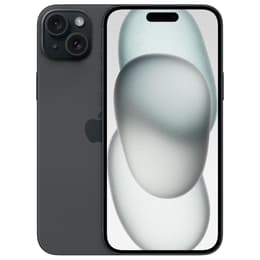
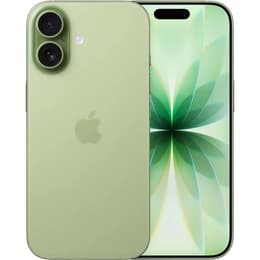

iPhone 15 Plus Vs iPhone 17

iPhone 15 Plus
iPhone 15 Plus
Starting at

Refurbished price:£345.00

Versus £799.00 new

See options
iPhone 17
iPhone 17
Starting at

Refurbished price:£689.00

Versus £799.00 new

See options

Ratings

The iPhone 15 Plus, released in September 2023, and the iPhone 17, launched in September 2025, represent different generations of Apple's standard-tier large-screen smartphones. While both devices offer a robust iOS experience, the iPhone 17 introduces notable advancements in display technology, processing power, and camera capabilities. These differences cater to varying user priorities and usage patterns.

Scores

Durability

When considering the practical lifespan of these devices, their release timelines and Apple's software support policies are key factors. The iPhone 17, being two years newer, benefits from an extended period of guaranteed software updates and security patches compared to its predecessor.

  • Software Longevity: The iPhone 17, released in September 2025, will receive iOS updates for a longer duration than the iPhone 15 Plus, which was released in September 2023 and discontinued in September 2025. This means the iPhone 17 will remain compatible with the latest features and security enhancements for an additional two years.
  • Physical Durability: Both models feature Apple's Ceramic Shield front cover, designed to enhance drop resistance. The iPhone 17 introduces Ceramic Shield 2, suggesting further refinements in screen durability. Both devices also carry an IP68 rating for dust and water resistance, indicating similar protection against environmental elements.
  • Repairability: While specific repairability scores can vary, Apple generally designs its devices with a certain level of modularity. Newer models often incorporate minor design changes that can impact the ease or cost of repairs, though both are expected to offer comparable repair options through authorized service providers.

Year of Release

2023

2025

Compatible with latest Update

Yes

Yes

OS

iOS

iOS

Foldable

No

No

Performance

The performance of a smartphone is largely dictated by its internal processing unit and memory, impacting everything from app responsiveness to multitasking efficiency. The iPhone 17, as a newer generation device, features a more advanced internal architecture.

  • Processing Power: The iPhone 15 Plus is powered by the A16 Bionic chip, which delivers smooth performance for everyday applications, gaming, and demanding tasks. The iPhone 17, however, integrates the A19 Bionic chip, offering faster app performance, smoother multitasking, and improved energy efficiency due to its newer architecture.
  • Multitasking and Responsiveness: The iPhone 15 Plus comes with 6GB of RAM, providing ample capacity for running multiple applications simultaneously. The iPhone 17 steps up to 8GB of RAM, which further enhances its ability to handle numerous background processes and complex applications without slowdowns, contributing to an overall more fluid user experience.
  • Storage Options: The iPhone 15 Plus offers storage configurations starting from 128GB. The iPhone 17 removes the 128GB base option, starting instead at 256GB, providing more generous storage space for users who store large amounts of media, applications, and files.

Memory (GB)

6 GB

8 GB

Screen quality

The display is a primary interface for smartphone interaction, and both the iPhone 15 Plus and iPhone 17 offer high-quality viewing experiences, though with distinct differences in their underlying technology and capabilities.

  • Display Technology and Refresh Rate: Both phones feature Super Retina XDR OLED displays, known for deep blacks, vibrant colors, and excellent contrast. However, a significant difference lies in the refresh rate. The iPhone 15 Plus has a standard 60Hz refresh rate. The iPhone 17 introduces ProMotion technology, offering an adaptive refresh rate up to 120Hz, which results in noticeably smoother scrolling, more fluid animations, and a more responsive feel during gaming and general navigation.
  • Brightness and Clarity: Both models provide high brightness levels for clear visibility in various lighting conditions. The iPhone 15 Plus offers up to 1,000 nits typical brightness, 1,600 nits peak HDR, and 2,000 nits peak outdoor brightness. The iPhone 17 matches these typical and HDR peak brightness levels but can reach an even higher 3,000 nits peak outdoor brightness, improving readability under direct sunlight.
  • Screen Size and Features: The iPhone 15 Plus features a 6.7-inch display, while the iPhone 17 has a slightly smaller 6.3-inch display. Both incorporate the Dynamic Island for interactive alerts and activities. The iPhone 17 also includes an Always-On display feature, allowing users to see glanceable information without fully waking the screen.

Resolution

1290 x 2796

2622x1206

Screen type

Super Retina XDR OLED

Super Retina XDR

Audiovisual

Camera systems are a crucial aspect of modern smartphones, and both the iPhone 15 Plus and iPhone 17 deliver capable photography and videography tools, with the newer model featuring advancements in sensor technology and computational photography.

  • Rear Camera System: The iPhone 15 Plus features a dual-camera system with a 48MP Main sensor and a 12MP Ultra Wide lens. The 48MP Main camera can also enable 2x optical-quality zoom. The iPhone 17 upgrades to a Dual Fusion camera system, featuring both a 48MP Main and a 48MP Ultra Wide lens, offering greater detail capture across different focal lengths.
  • Photography Features: Both devices benefit from Apple's computational photography features like Photonic Engine, Deep Fusion, and Smart HDR for enhanced image quality in various conditions, including low light. The iPhone 17 further refines these capabilities with AI-powered editing and advanced image stabilization, leading to sharper and clearer photos and videos.
  • Front Camera and Video: The iPhone 15 Plus includes a 12MP front camera with autofocus. The iPhone 17 features an upgraded 18MP Center Stage front-facing camera, improving selfie quality and video call experiences. Both phones offer high-quality video recording, with the iPhone 17 providing enhanced features for video, including advanced stabilization and potentially higher frame rate options for certain modes.

Main camera

48 megapixels

48 megapixels

Front camera

12 megapixels

18 megapixels

Miscellaneous

Beyond the core components, several practical elements contribute to the overall user experience, including connectivity, physical design, and biometric security.

  • Connectivity and Ports: The iPhone 15 Plus was the first standard iPhone to adopt a USB-C port, replacing the Lightning connector, though it operates at USB 2.0 speeds. The iPhone 17 continues with USB-C, and as a newer model, it is expected to offer faster data transfer capabilities, aligning with more modern USB standards. The iPhone 17 also supports newer wireless technologies like Wi-Fi 7 and Bluetooth 6, compared to Wi-Fi 6 and Bluetooth 5.3 on the iPhone 15 Plus.
  • Design and Handling: The iPhone 15 Plus has dimensions of 160.9 x 77.8 x 7.8 mm and weighs 201 grams. The iPhone 17 is slightly more compact and lighter, measuring 149.6 x 71.5 x 7.95 mm and weighing 177 grams. Both feature an aluminum design with a color-infused glass back.
  • Biometric Security: Both models rely on Face ID for secure authentication, offering a convenient and reliable method for unlocking the device and authorizing payments.

Weight

201 g

177 g

Screen size (in)

6.7

6.3

Mobile network

5G

5G

SIM card

Physical SIM + eSIM

Physical SIM + eSIM

Carrier compatibility

Unlocked

Unlocked

Connector

USB-C

USB-C

User feedback for the iPhone 15 Plus frequently highlights its exceptional battery life as a major strength, often outperforming even some Pro models in real-world usage tests. Users also praise its bright display and smooth performance for daily tasks. However, some users coming from devices with higher refresh rates noted the 60Hz display as a potential adjustment. The camera system is generally well-regarded, though some wished for more advanced telephoto capabilities or better low-light performance compared to Pro models.

For the iPhone 17, common praise points include its 120Hz ProMotion display, which delivers a significantly smoother visual experience. Users appreciate the improved camera system, particularly for video quality and advanced features. The enhanced processing power is also noted for providing top-tier performance across demanding applications and games. Some user criticisms mention that while battery life is good, it might not be a dramatic leap over its immediate predecessor, and some minor software quirks have been reported.

Users prioritizing extended battery life and a larger screen for media consumption at a potentially more accessible point may find the iPhone 15 Plus well-suited to their needs. Its proven endurance makes it a reliable choice for heavy daily use. Conversely, users who value the latest display technology, including a high refresh rate, superior processing power for future-proofing, and more advanced camera capabilities, will likely lean towards the iPhone 17. The iPhone 17 also offers a more compact form factor while still providing a substantial screen. For those seeking an eco-friendly alternative, both models are available as quality-assured refurbished options, offering a sustainable choice for acquiring advanced technology.

See all articles

Our recent comparisons