iPhone 16 Vs iPhone 17

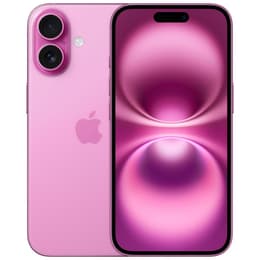
iPhone 16
iPhone 16
Starting at

Refurbished price:£484.00

Versus £699.00 new

See options
iPhone 17
iPhone 17
Starting at

Refurbished price:£689.00

Versus £799.00 new

See options

Ratings

The iPhone 16, released in September 2024, and the iPhone 17, launched in September 2025, represent consecutive generations of Apple's standard smartphone line. While both devices operate on the iOS ecosystem, the iPhone 17 introduces notable advancements in display technology, camera capabilities, and overall battery performance, building upon the solid foundation of its predecessor.

Scores

Durability

When considering the long-term usability of these devices, several factors contribute to their expected lifespan, including software support and physical durability.

  • Software Longevity: Apple typically provides major iOS updates for its iPhones for approximately five to seven years, with security updates often extending even longer. The iPhone 16 is expected to receive software support until around 2036, while the newer iPhone 17 will likely be supported until approximately 2037, offering an additional year of major updates.
  • Repairability: The iPhone 16 marked a significant improvement in repairability, achieving a score of 7 out of 10 from iFixit, largely due to a new battery removal method and a more modular internal design. The iPhone 17 maintains this focus on repairability, also earning a provisional score of 7 out of 10, featuring a dual-entry design and improved battery adhesive.
  • Physical Durability: Both models feature robust construction, but the iPhone 17 incorporates Ceramic Shield 2 on its front display, which is reported to be three times more scratch-resistant than the Ceramic Shield found on the iPhone 16.

Year of Release

2024

2025

Compatible with latest Update

Yes

Yes

Foldable

No

No

Performance

The performance of a smartphone is crucial for daily tasks, from launching applications to managing multiple processes simultaneously.

  • Processing Power: The iPhone 16 is powered by the A18 chip, which delivers efficient performance for demanding applications and multitasking. The iPhone 17 features the next-generation A19 chip, built on an upgraded 3nm process, offering further enhancements in speed and power efficiency, particularly beneficial for on-device artificial intelligence tasks and system-intensive operations.
  • Multitasking and Responsiveness: Both devices offer smooth operation, but the A19 chip in the iPhone 17 provides additional performance headroom, ensuring that the device remains responsive with future software updates and more demanding applications. Both models come with 8GB of RAM, contributing to efficient multitasking.
  • Battery Performance: The iPhone 17 offers a notable improvement in battery life compared to its predecessor. It features a larger battery capacity and benefits from the A19 chip's enhanced power efficiency and iOS optimizations. Users can expect up to 30 hours of video playback on the iPhone 17, compared to approximately 22 hours on the iPhone 16.
  • Storage Options: The iPhone 16 is available with storage options starting from 128GB, 256GB, and 512GB. The iPhone 17 elevates the base storage, starting at 256GB, providing more space for applications, photos, and videos.

Memory (GB)

8 GB

8 GB

Screen quality

The display is a primary interface for smartphone interaction, and both iPhones offer high-quality viewing experiences with some key distinctions.

  • Display Technology and Size: Both the iPhone 16 and iPhone 17 feature Super Retina XDR OLED displays, known for their deep blacks and vibrant colors. The iPhone 16 has a 6.1-inch display with a resolution of 2556 x 1179 pixels. The iPhone 17 offers a slightly larger 6.3-inch display with a resolution of 2622 x 1206 pixels, maintaining a sharp 460 pixels per inch.
  • Brightness and Clarity: The iPhone 17 significantly enhances outdoor visibility with a peak brightness of 3,000 nits, compared to the iPhone 16's 2,000 nits. Additionally, the iPhone 17 includes an anti-reflective coating, further improving screen readability in bright conditions.
  • Refresh Rate: A notable upgrade on the iPhone 17 is the inclusion of a 120Hz ProMotion display, which dynamically adjusts the refresh rate from 1Hz to 120Hz for smoother scrolling and more fluid animations. The iPhone 16 features a standard 60Hz refresh rate. The iPhone 17 also supports an Always-On display, allowing users to view essential information without fully waking the screen.

Resolution

1179 x 2556

2622x1206

Screen type

Super Retina XDR OLED

Super Retina XDR

Audiovisual

Both the iPhone 16 and iPhone 17 offer advanced camera systems designed to capture high-quality photos and videos in various conditions.

  • Rear Camera System: The iPhone 16 features a dual-camera system with a 48-megapixel Fusion Main camera and a 12-megapixel Ultrawide camera. The iPhone 17 upgrades its Ultrawide camera to 48 megapixels, providing more detail and improved image quality, particularly in challenging lighting. Both models support 4K Dolby Vision video recording.
  • Front Camera: The iPhone 16 includes a 12-megapixel front-facing camera. The iPhone 17 enhances the selfie experience with an 18-megapixel front camera, which also introduces a Center Stage feature. This feature automatically adjusts the camera's framing during video calls to keep subjects centered, even as they move.
  • Low-Light Performance: While both devices excel in everyday photography, the improved sensors and computational photography capabilities in the iPhone 17 contribute to better low-light performance and more accurate color reproduction, especially from the upgraded ultrawide lens.

Main camera

48 megapixels

48 megapixels

Front camera

12 megapixels

18 megapixels

Miscellaneous

Beyond core specifications, several practical features differentiate the user experience between these two iPhone models.

  • Connectivity: The iPhone 16 supports Wi-Fi 6E for fast wireless connections. The iPhone 17 steps up to Wi-Fi 7, offering even faster speeds and lower latency, alongside Bluetooth 6 and an updated second-generation Ultra Wideband chip for enhanced spatial awareness and device finding.
  • Ports and Biometrics: Both devices utilize a USB-C port for charging and data transfer. For security, both rely on Face ID for biometric authentication. The iPhone 16 introduced a dedicated Camera Control button, which is also present on the iPhone 17, allowing for quick access to camera functions.
  • Design and Handling: The iPhone 16 measures approximately 5.81 x 2.82 x 0.31 inches and weighs around 6.00 ounces. The iPhone 17 is marginally larger and heavier at about 5.89 x 2.81 x 0.31 inches and 6.24 ounces, primarily due to its larger display and battery. Despite the slight increase, both maintain a comfortable form factor for single-handed use.

Weight

170 g

177 g

Screen size (in)

6.1

6.3

Mobile network

5G

5G

SIM card

Physical SIM + eSIM

Physical SIM + eSIM

Carrier compatibility

Unlocked

Unlocked

Connector

USB-C (USB 2)

USB-C

The iPhone 16 and iPhone 17 both offer robust performance and a comprehensive feature set within the Apple ecosystem. User feedback often highlights the iPhone 16 as a highly capable and reliable device, praised for its strong camera system and consistent performance. However, some users noted its 60Hz display as a point of comparison with other smartphones on the market.

The iPhone 17, as the newer iteration, addresses several of these points, receiving praise for its significant display upgrades, including the 120Hz ProMotion technology and increased brightness, as well as its enhanced camera capabilities and extended battery life. Critics generally acknowledge the iPhone 17 as a substantial year-over-year improvement, offering more advanced features that enhance the daily user experience.

For users prioritizing the latest display technology, including a smoother refresh rate and improved outdoor visibility, along with a more advanced camera system and longer battery endurance, the iPhone 17 presents a compelling option. It is well-suited for those who engage in extensive media consumption, mobile gaming, or frequently capture photos and videos. Conversely, users who seek a dependable and high-performing smartphone for everyday tasks, and who may not require the absolute latest display or camera innovations, will find the iPhone 16 to be a strong contender. It continues to offer excellent performance and a premium experience.

When making a decision, considering a quality-assured refurbished option for either model can provide an eco-friendly alternative, allowing access to these advanced features while supporting sustainable consumption.
See all articles

Our recent comparisons