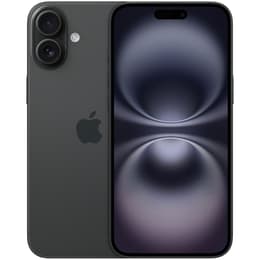
iPhone 16 Vs iPhone 16 Plus

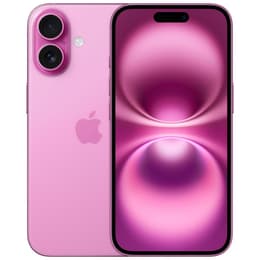
iPhone 16
iPhone 16
Starting at

Refurbished price:£484.00

Versus £699.00 new

See options
iPhone 16 Plus
iPhone 16 Plus
Starting at

Refurbished price:£502.00

Versus £799.00 new

See options

Ratings

The iPhone 16 and iPhone 16 Plus, both released in September 2024, represent Apple's standard-tier smartphone offerings. While sharing a common foundation in their operating system, internal processing power, and advanced camera capabilities, these two models primarily differentiate themselves through their physical size and corresponding battery endurance. Both devices run on iOS 18 and incorporate the latest Apple A18 chip, designed to enhance performance and support advanced AI features.

Scores

Durability

When considering the long-term usability of the iPhone 16 and iPhone 16 Plus, several factors contribute to their expected lifespan and ongoing support.

  • Release Timeline and OS Support: Both devices were launched in September 2024, meaning they will receive iOS updates for a comparable duration. Apple typically provides software support for its devices for approximately five to six years from their release date, ensuring continued access to new features and security enhancements.
  • Repairability: Both the iPhone 16 and iPhone 16 Plus have shown significant improvements in repairability compared to their predecessors, earning an iFixit score of 7 out of 10. This indicates a more modular internal design that facilitates easier and safer repairs, particularly for components like the battery.
  • Practical Lifespan: With robust build quality, including an aluminum design, color-infused glass back, and Ceramic Shield front, both models are designed for durability. Their IP68 rating for water and dust resistance further contributes to their resilience against everyday elements, suggesting a practical lifespan that extends well beyond their initial purchase.

Year of Release

2024

2024

Compatible with latest Update

Yes

Yes

Foldable

No

No

Performance

The performance of the iPhone 16 and iPhone 16 Plus is largely consistent, as both are equipped with the same core processing unit, but differences in physical size can subtly influence real-world usage.

  • Processor Capabilities: Both models feature the Apple A18 chip, which is optimized for generative artificial intelligence and includes a Neural Engine designed for faster AI processing. This allows both devices to handle demanding applications, complex multitasking, and graphic-intensive games smoothly and efficiently.
  • Battery Behavior: The iPhone 16 Plus, due to its larger physical size, accommodates a significantly larger battery. This translates to extended usage times, with the iPhone 16 Plus offering up to 27 hours of video playback compared to the iPhone 16's 22 hours. For audio playback, the Plus model provides up to 100 hours, while the standard model offers up to 80 hours. This difference is particularly noticeable for heavy users or those who frequently stream media.
  • Storage Options and Responsiveness: Both devices were initially available with 128GB, 256GB, or 512GB of internal storage, providing ample space for apps, photos, and videos. The shared processor and operating system ensure a consistent level of system responsiveness across both models, with quick app loading and fluid navigation.

Memory (GB)

8 GB

8 GB

Screen quality

The visual experience on the iPhone 16 and iPhone 16 Plus is defined by their display technology, though they cater to different preferences in terms of screen real estate.

  • Display Technology and Clarity: Both smartphones feature a Super Retina XDR OLED display, delivering deep blacks, vibrant colors, and excellent contrast. The pixel density is approximately 460 pixels per inch for both, ensuring sharp text and detailed images.
  • Screen Size and Viewing Experience: The primary distinction lies in size: the iPhone 16 has a 6.1-inch display, while the iPhone 16 Plus offers a larger 6.7-inch screen. The larger display on the Plus model provides a more expansive canvas for media consumption, gaming, and productivity tasks, making it suitable for users who prefer a more immersive visual experience.
  • Brightness and Refresh Rate: Both models achieve a typical maximum brightness of 1000 nits, with peak HDR brightness reaching 1600 nits and peak outdoor brightness up to 2000 nits, ensuring good visibility in various lighting conditions. However, both maintain a standard 60Hz refresh rate, which provides a smooth experience for most daily tasks but does not offer the ultra-smooth scrolling found on devices with higher refresh rates.

Resolution

1179 x 2556

1290 x 2796

Screen type

Super Retina XDR OLED

Super Retina XDR OLED

Audiovisual

The camera systems on the iPhone 16 and iPhone 16 Plus are identical, offering a versatile photography and videography experience with several notable enhancements.

  • Camera System Capabilities: Both devices are equipped with an advanced dual-camera system on the rear, featuring a 48MP Fusion wide-angle main camera and a 12MP ultrawide lens. The main camera supports super-high-resolution photos (24MP and 48MP) and includes sensor-shift optical image stabilization. The ultrawide camera has a wider aperture and automatic focus. For the first time since the iPhone 12, the cameras are vertically aligned, enabling spatial video capture.
  • Photography Performance: Both models benefit from features like Photonic Engine, Deep Fusion, and Smart HDR 5, which work together to optimize image quality across different lighting scenarios. They also include improved Photographic Styles for real-time adjustments to tone and color. Users can expect clear, detailed photos with accurate color reproduction, and improved low-light performance, especially with the ultrawide camera.
  • Video Recording and Audio: Both support 4K Dolby Vision video recording at various frame rates. The inclusion of new Audio Mix tools in iOS enhances sound recording quality, which can be beneficial for vloggers or anyone recording video with audio. Both also feature a 12MP front-facing camera with autofocus for clear selfies and video calls.

Main camera

48 megapixels

48 megapixels

Front camera

12 megapixels

12 megapixels

Miscellaneous

Beyond the core specifications, several practical elements contribute to the overall user experience of the iPhone 16 and iPhone 16 Plus.

  • Connectivity and Ports: Both models support Wi-Fi 7 for faster wireless internet speeds and Bluetooth 5.3 for efficient accessory connections. They both feature a USB-C charging port, aligning with modern connectivity standards.
  • Physical Design and Handling: The iPhone 16 measures 147.6 x 71.6 x 7.8 mm and weighs 170 grams, making it comfortable for one-handed use. The iPhone 16 Plus is larger at 160.9 x 77.8 x 7.8 mm and weighs 199 grams, offering a more substantial feel and a larger screen, though it typically requires two-handed operation. Both devices feature an aluminum frame with a color-infused glass back and a Ceramic Shield front for enhanced durability.
  • User Interaction Features: Both phones incorporate the Action button, which can be customized to quickly access various functions, and a new Camera Control button, designed to simplify camera adjustments and photo capture. For security, both rely on Face ID for facial recognition.

Weight

170 g

199 g

Screen size (in)

6.1

6.7

Mobile network

5G

5G

SIM card

Physical SIM + eSIM

Physical SIM + eSIM

Carrier compatibility

Unlocked

Unlocked

Connector

USB-C (USB 2)

USB-C (USB 2)

User sentiment for both the iPhone 16 and iPhone 16 Plus generally highlights their robust performance and camera capabilities. Common praise points often revolve around the reliable software experience, the quality of photos and videos, and the integration of new features like the Action button and Camera Control button. Users appreciate the consistent performance delivered by the A18 chip and the enhanced AI functionalities.

However, some common criticisms include the continued use of a 60Hz refresh rate display, which some users find less fluid compared to higher refresh rate screens on competing devices. The iPhone 16 Plus is often lauded for its exceptional battery life, making it a preferred choice for users who prioritize extended usage without frequent charging. The standard iPhone 16, while offering good battery life, requires more frequent charging for heavy users.

Users prioritizing a compact device that is easy to handle with one hand may prefer the iPhone 16. Its smaller form factor makes it more pocketable and comfortable for extended single-handed use. Conversely, users who value a larger display for media consumption, gaming, or productivity, and who require the longest possible battery life, will find the iPhone 16 Plus better suited to their needs. The choice between the two largely comes down to personal preference for screen size and battery endurance, as their core performance and camera systems are identical.

For those considering these models, exploring quality-assured refurbished options can provide an eco-friendly alternative, offering the same features and performance while contributing to a more sustainable consumption cycle.

See all articles

Our recent comparisons