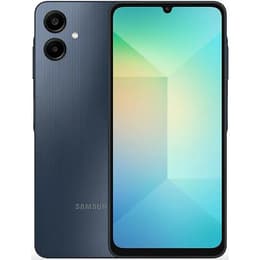
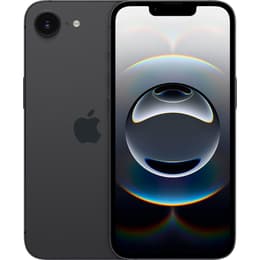

Galaxy A06 Vs iPhone 16e

Galaxy A06
Galaxy A06
Starting at

Refurbished price:£70.00

Versus £158.08 new

See options
iPhone 16e
iPhone 16e
Starting at

Refurbished price:£359.00

Versus £599.00 new

See options

Ratings

The Samsung Galaxy A06, released in late 2024 (LTE) and early 2025 (5G), and the iPhone 16E, introduced in September 2025, represent distinct approaches to smartphone design and functionality. While the Galaxy A06 focuses on delivering essential features within an accessible package, the iPhone 16E offers a streamlined Apple experience with advanced core technologies. Both devices operate on their respective ecosystems, Android for the Galaxy A06 and iOS for the iPhone 16E, providing users with different software environments and app experiences.

Scores

Durability

When considering the long-term usability of these devices, their release timelines and software support policies are key factors. The Galaxy A06 LTE model was released in August 2024, followed by the 5G variant in February 2025. The iPhone 16E was introduced in September 2025. This difference in release dates impacts their respective software longevity.

  • Software Updates: The Galaxy A06 5G model is slated to receive four major Android OS upgrades and four years of security updates, extending its support until 2029. The LTE version, however, receives two OS upgrades and four years of security updates, ending in 2028. In contrast, the iPhone 16E, running on iOS, is expected to receive software updates for approximately five to seven years, potentially extending its functional lifespan until around 2031.
  • Physical Durability: The Galaxy A06 features a plastic back and frame with a glass front, and the 5G variant includes an IP54 rating for dust and splash resistance. The iPhone 16E incorporates a Ceramic Shield front cover and an aluminum frame, offering enhanced resistance to drops and scratches, and boasts an IP68 rating for water and dust resistance, allowing submersion up to 6 meters for 30 minutes.
  • Practical Lifespan: Users can expect the iPhone 16E to maintain optimal performance and receive critical security updates for a longer duration, making it a suitable choice for those prioritizing extended device support. The Galaxy A06, particularly the 5G model, offers a reasonable support period for its category, but the LTE version has a shorter update cycle.

Year of Release

2024

2025

OS

Android

iOS

Foldable

No

No

Performance

The performance capabilities of the Galaxy A06 and iPhone 16E cater to different user expectations, largely influenced by their internal components and software optimization.

  • Processing Power: The Galaxy A06 is equipped with a MediaTek Helio G85 processor in its LTE version and a MediaTek Dimensity 6300 in its 5G version. These processors are designed for everyday tasks such as browsing, social media, and light applications. The iPhone 16E features an A18 chip, which includes a 6-core CPU, a 5-core GPU, and a 16-core Neural Engine. This advanced chip is engineered to handle demanding applications, complex multitasking, and advanced AI features with efficiency.
  • System Responsiveness: Users of the Galaxy A06 generally report smooth operation for basic daily use, though some may experience lag or stuttering during heavy multitasking or graphically intensive gaming. The iPhone 16E provides a consistently fluid and responsive user experience, ensuring that apps load quickly and transitions are seamless, even under significant load.
  • Storage and Multitasking: The Galaxy A06 offers various configurations, including 4GB or 6GB of RAM and 64GB or 128GB of internal storage, utilizing eMMC storage, which is generally slower than other modern storage types. The iPhone 16E comes with ample storage options and is optimized for efficient memory management, contributing to its strong multitasking capabilities.

Memory (GB)

4 GB

8 GB

Screen quality

The visual experience on the Galaxy A06 and iPhone 16E differs significantly due to their display technologies and specifications.

  • Display Technology and Resolution: The Galaxy A06 features a 6.7-inch PLS LCD display with a 720 x 1600 pixel (HD+) resolution, resulting in approximately 262 pixels per inch. The iPhone 16E boasts a 6.1-inch Super Retina XDR OLED display with a 2556 x 1179 pixel resolution, offering a sharper image at 460 pixels per inch. The OLED technology on the iPhone 16E provides deep blacks and vibrant colors, enhancing the overall viewing experience.
  • Brightness and Clarity: The Galaxy A06's display offers average brightness for outdoor use but performs well indoors, with no reported PWM flickering. The iPhone 16E's display achieves a typical maximum brightness of 1000 nits, with peak HDR brightness reaching 1600 nits and outdoor peak brightness up to 2000 nits, ensuring excellent visibility in various lighting conditions.
  • Refresh Rate and Features: The Galaxy A06 LTE model has a standard 60Hz refresh rate, while the 5G model offers a smoother 90Hz refresh rate. The iPhone 16E maintains a 60Hz refresh rate and includes features like HDR, True Tone for adaptive white balance, and a wide color (P3) gamut for accurate color reproduction. It also features a Dynamic Island for interactive alerts and activities.

Resolution

720 x 1600

2532x1170

Audiovisual

The camera systems on the Galaxy A06 and iPhone 16E are designed for different levels of photographic capability, reflecting their respective market segments.

  • Rear Camera System: The Galaxy A06 features a dual-camera setup with a 50-megapixel main sensor and a 2-megapixel depth sensor. It typically captures photos at 12 megapixels by default, using pixel binning. The iPhone 16E comes with an advanced dual-camera system, including a 48-megapixel Fusion Main camera that can produce 2x optical-quality zoom and a 12-megapixel Ultra Wide camera with macro photography capabilities.
  • Photography Performance: In good lighting, the Galaxy A06 produces decent photos with natural colors and balanced dynamic range, though its autofocus can struggle with video. The iPhone 16E excels in various conditions, offering sharp and clean photos, good low-light performance, and advanced computational photography features like Photonic Engine and Smart HDR 5. It also supports spatial video capture.
  • Video and Front Camera: Both devices can record video up to Full HD at 30 frames per second from their front and rear cameras, with the iPhone 16E also capable of 4K video recording at 60 frames per second. The Galaxy A06 has an 8-megapixel front camera, while the iPhone 16E features a 12-megapixel TrueDepth front camera, which also enables Face ID.

Front camera

8 megapixels

TrueDepth 12MP

Miscellaneous

Beyond their core features, several practical elements differentiate the Galaxy A06 and iPhone 16E, impacting daily convenience and connectivity.

  • Connectivity and Ports: The Galaxy A06 supports 4G LTE (LTE model) or 5G (5G model) connectivity, Wi-Fi, and Bluetooth 5.3, and includes a USB-C port and a 3.5mm headphone jack. The iPhone 16E supports Wi-Fi 7, Bluetooth 5.3, and 5G connectivity, featuring a USB-C port (with USB 2.0 speeds) but no headphone jack. It also integrates a second-generation Ultra Wideband chip for enhanced spatial awareness.
  • Biometric Security and Navigation: The Galaxy A06 typically includes a side-mounted fingerprint sensor for secure unlocking. The iPhone 16E relies on Face ID, Apple's facial recognition system, for biometric authentication.
  • Design and User Interface: The Galaxy A06 features a plastic build, contributing to its lighter weight (189g for LTE, 191g for 5G). The iPhone 16E, weighing 170g, has an aluminum design with a Ceramic Shield front. It also introduces an Action Button, which is customizable for quick access to various functions, and a Camera Control button for streamlined photography.

Weight

189 g

167 g

Screen size (in)

6.7

6.1

Mobile network

4G

5G

SIM card

Dual Physical SIM

eSIM

Carrier compatibility

Unlocked

Unlocked

Connector

USB-C + Jack 3.5mm

USB-C

The Samsung Galaxy A06 and iPhone 16E cater to distinct user needs and preferences. Users often praise the Galaxy A06 for its robust battery life, which can comfortably last a full day or more for moderate users, and its inclusion of a headphone jack. However, some common criticisms include its slower eMMC storage, the basic nature of its camera system, and the potential for performance slowdowns with demanding applications.

The iPhone 16E is frequently lauded for its powerful A18 chip, delivering smooth performance across all tasks, its advanced camera capabilities, and its durable design with Ceramic Shield and IP68 water resistance. User feedback often highlights the consistent iOS experience and long-term software support as significant advantages. A frequent point of discussion, however, is its 60Hz display, which some users might find less fluid compared to higher refresh rate screens available on other devices.

Users prioritizing an extended software support timeline, a highly responsive operating system, and advanced camera features will find the iPhone 16E well-suited to their needs. Conversely, those seeking a device with a large display, a long-lasting battery, and the flexibility of the Android ecosystem, particularly for essential daily tasks, may lean towards the Galaxy A06. Both devices offer a quality-assured refurbished option, providing an eco-friendly alternative for consumers looking to make informed and sustainable choices.

See all articles

Our recent comparisons