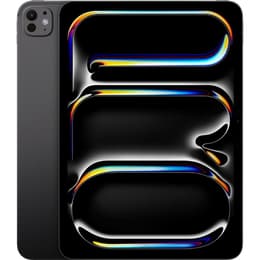

iPad Air 6 (2024, M2 series) Vs iPad Pro (2024, M4 series)

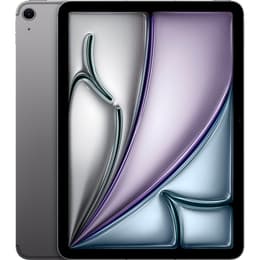
iPad Air 6 (2024, M2 series)
Starting at

Refurbished price:£404.00

Versus £599.00 new

See options
iPad Pro (2024, M4 series)
Starting at

Refurbished price:£642.00

Versus £999.00 new

See options

Ratings

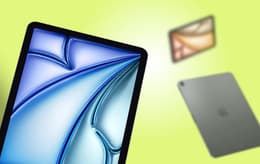
The iPad Air 2024 M2 Series and the iPad Pro 2024 M4 Series represent Apple's latest advancements in tablet technology, both released in May 2024. While sharing the same operating system, iPadOS, these devices cater to different user needs through distinct hardware capabilities. The iPad Air (M2) offers a powerful and versatile experience for a broad audience, whereas the iPad Pro (M4) is engineered for demanding professional workflows, featuring a more advanced display and a newer generation of processing power.

Scores

Durability

Both the iPad Air (M2) and iPad Pro (M4) were released in May 2024, ensuring they benefit from the latest software and hardware innovations. Apple typically provides major iPadOS updates for approximately 5 to 6 years from a device's release, with security updates often extending for a longer period, potentially up to 7-10 years.

  • Software Longevity: Given their recent release and powerful processors, both models are expected to receive consistent iPadOS updates for many years, ensuring access to new features and security enhancements.
  • Practical Lifespan: Users can anticipate a practical lifespan of several years for both devices, with the M4 chip in the Pro model potentially offering a slight edge in future-proofing for the most intensive tasks due to its newer architecture.
  • Repairability: While specific repairability scores can vary, Apple generally designs its devices with a balance of durability and serviceability. Both models are built with robust materials, contributing to their expected longevity.

Year of Release

2024

2024

Compatible with latest Update

Yes

Yes

OS

iPadOS

iPadOS

Maximum Operating System supported

iPadOS 18

iPadOS 18

Performance

The core difference in performance between these two tablets lies in their processing units, influencing how they handle demanding applications and multitasking. The iPad Air features the M2 chip, while the iPad Pro introduces the more advanced M4 chip.

  • Processing Power: The iPad Air (M2) delivers robust performance for everyday tasks, creative work, and gaming, handling demanding apps smoothly. The iPad Pro (M4), with its next-generation processor, offers significantly faster CPU and GPU speeds, making it particularly well-suited for highly intensive professional applications, complex video editing, and advanced 3D rendering.
  • System Responsiveness: Both devices offer fluid navigation and quick app loading. However, the iPad Pro (M4) provides an even more immediate response, especially when dealing with large files or multiple high-demand applications simultaneously, partly due to its higher RAM configurations available in top-tier models.
  • Storage and Multitasking: Both models offer various storage options up to 1TB for the Air and up to 2TB for the Pro. The iPad Pro (M4) also offers up to 16GB of RAM in its higher storage configurations, compared to the iPad Air (M2)'s 8GB, which can benefit users who frequently engage in heavy multitasking or work with very large project files.

Memory (GB)

8 GB

8 GB

Processor

Apple M2

Apple M4

Screen quality

The display technology is a significant differentiator, offering distinct visual experiences tailored to different user expectations. Both models are available in 11-inch and 13-inch sizes.

  • Display Technology: The iPad Air (M2) features a Liquid Retina IPS LCD display, known for its accurate colors and wide viewing angles. The iPad Pro (M4) elevates the visual experience with an Ultra Retina XDR display, which utilizes Tandem OLED technology. This advanced display offers deeper blacks, higher contrast, and more vibrant colors.
  • Brightness and Clarity: The iPad Air (M2) provides good brightness for most indoor and outdoor conditions, with the 11-inch model reaching 500 nits and the 13-inch model reaching 600 nits. The iPad Pro (M4) achieves a higher peak brightness of 1000 nits for SDR content and an impressive 1600 nits for HDR content, making it exceptionally clear and vibrant even in bright environments.
  • Refresh Rate: The iPad Air (M2) maintains a standard 60Hz refresh rate. In contrast, the iPad Pro (M4) features ProMotion technology, offering an adaptive refresh rate that can scale from 10Hz to 120Hz. This results in smoother scrolling, more responsive interactions, and a more fluid visual experience, particularly noticeable in fast-paced content or when using the Apple Pencil.

Resolution

2360 x 1640

2420 x 1668

True Tone

Yes

Yes

Pro-Motion

No

Yes

Screen type

Liquid Retina display

Ultra Retina XDR display

Pixel density

264ppp

264ppp

Brightness

500 nits brightness

1000 nits brightness max

Sound quality

Speakers

Stereo speakers (landscape)

Four speaker audio

Audiovisual

Both iPad models are equipped with capable camera systems, though the iPad Pro (M4) includes additional features designed for more advanced use cases.

  • Rear Camera System: Both the iPad Air (M2) and iPad Pro (M4) feature a 12MP wide rear camera capable of capturing detailed photos and 4K video. The iPad Pro (M4) enhances this with an adaptive True Tone flash and a LiDAR Scanner, which improves autofocus in low light and enables advanced augmented reality (AR) experiences.
  • Front Camera and Video Calls: Both devices include a 12MP ultra-wide front camera, now positioned on the landscape edge, which is ideal for video calls and Center Stage functionality. The iPad Pro (M4) integrates Face ID with its front camera for secure authentication, while the iPad Air (M2) uses Touch ID.
  • Audio Experience: The iPad Air (M2) provides stereo speakers, offering a clear audio experience for media consumption. The 13-inch Air model includes enhanced bass response. The iPad Pro (M4) features a four-speaker audio system, delivering a richer and more immersive sound profile, which can be beneficial for content creation and media playback.

Miscellaneous

Beyond core performance and display, several practical elements differentiate these two tablets, impacting daily usability and accessory compatibility.

  • Connectivity and Ports: Both models support Wi-Fi 6E and Bluetooth 5.3 for fast wireless connections. They both feature a USB-C port. However, the iPad Pro (M4)'s USB-C port supports Thunderbolt 3 and USB 4, offering significantly faster data transfer speeds (up to 40 Gbit/s) and broader external display compatibility compared to the iPad Air (M2)'s USB-C port (up to 10 Gbit/s).
  • Authentication and Design: The iPad Air (M2) uses Touch ID integrated into the power button for secure unlocking. The iPad Pro (M4) utilizes Face ID, allowing for facial recognition authentication. The iPad Pro (M4) is notably thinner and lighter than the iPad Air (M2), with the 13-inch Pro model being Apple's thinnest device to date.
  • Accessory Compatibility: Both devices are compatible with the Apple Pencil Pro and Apple Pencil (USB-C). The iPad Air (M2) works with the existing Magic Keyboard, while the iPad Pro (M4) is designed for a new Magic Keyboard featuring a function row and an aluminum palm rest, enhancing its laptop-like functionality.

Weight

462 g

444 g

Width

17.8 cm

17.7 cm

Height

24 cm

24.9 cm

Depth

0.61 cm

0.5 cm

Screen size (in)

11

11

Network

Wi-Fi

Wi-Fi

Carrier compatibility

Without SIM Port

Without SIM Port

Wi-Fi technology

Wi-Fi 6E 802.11ax

Wi-Fi 6E 802.11ax

Bluetooth Version

Bluetooth 5.3

Bluetooth 5.3

Face ID

No

Yes

Touch ID

Yes

No

Connector

USB Type-C

USB Type-C

User sentiment indicates that both the iPad Air (M2) and iPad Pro (M4) are highly capable tablets, each excelling in different areas. Users frequently praise the iPad Air (M2) for its excellent balance of performance, portability, and display quality, often noting that its M2 chip is more than sufficient for most daily tasks, creative endeavors, and even some demanding applications. Its battery life is generally well-regarded, often lasting a full day of moderate to heavy use.

The iPad Pro (M4) receives acclaim for its groundbreaking Ultra Retina XDR OLED display, which offers unparalleled visual fidelity, deep blacks, and vibrant colors, making it ideal for media consumption and professional creative work. Its M4 chip is consistently highlighted as being exceptionally fast, providing significant headroom for the most intensive workflows, though some users acknowledge that its full potential may not be utilized by everyone due to iPadOS limitations. The Pro model's thinner and lighter design is also a frequent point of praise.

Users prioritizing a powerful and versatile tablet for general productivity, creative hobbies, and entertainment will find the iPad Air (M2) to be an excellent choice. Its performance is robust enough for most users, and the Liquid Retina display provides a great viewing experience. For those who require the absolute best in display technology, maximum processing power for professional-grade applications, and advanced features like Face ID and Thunderbolt connectivity, the iPad Pro (M4) is the more suitable option. It caters to professionals and power users who push their devices to the limit. Choosing a quality-assured refurbished option for either model can be a sustainable choice, offering a way to access these advanced technologies while extending the product's lifecycle.
See all articles

Our recent comparisons