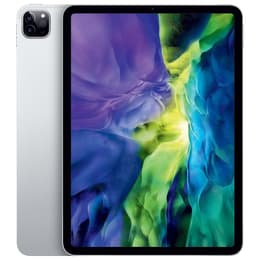

Galaxy Tab S9 (11.0", 2023) Vs iPad Pro (2020, A12 series)

Galaxy Tab S9 (11.0", 2023)
Starting at

Refurbished price:£370.00

Versus £1,060.32 new

See options
iPad Pro (2020, A12 series)
Starting at

Refurbished price:£296.00

Versus £769.00 new

See options

Ratings

The Samsung Galaxy Tab S9, released in August 2023, and the Apple iPad Pro 2020 (11-inch model), launched in March 2020, represent two distinct approaches to premium tablet computing. While both offer high-performance experiences, they differ significantly in their operating systems, display technologies, and ecosystem integrations. The Galaxy Tab S9 runs on Android, providing a versatile and open platform, whereas the iPad Pro operates on Apple's iPadOS, known for its optimized app ecosystem and tight hardware-software integration.

Scores

Durability

When considering the longevity of a tablet, several factors come into play, including software support, physical durability, and the pace of technological advancements.

  • Release Timeline: The Galaxy Tab S9 is a more recent device, having been released in August 2023. The iPad Pro 2020, conversely, was released earlier, in March 2020. This difference in release dates means the Tab S9 benefits from newer components and a longer potential software support window from its launch.
  • Software Longevity: The Galaxy Tab S9 launched with Android 13 and is expected to receive several years of major Android updates, extending its functional lifespan. The iPad Pro 2020, initially running iPadOS 13.4, has received consistent updates and is upgradeable to iPadOS 17.2, demonstrating Apple's commitment to long-term software support for its devices.
  • Durability Features: The Galaxy Tab S9 features an IP68 rating for dust and water resistance, offering a higher level of protection against environmental elements. The iPad Pro 2020 does not carry an official IP rating, though it is built with robust materials.

Year of Release

2023

2020

Compatible with latest Update

Yes

Yes

OS

Android

iPadOS

Performance

Both tablets are designed for demanding tasks, offering powerful performance for a range of activities from creative work to gaming and multitasking.

  • Processing Power: The Galaxy Tab S9 is equipped with a current-generation processor, enabling smooth handling of demanding applications, efficient multitasking, and responsive gaming experiences. The iPad Pro 2020 features a powerful chip that delivers strong performance for professional applications, video editing, and graphic-intensive games, maintaining fluidity even with complex workloads.
  • Memory and Storage: The Galaxy Tab S9 offers configurations with 8GB or 12GB of RAM and storage options of 128GB or 256GB, with the added flexibility of expandable storage via a microSD card up to 1TB. The iPad Pro 2020 comes with 6GB of RAM across all models and offers internal storage options ranging from 128GB up to 1TB, without the possibility of expansion.
  • Battery Behavior: The Galaxy Tab S9, with its 8400mAh battery, typically provides around 9-10 hours of web browsing and over 11 hours of video playback in tests, supporting a full day of mixed usage. The iPad Pro 2020, featuring a 7538mAh battery in the 11-inch model, generally offers 8-10 hours of battery life with typical use, and around 7 hours 48 minutes for continuous video streaming at full brightness.

Memory (GB)

8 GB

6 GB

Screen quality

The visual experience is a key differentiator, with both tablets offering high-quality displays tailored to their respective ecosystems.

  • Display Technology: The Galaxy Tab S9 features an 11-inch Dynamic AMOLED 2X display, known for its deep blacks, vibrant colors, and high contrast, which enhances media consumption and visual tasks. The iPad Pro 2020 utilizes an 11-inch Liquid Retina IPS LCD display, which provides accurate color reproduction, wide viewing angles, and consistent brightness.
  • Resolution and Refresh Rate: The Tab S9 offers a resolution of 1600 x 2560 pixels, resulting in a pixel density of approximately 274 ppi, combined with a 120Hz refresh rate for smooth scrolling and responsive interactions. The iPad Pro 2020 has a resolution of 2388 x 1668 pixels at 264 ppi, also featuring a 120Hz ProMotion refresh rate for fluid visuals and responsiveness.
  • Brightness and Clarity: The iPad Pro 2020's display can reach up to 600 nits of brightness, making it suitable for various lighting conditions, and includes features like P3 wide color and True Tone for adaptive color temperature. The Galaxy Tab S9's AMOLED panel inherently offers excellent contrast and brightness for outdoor visibility, further enhanced by HDR10+ support for high-dynamic-range content.

Resolution

1600 x 2560

2388 x 1668

Screen type

Dynamic AMOLED 2X

Liquid Retina display

Pixel density

280ppp

264ppp

Audiovisual

Both tablets offer capable camera systems, though their primary use cases often lean towards video conferencing and document scanning rather than extensive photography.

  • Rear Camera System: The Galaxy Tab S9 features a 13MP wide-angle main camera on the rear, capable of capturing detailed images and recording video up to 4K at 60 frames per second. The iPad Pro 2020 includes a dual-camera setup with a 12MP wide lens and a 10MP ultrawide lens, alongside a LiDAR scanner that enhances augmented reality experiences and depth sensing.
  • Front Camera Performance: For video calls and selfies, the Tab S9 is equipped with a 12MP ultrawide front camera. The iPad Pro 2020 has a 7MP front-facing camera, which is well-suited for video conferencing and offers features like Portrait mode using its Face ID sensors.
  • Audio Experience: Both tablets feature quad stereo speakers, providing a rich audio experience for media consumption and video calls. The Galaxy Tab S9's speakers are tuned by AKG and support Dolby Atmos. Neither device includes a traditional 3.5mm headphone jack.

Miscellaneous

Beyond core performance and display, several practical features contribute to the overall user experience and device utility.

  • Connectivity Options: The Galaxy Tab S9 supports Wi-Fi 6E and Bluetooth 5.3, with optional 5G connectivity for mobile data access. The iPad Pro 2020 supports Wi-Fi 6 and Bluetooth 5.0, also offering LTE cellular options for connectivity on the go.
  • Ports and Biometrics: Both tablets feature a USB Type-C port for charging and data transfer. The Galaxy Tab S9 incorporates an in-display fingerprint sensor for secure unlocking. The iPad Pro 2020 uses Face ID for biometric authentication, allowing for secure unlocking and payments through facial recognition.
  • Design and Accessories: The Galaxy Tab S9 has dimensions of 254.3 x 165.8 x 5.9 mm and weighs around 498g (Wi-Fi model), and includes the S Pen stylus in the box. The iPad Pro 2020 measures 247.6 x 178.5 x 5.9 mm and weighs approximately 471g (Wi-Fi model), supporting the Apple Pencil (2nd Gen) and Magic Keyboard, which are sold separately.

Weight

129 g

471 g

Screen size (in)

11.0

11

Network

Wi-Fi

Wi-Fi

Carrier compatibility

Unlocked

Without SIM Port

User feedback for the Galaxy Tab S9 often praises its vibrant AMOLED display, robust performance for gaming and productivity, and the inclusion of the S Pen, which enhances its value for creative and note-taking tasks. Some users note that while its battery life is good, it might not always reach the maximum advertised figures, especially with the demanding AMOLED screen. The IP68 water and dust resistance is also a frequently appreciated feature, offering peace of mind for use in various environments.

The iPad Pro 2020 is frequently lauded for its powerful performance, smooth iPadOS experience, and the quality of its Liquid Retina display with ProMotion technology. Users often highlight its strong ecosystem of apps optimized for the tablet form factor and its capability for professional-level creative work. Common observations include its excellent speakers and the utility of Face ID. Some users have reported that the battery life, while generally good, can vary depending on usage intensity, with some experiencing less than the advertised 10 hours with heavy use.

Users prioritizing a vibrant AMOLED display, expandable storage, and an included stylus for creative and productivity tasks within the Android ecosystem may find the Galaxy Tab S9 well-suited to their needs. Conversely, users who value a highly optimized app ecosystem, consistent software updates, and a powerful chip for demanding creative applications within the Apple ecosystem may lean towards the iPad Pro 2020. Both devices offer compelling experiences, and considering a quality-assured refurbished option for either can be a sustainable choice for those looking to extend the life cycle of electronic products.


See all articles

Our recent comparisons