Galaxy Tab S9+ (12.4", 2023) Vs iPad 9 (2021, A13 series)

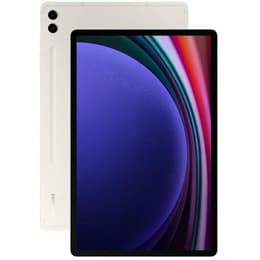
Galaxy Tab S9+ (12.4", 2023)
Starting at

Refurbished price:£440.84

Versus £868.13 new

See options
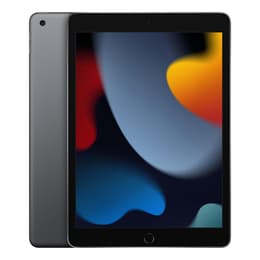
iPad 9 (2021, A13 series)
Starting at

Refurbished price:£158.00

Versus £679.00 new

See options

Ratings

The Samsung Galaxy Tab S9 Plus, released in August 2023, and the Apple iPad 9th Generation, launched in September 2021, represent distinct approaches to the tablet experience. While both devices offer robust platforms for productivity and entertainment, they differ significantly in their operating systems, display technology, and overall design philosophy. The Galaxy Tab S9 Plus operates on Android, providing a larger, more vibrant display and advanced features, whereas the iPad 9th Generation runs on iPadOS, offering a streamlined experience with a focus on accessibility and a familiar ecosystem.

Scores

Durability

The practical lifespan of a tablet is influenced by its release timeline, software support, and physical resilience. These two devices offer different levels of longevity and durability.

  • Release Timeline: The Galaxy Tab S9 Plus was released in August 2023, making it a more recent device compared to the iPad 9th Generation, which launched in September 2021 and was discontinued in May 2024. This difference in age impacts their remaining software support cycles.
  • Software Longevity: The Galaxy Tab S9 Plus, running Android, typically receives several years of major operating system updates and security patches from its release date. The iPad 9th Generation, on the other hand, is expected to receive regular iPadOS updates until approximately 2026, with security updates potentially extending until 2028.
  • Physical Durability: The Galaxy Tab S9 Plus features an Armor Aluminum frame and boasts an IP68 rating for dust and water resistance, indicating it can withstand submersion in fresh water up to 1.5 meters for 30 minutes. The iPad 9th Generation has an aluminum enclosure but does not carry an official IP rating for water or dust resistance.

Year of Release

2023

2021

Compatible with latest Update

Yes

Yes

OS

Android

iPadOS

Performance

Performance is a key differentiator, impacting how smoothly applications run, how quickly tasks are completed, and the overall responsiveness of the user interface.

  • Processing Power: The Galaxy Tab S9 Plus is equipped with a current-generation octa-core processor designed for demanding tasks, offering substantial power for multitasking, graphic-intensive applications, and advanced gaming. The iPad 9th Generation utilizes a capable hexa-core processor that handles everyday applications, web browsing, and casual gaming with ease.
  • Multitasking and Storage: The Galaxy Tab S9 Plus typically comes with 12GB of RAM, facilitating seamless transitions between numerous open applications and intensive workflows. It offers storage options of 256GB or 512GB, expandable via microSD card. The iPad 9th Generation includes 3GB of RAM, suitable for general multitasking, and is available with 64GB or 256GB of internal storage, which is not expandable.
  • Battery Behavior: The Galaxy Tab S9 Plus houses a 10,090 mAh battery, generally providing around 8 to 10 hours of mixed usage, depending on the intensity of tasks. The iPad 9th Generation features a 32.4 Wh battery, which translates to approximately 10 hours of web surfing or video playback on Wi-Fi.

Memory (GB)

12 GB

3 GB

Screen quality

The display is a primary interface for tablets, and both devices offer distinct visual experiences tailored to different user preferences.

  • Display Technology and Size: The Galaxy Tab S9 Plus features a 12.4-inch Dynamic AMOLED 2X display, known for its deep blacks, high contrast, and vibrant color reproduction. The iPad 9th Generation comes with a 10.2-inch Retina IPS LCD, which provides accurate colors and wide viewing angles.
  • Resolution and Smoothness: The Galaxy Tab S9 Plus offers a resolution of 2800 x 1752 pixels with a 120Hz refresh rate, resulting in sharp images and exceptionally smooth scrolling and animations. The iPad 9th Generation has a resolution of 2160 x 1620 pixels and a standard 60Hz refresh rate, delivering clear visuals for most content.
  • Brightness and Clarity: The Galaxy Tab S9 Plus's Dynamic AMOLED 2X display provides high brightness levels, enhancing visibility in various lighting conditions, including outdoors. The iPad 9th Generation's Retina display offers 500 nits of brightness and includes True Tone technology, which adjusts the display's color temperature to match ambient light for a more natural viewing experience.

Resolution

1752 x 2800

2160 x 1620

Screen type

Dynamic AMOLED 2X

Retina display

Pixel density

270ppp

264ppp

Audiovisual

While tablets are not typically primary photography devices, their camera systems are important for video calls, document scanning, and occasional photo capture.

  • Rear Camera Capabilities: The Galaxy Tab S9 Plus features a dual-camera setup on the rear, consisting of a 13MP wide lens and an 8MP ultrawide lens, offering versatility for different shooting scenarios and video recording up to 4K at 60 frames per second. The iPad 9th Generation has an 8MP wide rear camera, suitable for basic photography and document scanning, with video recording at 1080p at 30 frames per second.
  • Front Camera and Video Conferencing: Both tablets excel in front-facing camera performance, crucial for video calls. The Galaxy Tab S9 Plus is equipped with a 12MP ultrawide front camera. The iPad 9th Generation also features a 12MP ultrawide front camera with Center Stage, a feature that automatically keeps the user in the frame during video calls.
  • Audio Experience: The Galaxy Tab S9 Plus integrates quad speakers tuned by AKG with Dolby Atmos support, providing a rich audio experience for media consumption. The iPad 9th Generation features stereo speakers, delivering clear audio for video calls and general media.

Miscellaneous

Beyond core specifications, several practical elements contribute to the overall user experience and device utility.

  • Connectivity and Ports: The Galaxy Tab S9 Plus supports Wi-Fi 6E and Bluetooth 5.3, offering faster and more stable wireless connections, and features a USB-C 3.2 port for data transfer and charging. The iPad 9th Generation supports Wi-Fi 5 (802.11ac) and Bluetooth 4.2, and uses a Lightning port for charging and accessories.
  • Biometric Security and Accessories: The Galaxy Tab S9 Plus incorporates an in-display fingerprint sensor for secure unlocking and comes with an IP68-rated S Pen for writing and drawing. The iPad 9th Generation features Touch ID integrated into the home button and supports the first-generation Apple Pencil and Smart Keyboard.
  • Physical Characteristics: The Galaxy Tab S9 Plus measures 285.4 x 185.4 x 5.7 mm and weighs approximately 581g (Wi-Fi model), presenting a larger and thinner profile. The iPad 9th Generation measures 250.6 x 174.1 x 7.5 mm and weighs around 487g (Wi-Fi model), offering a more compact form factor.

Weight

129 g

498 g

Screen size (in)

12.4

10.2

Network

Wi-Fi

Wi-Fi + 4G

Carrier compatibility

Unlocked

Unlocked

User feedback for the Samsung Galaxy Tab S9 Plus often praises its expansive and vibrant AMOLED display, robust performance for demanding applications, and the inclusion of the S Pen, which enhances productivity and creative tasks. Some users appreciate its IP68 rating for added durability. Common observations include its premium build and suitability for media consumption and professional work.

The iPad 9th Generation is frequently lauded for its consistent performance for everyday use, the reliability of iPadOS, and its improved front-facing camera with Center Stage, making it a strong contender for video conferencing and educational purposes. Users often highlight its long-standing software support and integration within the Apple ecosystem. Some feedback notes its traditional design and the presence of a Lightning port as areas that could be updated.

Users prioritizing a large, high-refresh-rate OLED display, advanced multitasking capabilities, and integrated stylus functionality may find the Galaxy Tab S9 Plus well-suited to their needs. Its dust and water resistance also make it a consideration for those who use their device in varied environments. Conversely, users seeking a reliable, user-friendly tablet for general productivity, media consumption, and video calls within a familiar ecosystem might lean toward the iPad 9th Generation. Its continued software support and established accessory ecosystem are also key factors.

For those considering either device, exploring quality-assured refurbished options can provide an eco-friendly alternative, extending the life cycle of these products and offering a sustainable choice.

See all articles

Our recent comparisons