
Galaxy S23+ Vs Galaxy S25

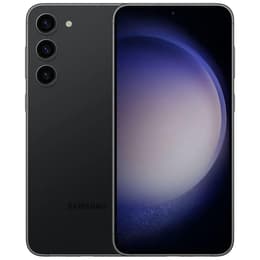
Galaxy S23+
Galaxy S23+
Starting at

Refurbished price:£257.00

Versus £1,199.99 new

See options
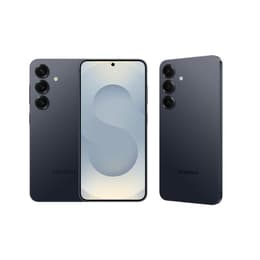
Galaxy S25
Galaxy S25
Starting at

Refurbished price:£435.00

Versus £766.13 new

See options

Ratings

The Samsung Galaxy S23 Plus, released in early 2023, and the Samsung Galaxy S25, launched in early 2025, represent two generations of Samsung's flagship smartphone line. While both devices offer a premium Android experience, the Galaxy S25 introduces advancements in software longevity, processing power, and display technology, alongside a more compact design. Both run on Samsung's One UI atop the Android operating system, providing a consistent user interface.

Scores

Durability

When considering the long-term usability of a smartphone, software support and physical resilience are key factors. The Galaxy S25 offers a notable advantage in its extended support timeline.

  • Software Longevity: The Galaxy S25, released with Android 15, is promised seven years of operating system upgrades and seven years of security updates, extending its support until approximately 2032. In contrast, the Galaxy S23 Plus, launched with Android 13, receives four years of OS updates and five years of security updates, with support concluding around 2028. [1, 6, 10, 17, 31, 37]
  • Physical Durability: Both devices feature an aluminum frame and Gorilla Glass Victus 2 on the front for screen protection, offering robust resistance against drops and scratches. They also share an IP68 rating for water and dust resistance, meaning they can withstand submersion in fresh water up to 1.5 meters for 30 minutes. [2, 9]
  • Repairability: The Galaxy S25 series has shown improved repairability, with the standard S25 model receiving a high score of 9 out of 10 from PBKReviews, indicating it is relatively straightforward to open and repair. [20, 25] While specific scores for the S23 Plus are less prominent, older flagship models generally had lower repairability ratings, suggesting the S25 offers a more accessible repair experience.

Year of Release

2023

2025

OS

Android

Android

Foldable

No

No

Performance

The performance of a smartphone is largely determined by its internal components, influencing how smoothly applications run and how efficiently it handles demanding tasks. There are distinct differences in the processing capabilities and memory configurations between these two models.

  • Processing Power: The Galaxy S25 is equipped with a newer generation processor, built on a more advanced 3nm manufacturing process. This translates to enhanced speed and efficiency for everyday operations, multitasking, and graphically intensive applications. The Galaxy S23 Plus features a capable processor from an earlier generation, which still delivers smooth performance for most users but may show a difference in speed and thermal management during prolonged heavy use. [1, 2, 4, 5, 8, 9, 14, 17, 24]
  • Multitasking and Responsiveness: The Galaxy S25 comes standard with 12GB of RAM, providing ample capacity for running numerous applications simultaneously and switching between them without lag. The Galaxy S23 Plus includes 8GB of RAM, which is sufficient for typical multitasking, but the additional RAM in the S25 offers more headroom for power users or future, more demanding software. [1, 5, 8, 9, 17, 31]
  • Storage Technology: Both devices offer storage options starting from 256GB, with larger capacities available. Both utilize UFS 4.0 storage for faster data read and write speeds in their higher storage configurations, contributing to quicker app loading and file transfers. [1, 15, 17, 31]

Memory (GB)

8 GB

12 GB

Screen quality

The display is a primary interface for smartphone interaction, and both the Galaxy S23 Plus and Galaxy S25 feature high-quality panels, though with some key distinctions in their capabilities.

  • Display Technology and Clarity: Both smartphones utilize Dynamic AMOLED 2X display technology, known for its vibrant colors, deep blacks, and excellent contrast. The Galaxy S23 Plus features a 6.6-inch display with Full HD+ resolution (2340 x 1080 pixels). The standard Galaxy S25 has a slightly smaller 6.2-inch display, also with Full HD+ resolution (2340 x 1080 pixels). [1, 2, 3, 4, 9, 13, 14, 15, 17, 21, 22, 31, 39]
  • Brightness and Outdoor Visibility: The Galaxy S25 offers a higher peak brightness of 2600 nits, which significantly improves visibility in bright outdoor conditions. The Galaxy S23 Plus also provides excellent outdoor visibility with a peak brightness of 1750 nits. [1, 9, 13, 17, 22, 39, 40, 42]
  • Refresh Rate and Smoothness: Both models feature an adaptive refresh rate of up to 120Hz, ensuring smooth scrolling and fluid animations. The Galaxy S25 benefits from LTPO technology, allowing its refresh rate to dynamically scale down to 1Hz for static content, which can contribute to power efficiency. The S23 Plus's adaptive refresh rate scales between 48Hz and 120Hz. [1, 13, 17, 21, 22, 28, 31, 41]

Resolution

1080 x 2340

1080x2340

Screen type

Dynamic AMOLED 2X

Dynamic LTPO AMOLED 2X

Audiovisual

Both the Galaxy S23 Plus and Galaxy S25 are equipped with versatile camera systems designed to capture a wide range of photographic and video content, with the newer model benefiting from software enhancements.

  • Rear Camera System: The Galaxy S23 Plus features a triple rear camera setup, including a 50-megapixel wide-angle main sensor, a 12-megapixel ultra-wide lens, and a 10-megapixel telephoto lens with 3x optical zoom. The standard Galaxy S25 maintains a similar hardware configuration with a 50-megapixel main camera, a 12-megapixel ultra-wide, and a 10-megapixel telephoto lens with 3x optical zoom. [2, 3, 5, 8, 9, 14, 15, 19, 21, 23, 26]
  • Photography Performance: While the core camera hardware is similar, the Galaxy S25 benefits from a newer processor and advanced image processing algorithms, including AI-enhanced features like Nightography zoom and ProVisual Engine. This can lead to improved detail, color accuracy, and low-light performance compared to the S23 Plus. Both models are capable of capturing detailed images in various lighting conditions. [2, 14, 23, 26]
  • Video Recording and Audio: Both devices support video recording at up to 8K resolution at 30 frames per second, offering high-quality video capture. [1, 23] They also feature capable microphones for clear audio recording and stereo speakers for an immersive media consumption experience. [14]

Miscellaneous

Beyond core performance and display, several practical features contribute to the overall user experience and daily convenience of these smartphones.

  • Connectivity and Ports: Both the Galaxy S23 Plus and Galaxy S25 support 5G connectivity for fast mobile data speeds. The S25 likely incorporates newer Wi-Fi standards (e.g., Wi-Fi 7) and Bluetooth 5.4, offering potentially faster and more stable wireless connections compared to the S23 Plus's Wi-Fi 6E and Bluetooth 5.3. Both devices use a USB Type-C port for charging and data transfer. [3, 8, 9, 29]
  • Biometric Security: For secure unlocking and authentication, both smartphones feature an ultrasonic in-display fingerprint sensor. The Galaxy S25 also integrates advanced AI features, such as Live Translator and Chat Assistant, enhancing user interaction and productivity. [1, 2, 8]
  • Design and Handling: The Galaxy S25 is a more compact and lighter device, measuring 146.9 x 70.5 x 7.2 mm and weighing 162g. The Galaxy S23 Plus is larger and slightly heavier at 157.8 x 76.2 x 7.6 mm and 196g. [2, 9, 16, 29] This difference in size impacts one-handed usability and pocketability, with the S25 offering a more manageable form factor for some users.

Weight

196 g

162 g

Screen size (in)

6.6

6.2

Mobile network

5G

5G

SIM card

Dual Physical SIM + eSIM

Physical SIM + eSIM

Carrier compatibility

Unlocked

Unlocked

User feedback for the Galaxy S23 Plus often highlights its robust battery life and consistent performance as strong points. Many users appreciate its balanced size, offering a larger screen than the base S23 without the bulk of the Ultra model. Criticisms sometimes point to its camera system being a more iterative upgrade over its predecessor rather than a revolutionary one. [27, 33, 34, 35]

For the Galaxy S25, initial user impressions and expert reviews praise its significantly extended software support, ensuring long-term usability and security. The improved display brightness and the more efficient, powerful processor are also frequently cited as key advantages. Some users might note the standard S25's smaller battery capacity compared to the S23 Plus, which could translate to different real-world battery experiences depending on usage patterns. The enhanced repairability of the S25 series is also a positive development for those who value device longevity. [7, 11, 14, 20, 25]

Users prioritizing long-term software support and a more compact, lighter design with the latest processing power will find the Galaxy S25 well-suited to their needs. Its higher peak display brightness and improved repairability also make it an appealing choice. Conversely, individuals who prefer a larger display in a non-Ultra form factor and prioritize a larger battery capacity might lean towards the Galaxy S23 Plus. Both devices offer a premium Android experience, and choosing between them often comes down to these specific preferences. For those seeking a sustainable choice, both models are available as quality-assured refurbished options, extending their lifespan and reducing electronic waste.

See all articles

Our recent comparisons