
Galaxy S25 Vs iPhone 16e

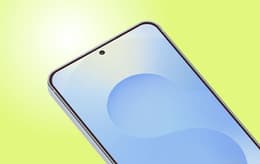
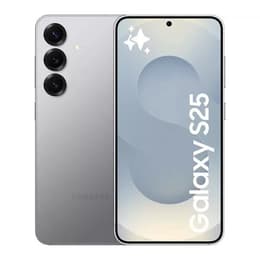
Galaxy S25
Galaxy S25
Starting at

Refurbished price:£435.00

Versus £766.13 new

See options
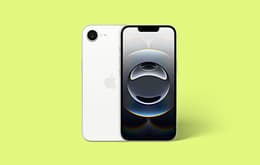
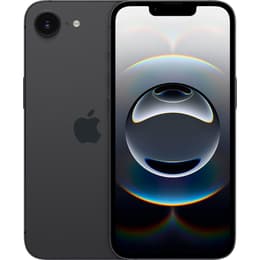
iPhone 16e
iPhone 16e
Starting at

Refurbished price:£359.00

Versus £599.00 new

See options

Ratings

The Samsung Galaxy S25 and the iPhone 16E are both contemporary smartphones released in early 2025, offering distinct experiences within their respective ecosystems. While the Galaxy S25 represents Samsung's standard flagship offering with a focus on advanced Android features, the iPhone 16E serves as Apple's entry-level model within the iPhone 16 series, emphasizing core iPhone capabilities in a more accessible package. The primary differentiators lie in their operating systems, camera versatility, and display technologies.

Scores

Durability

Evaluating the practical lifespan of these devices involves considering their release timelines, software support, and physical durability features.

  • Release Timeline: The Samsung Galaxy S25 was announced in January 2025 and became available in February 2025. The iPhone 16E followed closely, announced in February 2025 and released later that month. Both devices are current-generation models, ensuring a long initial period of relevance.
  • Software Longevity: Samsung has committed to providing up to seven years of operating system updates for the Galaxy S25, ensuring it remains current with the latest Android features and security patches for an extended period. The iPhone 16E, running on iOS, is also expected to receive several years of software support, a hallmark of Apple's ecosystem, though a specific number of years is not typically announced.
  • Durability Features: The Galaxy S25 incorporates IP68 water and dust resistance, along with Corning Gorilla Glass Victus 2 and an Armour Aluminium frame for enhanced physical resilience. The iPhone 16E also features IP68 resistance and a Ceramic Shield display, which is designed for improved drop performance, complemented by an aluminum frame.

Year of Release

2025

2025

OS

Android

iOS

Foldable

No

No

Performance

Both smartphones are equipped with powerful processors designed to handle demanding tasks, though their architectural approaches differ.

  • Processing Power: The Galaxy S25 is powered by a current-generation processor optimized for the Galaxy series, enabling smooth multitasking, efficient app loading, and capable handling of graphically intensive games. This processor is noted for significant performance increases compared to its predecessor, particularly in AI tasks. The iPhone 16E features Apple's A18 chip, which provides robust performance for everyday use, gaming, and the integration of advanced AI features.
  • Multitasking and Responsiveness: The Galaxy S25 comes with 12 GB of RAM, contributing to a highly responsive user experience, especially when switching between multiple applications or running complex processes. While the specific RAM for the iPhone 16E is not detailed, iPhones are known for efficient memory management, allowing for fluid multitasking even with potentially less physical RAM.
  • Storage Options: The Galaxy S25 is available with 128 GB or 256 GB of internal storage. The iPhone 16E offers more varied storage configurations, including 128 GB, 256 GB, and 512 GB, providing more choices for users with extensive storage needs.

Memory (GB)

12 GB

8 GB

Screen quality

The visual experience on both devices is delivered through high-quality displays, each with its own characteristics.

  • Display Technology and Clarity: The Galaxy S25 features a 6.2-inch Dynamic AMOLED 2X display, offering vibrant colors, deep blacks, and excellent contrast. It provides an FHD+ resolution (2340 x 1080 pixels) for clear and detailed visuals. The iPhone 16E sports a 6.1-inch OLED display with a resolution of 2532 x 1170 pixels, also delivering sharp images and good color reproduction.
  • Brightness and Refresh Rate: The Galaxy S25's display can reach a peak brightness of 2600 nits, making it highly visible even in bright outdoor conditions, and features an adaptive refresh rate that can scale from 1 Hz to 120 Hz for smooth scrolling and responsive interactions. The iPhone 16E's display offers good brightness, though typically lower than the Galaxy S25, and maintains a standard 60 Hz refresh rate, which is suitable for general use but may not offer the same fluidity as higher refresh rate screens.
  • Viewing Experience: Both phones provide immersive viewing experiences for media consumption and daily tasks. The Galaxy S25's larger screen and higher refresh rate may appeal to users who prioritize fluid visuals and a slightly more expansive display area, while the iPhone 16E offers a compact form factor with a high-quality OLED panel.

Resolution

1080x2340

2532x1170

Audiovisual

Both smartphones offer capable camera systems, designed to capture high-quality photos and videos in various conditions.

  • Rear Camera System: The Galaxy S25 is equipped with a versatile triple-camera setup on the rear, including a 50 MP main sensor, a 12 MP ultra-wide lens, and a 10 MP telephoto lens with 3x optical zoom, providing flexibility for different photographic scenarios. The iPhone 16E features a 48 MP main camera with an optical-quality 2x telephoto capability, allowing for detailed zoomed-in shots, alongside a 12 MP front camera.
  • Photography Performance: The Galaxy S25 benefits from a Next Gen ProVisual Engine and AI enhancements, which aim to minimize noise and enhance detail, particularly in low-light environments. It also supports 10-bit HDR for richer still images and a Galaxy Log format for video. The iPhone 16E's camera system, integrated with Apple Intelligence, is designed for consistent image quality and user-friendly operation, excelling in everyday photography.
  • Video Capabilities and Audio: The Galaxy S25 can record 8K video at 30fps and 4K video at 60fps, offering advanced video features. The iPhone 16E also provides strong video recording capabilities, typically focusing on ease of use and cinematic quality. Both devices offer good microphone quality for calls and recordings, and their speakers deliver clear audio for media consumption.

Miscellaneous

Beyond core performance, several practical features contribute to the overall user experience of these devices.

  • Connectivity: Both the Galaxy S25 and iPhone 16E support 5G connectivity for fast mobile data speeds. They also include modern Wi-Fi standards and Bluetooth for wireless connections to accessories and networks. The iPhone 16E utilizes Apple's C1 modem, which is noted for power efficiency, though it does not support mmWave 5G.
  • Ports and Biometrics: Both smartphones have adopted the USB-C port for charging and data transfer. For security and convenience, the Galaxy S25 features an ultrasonic fingerprint scanner embedded under the display, while the iPhone 16E relies on Face ID for secure facial recognition.
  • Design and Handling: The Galaxy S25 measures 146.9mm x 70.5mm x 7.2mm and weighs 162g, offering a compact and manageable form factor. The iPhone 16E has similar dimensions at 5.78 x 2.82 x 0.31 inches (approximately 146.8mm x 71.6mm x 7.9mm) and weighs 167g, providing a comfortable in-hand feel. Both devices feature premium build materials, with the Galaxy S25 using Armour Aluminium and the iPhone 16E an aluminum frame.

Weight

162 g

167 g

Screen size (in)

6.2

6.1

Mobile network

5G

5G

SIM card

Physical SIM + eSIM

eSIM

Carrier compatibility

Unlocked

Unlocked

The Samsung Galaxy S25 and iPhone 16E cater to users seeking modern smartphone capabilities within their preferred operating systems. User feedback often praises the Galaxy S25 for its powerful processor, versatile camera system with optical zoom, and vibrant, high-refresh-rate display. Some users appreciate its extensive software update commitment and the integration of advanced AI features. Conversely, the iPhone 16E is frequently lauded for its seamless iOS experience, robust A18 chip, and the reliability of its camera for everyday moments, along with its compact design and Face ID security.

Users prioritizing a highly customizable Android experience with a feature-rich camera, a high-refresh-rate display, and long-term software support may find the Galaxy S25 well-suited to their needs. Its strong performance and advanced display technology make it a compelling choice for power users and multimedia enthusiasts. On the other hand, users who value the intuitive and secure iOS ecosystem, consistent performance, and a streamlined user experience will likely lean towards the iPhone 16E. Its integration with Apple Intelligence and reliable camera make it an excellent option for those deeply embedded in the Apple ecosystem or seeking a dependable entry point into the iPhone series.

For those considering either device, exploring quality-assured refurbished options can provide an eco-friendly alternative, offering access to these advanced technologies while supporting sustainable consumption.
See all articles

Our recent comparisons