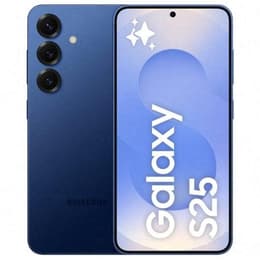


Galaxy S25 Vs Google Pixel 9 Pro XL

Galaxy S25
Galaxy S25
Starting at

Refurbished price:£435.00

Versus £766.13 new

See options
Google Pixel 9 Pro XL
Starting at

Refurbished price:£384.00

Versus £1,093.99 new

See options

Ratings

The Samsung Galaxy S25, released in February 2025, and the Google Pixel 9 Pro XL, launched in August 2024, represent two distinct approaches to high-end Android smartphones. While both devices offer premium experiences, they differentiate themselves through their camera philosophies, display characteristics, and overall performance profiles. Both run on the Android operating system, providing a familiar software environment with unique manufacturer-specific enhancements.

Scores

Durability

When considering the long-term usability of these devices, both manufacturers have committed to extended software support, which is a significant factor in their practical lifespan.

  • Release Timeline: The Google Pixel 9 Pro XL arrived in August 2024, preceding the Samsung Galaxy S25, which was released in February 2025. This means the Galaxy S25 benefits from a slightly newer hardware generation.
  • Software Longevity: Both the Galaxy S25 and the Pixel 9 Pro XL are committed to receiving seven years of operating system and security updates. The Galaxy S25 launched with Android 15 and One UI 7, with support extending until 2032. The Pixel 9 Pro XL also launched with Android 15 and is promised updates until Android 22. This extended support ensures both devices remain secure and compatible with new features for a considerable period.
  • Durability Features: The Galaxy S25 incorporates Corning Gorilla Glass Victus 2 on the front and an Armor Aluminum frame, contributing to its resilience against daily wear and tear. The Pixel 9 Pro XL also features a durable glass back and a polished aluminum frame, with Corning Gorilla Glass Victus 2 protecting its display. Both devices carry an IP68 rating for dust and water resistance, offering protection against immersion.

Year of Release

2025

2024

OS

Android

Android

Foldable

No

No

Performance

The core processing power and storage capabilities vary between these two smartphones, impacting how they handle demanding applications and multitasking.

  • Processor Capabilities: The Samsung Galaxy S25 is powered by a current-generation processor optimized for Galaxy devices, manufactured on a 3nm process. This processor is designed to deliver robust performance for resource-intensive applications and gaming. The Google Pixel 9 Pro XL features Google's Tensor G4 processor, a 4nm chip, which focuses on efficient AI processing and a smooth overall user experience. For raw processing power and gaming, the Galaxy S25 generally offers a snappier experience.
  • Multitasking and Storage: The Galaxy S25 comes with 12GB of RAM, paired with UFS 4.0 flash storage, providing quick app loading and efficient multitasking. Storage options include 128GB and 256GB. The Pixel 9 Pro XL is equipped with 16GB of RAM and UFS 3.1 flash storage, supporting extensive multitasking and smooth operation. It offers a wider range of storage configurations, from 128GB up to 1TB. Neither device supports expandable storage.
  • Battery Behavior: The Galaxy S25 houses a 4000 mAh battery, designed to last a full day with mixed usage. The Pixel 9 Pro XL features a larger 5060 mAh battery, which often translates to extended usage times, with some users reporting up to two days of moderate use.

Memory (GB)

12 GB

16 GB

Screen quality

The visual experience on both smartphones is a key consideration, with differences in display technology, size, and brightness levels.

  • Display Technology and Clarity: The Samsung Galaxy S25 features a 6.2-inch Dynamic LTPO AMOLED 2X display, offering vibrant colors, deep blacks, and a resolution of 2340 x 1080 pixels (FHD+). The Google Pixel 9 Pro XL boasts a larger 6.8-inch LTPO OLED display with a higher QHD+ resolution of 2992 x 1344 pixels, providing a sharper viewing experience. Both displays support HDR10+ for enhanced contrast and color in compatible content.
  • Brightness and Smoothness: The Galaxy S25's display can reach a peak brightness of 2600 nits, ensuring good visibility in various lighting conditions. The Pixel 9 Pro XL offers an even higher peak brightness of 3000 nits, which can be beneficial for outdoor use and HDR content. Both phones feature an adaptive refresh rate of up to 120Hz, contributing to smooth scrolling and fluid animations.
  • Viewing Experience: The Galaxy S25 provides a more compact viewing experience due to its smaller screen size, which can be preferred by users seeking easier one-handed operation. The Pixel 9 Pro XL's larger display offers more screen real estate, making it well-suited for media consumption, gaming, and productivity tasks where a larger canvas is advantageous.

Resolution

1080x2340

1344 x 2992

Screen type

Dynamic LTPO AMOLED 2X

LTPO OLED

Audiovisual

Both devices offer advanced camera systems, but they approach photography with different strengths and hardware configurations.

  • Rear Camera System: The Samsung Galaxy S25 features a triple rear camera setup: a 50MP main sensor with optical image stabilization (OIS), a 12MP ultra-wide camera with a 120-degree field of view, and a 10MP telephoto lens offering 3x optical zoom with OIS. The Google Pixel 9 Pro XL also has a triple rear camera system, consisting of a 50MP main sensor with OIS, a 48MP ultra-wide camera with a 123-degree field of view and macro autofocus, and a 48MP periscope telephoto lens providing 5x optical zoom with OIS. The Pixel's larger ultrawide and higher optical zoom telephoto offer distinct advantages in those specific areas.
  • Photography Performance: The Pixel 9 Pro XL is often praised for its computational photography, delivering natural colors and excellent detail, particularly from its main camera, and performs well in low-light conditions. The Galaxy S25 also provides detailed images with good color reproduction, with Samsung focusing on software optimization to enhance image quality. The Pixel's ultrawide camera has a slightly wider field of view.
  • Video Recording and Front Camera: Both phones are capable of high-resolution video recording. The Galaxy S25 supports up to 8K at 30fps and includes features like LOG video and improved nighttime video capture. The Pixel 9 Pro XL records up to 4K at 60fps, with cloud-based upscaling for 8K video via Video Boost. For selfies and video calls, the Galaxy S25 has a 12MP front camera, while the Pixel 9 Pro XL features a higher-resolution 42MP front camera with autofocus.

Miscellaneous

Beyond the core specifications, several practical elements contribute to the overall user experience and device utility.

  • Connectivity and Ports: Both the Galaxy S25 and Pixel 9 Pro XL support modern connectivity standards, including 5G for fast mobile data, and current Wi-Fi and Bluetooth versions. The Galaxy S25 uses a USB Type-C port. The Pixel 9 Pro XL also features a USB-C port.
  • Biometric Security: For secure unlocking and authentication, both devices incorporate an ultrasonic in-screen fingerprint sensor. The Pixel 9 Pro XL also includes Google's dedicated Titan M2 security chip for enhanced user privacy.
  • Design and Handling: The Galaxy S25 is a more compact device, measuring 146.9 x 70.5 x 7.2 mm and weighing 162g, making it easier for one-handed use and pocketability. The Pixel 9 Pro XL is larger and heavier at 162.8 x 76.6 x 8.5mm and 221g, offering a more substantial feel in hand. The Galaxy S25 has a flat display, while the Pixel 9 Pro XL also features a flat panel.

Weight

162 g

221 g

Screen size (in)

6.2

6.8

Mobile network

5G

5G

SIM card

Physical SIM + eSIM

Physical SIM + eSIM

Carrier compatibility

Unlocked

Unlocked

The Samsung Galaxy S25 and Google Pixel 9 Pro XL each present compelling features for different user needs. User sentiment often highlights the Galaxy S25's strong raw performance, particularly for demanding applications and gaming, thanks to its optimized processor. Some users appreciate its compact design and the comprehensive suite of Galaxy AI features. However, some reviews note that while its camera hardware is capable, the base model's camera system might not offer the same level of zoom versatility as some competitors.

Conversely, the Google Pixel 9 Pro XL is frequently praised for its exceptional camera system, especially its computational photography capabilities that deliver natural-looking photos and strong low-light performance. Users also often commend its extended battery life and the clean, intuitive Android experience, along with Google's advanced AI integrations. Some criticisms occasionally point to its processor not matching the absolute peak performance of some rivals in synthetic benchmarks, though real-world usage remains smooth.

Users prioritizing a powerful processor for gaming and a more compact form factor may find the Samsung Galaxy S25 well-suited to their needs. Those who place a higher value on advanced computational photography, a larger display, and extended battery life, coupled with a streamlined software experience, may lean toward the Google Pixel 9 Pro XL. Both devices offer long-term software support, making them viable choices for an extended period. For those considering these devices, exploring quality-assured refurbished options can provide an eco-friendly alternative to new purchases.


See all articles

Our recent comparisons