
Compare models
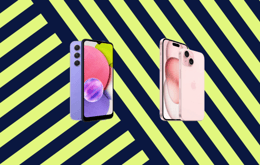
Galaxy Z Flip7 Vs iPhone 16
- 1-year minimum warranty
- Free delivery on all items
- Free 30-day returns
Differences at a glance
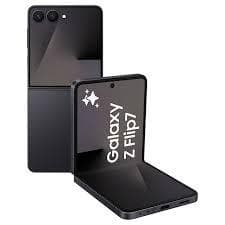
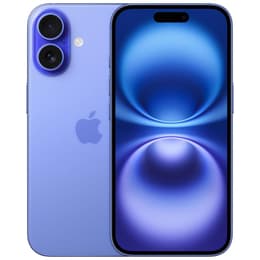
The Samsung Galaxy Z Flip7 (2025) and Apple iPhone 16 (2024) represent two distinct smartphone philosophies, combining a folding clamshell design with a traditional candy-bar mobile format. While both devices serve everyday communication and media needs, they differ fundamentally in form factor and operating systems, with the Galaxy running Android and the iPhone operating on iOS. Choosing between them depends largely on user preferences regarding physical dimensions and software ecosystems.
Available Models
Colour
Storage (GB)
Scores
Durability
Both smartphones provide robust long-term support, though their release timelines and hardware designs introduce different considerations for long-term ownership.
- Software Support: The iPhone 16 benefits from Apple's consistent multi-year iOS updates, while the Galaxy Z Flip7 features extended Android version updates and security patches.
- Hardware Endurance: The traditional candy-bar design of the iPhone 16 offers fewer moving parts, whereas the foldable hinge mechanism on the Galaxy Z Flip7 requires careful handling over years of daily folding and unfolding.
- Repairability: Standard slab phones generally present straightforward repair paths for components like batteries, while foldable displays require specialized servicing procedures.
Year of Release
2025
2024
Performance
Underneath their exteriors, both handsets deliver rapid processing speeds capable of handling demanding applications, heavy multitasking, and modern mobile games without noticeable stutter.
- Storage Configurations: Both devices offer ample baseline storage tiers starting at mid-range capacities, scaling upward for users with large media libraries.
- Multitasking and Memory: Generous system memory allocations on both models ensure smooth app switching, though background task management differs between Android and iOS architectures.
- Battery Behavior: Battery endurance varies under heavy use due to different cell capacities and screen configurations, with both models supporting rapid wired replenishment and wireless charging methods.
Screen quality
Visual output is a primary differentiator, as the Galaxy Z Flip7 utilizes a flexible folding panel paired with an expanded exterior cover screen, while the iPhone 16 relies on a rigid, high-resolution flat display.
- Display Technology: Both models utilize advanced OLED technology that delivers deep black levels, high contrast ratios, and vivid color reproduction for video playback.
- Outdoor Visibility: High peak brightness capabilities on both screens ensure content remains legible under direct sunlight.
- Refresh Dynamics: The Galaxy Z Flip7 features a high refresh rate for smooth scrolling, whereas the iPhone 16 standard model utilizes a traditional refresh rate for everyday navigation.
Audiovisual
Photography and media capture are handled via dual-lens rear arrays on both devices, supported by computational processing to enhance clarity in diverse lighting environments.
- Lens Versatility: Both handsets pair a high-resolution primary wide sensor with an ultra-wide secondary lens for landscape and group framing.
- Video and Audio: Video recording tools deliver steady footage with clear audio capture from integrated multi-microphone arrays suitable for calls and content creation.
- Media Playback: Stereo speaker setups on both devices provide balanced sound output for casual music listening and video streaming without external speakers.
Miscellaneous
Practical daily usability is shaped by physical dimensions, connectivity standards, and biometric security features built into each device body.
- Connectivity and Ports: Both models support current-generation 5G cellular networks, high-speed Wi-Fi standards, and modern Bluetooth accessories alongside universal USB-C charging ports.
- Security Sensors: Biometric authentication is handled via facial recognition on the iPhone 16 and a side-mounted fingerprint sensor integrated into the power button on the Galaxy Z Flip7.
- Physical Handling: The Galaxy Z Flip7 folds into a compact square for easy pocket storage, while the iPhone 16 maintains a lightweight, pocket-friendly rigid profile.
Screen size (in)
6.9
6.1
Mobile network
5G
5G
SIM card
Physical SIM + eSIM
eSIM
Carrier compatibility
Unlocked
Unlocked
Connector
USB-C
USB-C (USB 2)
What the community thinks
User feedback highlights distinct preferences for each device across community forums. Galaxy Z Flip7 owners frequently praise the compact folding pocket footprint, the utility of the larger cover screen for quick notifications, and flexible angles for hands-free photography. Conversely, some users note that the crease on the folding display remains visible under certain lighting conditions. iPhone 16 users commonly commend the reliable battery efficiency, robust build quality, and seamless integration within the broader Apple device ecosystem, though some express a desire for faster screen refresh rates on the base model.
Users prioritizing a compact, pocketable form factor and a versatile folding layout will find the Galaxy Z Flip7 well-suited to their daily routine, while users favoring a traditional rigid design and a streamlined software ecosystem may prefer the iPhone 16. For buyers seeking a sustainable choice, exploring a quality-assured refurbished option provides an eco-friendly alternative that delivers identical daily functionality while reducing electronic waste. Ultimately, the right choice depends entirely on whether a folding layout or a conventional candy-bar design aligns better with personal workflow habits.