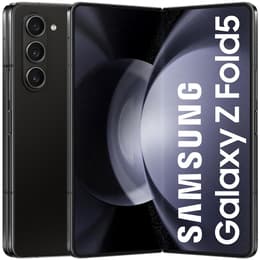


Galaxy Z Fold5 Vs Xiaomi Redmi Note 11 Pro 5G

Galaxy Z Fold5
Galaxy Z Fold5
Starting at

Refurbished price:£413.00

Versus £1,770.61 new

See options
Xiaomi Redmi Note 11 Pro 5G
Starting at

Refurbished price:£102.00

Versus £599.00 new

See options

Ratings

The Samsung Galaxy Z Fold5, released in August 2023, and the Xiaomi Redmi Note 11 Pro 5G, launched in January 2022, represent distinct approaches to smartphone design and functionality. The Galaxy Z Fold5 offers a unique foldable form factor that transforms from a traditional smartphone into a larger tablet-like display, while the Redmi Note 11 Pro 5G provides a conventional smartphone experience with a focus on core features. Both devices operate on the Android platform, with Samsung's One UI and Xiaomi's MIUI offering different user interfaces and software experiences.

Scores

Durability

The longevity and support for these devices vary significantly due to their release timelines and manufacturer policies.

  • Software Support: The Galaxy Z Fold5, being a more recent flagship device, typically receives four major Android OS upgrades and five years of security updates from its release, ensuring a longer period of updated features and security. The Redmi Note 11 Pro 5G, launched earlier, generally receives fewer major Android updates, often around two to three, and a shorter span of security patches, usually three to four years.
  • Physical Durability: The Galaxy Z Fold5 features an Armor Aluminum frame and Gorilla Glass Victus 2 on its cover screen, along with an IPX8 water resistance rating, meaning it can withstand submersion in water but lacks official dust resistance. Its foldable screen includes a pre-installed protector. The Redmi Note 11 Pro 5G offers IP53 dust and splash resistance and uses Gorilla Glass 5 for its front display.
  • Repairability: The Redmi Note 11 Pro 5G has a relatively high repairability score, with components like the back plate and battery being accessible for servicing. The Galaxy Z Fold5, due to its complex foldable design, presents more challenges for repair, particularly concerning its main display, though battery replacement has seen improvements with pull-tabs.

Year of Release

2023

2022

Compatible with latest Update

Yes

No

OS

Android

Android

Foldable

Yes

No

Performance

Performance capabilities differ between these two devices, catering to varying user demands for processing power and multitasking.

  • Processing Power: The Galaxy Z Fold5 is equipped with a high-end processor, enabling smooth operation for demanding applications, intensive gaming, and efficient multitasking across its large display. The Redmi Note 11 Pro 5G utilizes a mid-range processor that handles everyday tasks, general app usage, and moderate gaming with responsiveness.
  • Multitasking and Storage: With 12GB of RAM, the Galaxy Z Fold5 offers substantial capacity for running multiple applications simultaneously and switching between them without slowdowns. It comes with ample internal storage options ranging from 256GB to 1TB, utilizing faster UFS 4.0 technology, but does not support expandable storage. The Redmi Note 11 Pro 5G is available with 6GB or 8GB of RAM, which is sufficient for typical smartphone usage, and offers 64GB or 128GB of internal storage, with the added flexibility of microSD card expansion up to 1TB.
  • Battery Behavior: The Galaxy Z Fold5 features a 4400 mAh battery, which, combined with its efficient processor, typically provides a full day of use for many users. The Redmi Note 11 Pro 5G houses a larger 5000 mAh battery, known for delivering extended battery life that can often last beyond a single day on a full charge.

Memory (GB)

12 GB

6 GB

Screen quality

The display experience is a key differentiator, with the Galaxy Z Fold5 offering a unique adaptable screen and the Redmi Note 11 Pro 5G providing a vibrant traditional panel.

  • Display Technology and Size: The Galaxy Z Fold5 features two Dynamic AMOLED 2X displays: a 7.6-inch main foldable screen and a 6.2-inch cover screen, both offering vibrant colors and deep blacks. The Redmi Note 11 Pro 5G comes with a single 6.67-inch Super AMOLED display, providing a rich and clear viewing experience.
  • Resolution and Brightness: The main display of the Galaxy Z Fold5 has a resolution of 2176 x 1812 pixels, while its cover screen is 2316 x 904 pixels, both delivering sharp visuals. It can reach a peak brightness of 1750 nits, ensuring good visibility in bright outdoor conditions. The Redmi Note 11 Pro 5G offers a 1080 x 2400 pixel (FHD+) resolution and can achieve a peak brightness of 1200 nits, which also contributes to good outdoor readability.
  • Refresh Rate and Viewing Experience: Both devices feature a 120Hz refresh rate, contributing to smooth scrolling and fluid animations. The Galaxy Z Fold5's large unfolded screen provides an immersive, tablet-like experience for media consumption and productivity, though a visible crease is present. The Redmi Note 11 Pro 5G offers a large, flat display suitable for everyday viewing and media.

Resolution

1812 x 2176

1080 x 2400

Screen type

Foldable Dynamic AMOLED 2X

Super AMOLED

Audiovisual

Camera capabilities vary between the two devices, with different strengths in photography and video recording.

  • Rear Camera Systems: The Galaxy Z Fold5 features a versatile triple-camera setup on the rear, including a 50MP main sensor, a 12MP ultrawide lens, and a 10MP telephoto lens with 3x optical zoom, offering flexibility for various shooting scenarios. The Redmi Note 11 Pro 5G also has a triple rear camera system, highlighted by a 108MP main sensor, an 8MP ultrawide lens, and a 2MP macro lens.
  • Photography Performance: In well-lit conditions, the Galaxy Z Fold5 produces good quality photos, though colors can sometimes appear oversaturated. Its low-light performance is generally capable. The Redmi Note 11 Pro 5G performs well in bright environments, capturing detailed images with its high-megapixel main sensor, which typically uses pixel-binning to produce 12MP photos. However, its performance can be less consistent in challenging low-light situations.
  • Video and Audio: The Galaxy Z Fold5 supports high-resolution video recording, including up to 8K. The Redmi Note 11 Pro 5G's video recording capabilities are limited to 1080p at 30 frames per second, which may be a consideration for users who frequently record video. Both devices feature stereo speakers, with the Redmi Note 11 Pro 5G's speakers being JBL tuned.

Main camera

50 megapixels

108 megapixels

Front camera

4 megapixels

16 megapixels

Miscellaneous

Beyond core features, several practical elements distinguish the Galaxy Z Fold5 and the Redmi Note 11 Pro 5G.

  • Connectivity and Ports: The Galaxy Z Fold5 supports advanced connectivity standards, including 5G, Wi-Fi 6E, and Bluetooth 5.3, offering faster wireless speeds and more stable connections. It features a USB-C port for charging and data transfer. The Redmi Note 11 Pro 5G also supports 5G connectivity, along with Wi-Fi 5 and Bluetooth 5.1. It includes both a USB-C port and a 3.5mm headphone jack, providing traditional audio connectivity.
  • Design and Handling: The Galaxy Z Fold5 weighs 253 grams and, when folded, measures 154.9 x 67.1 x 13.4 mm, making it a heavier but more compact device in its folded state. When unfolded, it offers a larger, thinner profile. The Redmi Note 11 Pro 5G weighs 202 grams and measures 164.2 x 76.1 x 8.1 mm, presenting a lighter and more traditional smartphone form factor.
  • Biometrics and Build Materials: Both devices incorporate a side-mounted fingerprint sensor for secure unlocking. The Galaxy Z Fold5 also includes face recognition. The Fold5 is constructed with an Armor Aluminum frame and Gorilla Glass Victus 2 on its cover screen, contributing to its premium feel. The Redmi Note 11 Pro 5G features a glass front (Gorilla Glass 5) and back, with a plastic frame.

Weight

150 g

202 g

Screen size (in)

7.6

6.67

Mobile network

4G

5G

SIM card

Dual Physical SIM + eSIM

Dual Physical SIM

Carrier compatibility

Unlocked

Unlocked

The Samsung Galaxy Z Fold5 and the Xiaomi Redmi Note 11 Pro 5G cater to different user preferences and needs. The Galaxy Z Fold5 is often praised for its innovative foldable design, offering a versatile large screen for productivity and media consumption, coupled with high-end performance and a commitment to longer software support. However, some users note that its camera system, while capable, may not always match the performance of other top-tier flagship devices, and the visible crease on the main display is a common point of discussion.

Conversely, the Redmi Note 11 Pro 5G is frequently lauded for its vibrant Super AMOLED display, impressive battery life that often extends beyond a single day, and a capable main camera for everyday photography. Criticisms often revolve around its video recording limitations, specifically the absence of 4K capability, and the less impressive performance of its secondary cameras. Users also sometimes express concerns about the frequency and duration of software updates compared to higher-end devices.

Users prioritizing a cutting-edge, adaptable device for multitasking, immersive media, and a longer period of software updates may find the Galaxy Z Fold5 well-suited to their requirements. Those who value a traditional smartphone experience with a large, bright display, excellent battery longevity, and a solid main camera for general use might lean towards the Redmi Note 11 Pro 5G. Both devices are available as quality-assured refurbished options, providing an eco-friendly alternative for consumers.

See all articles

Our recent comparisons