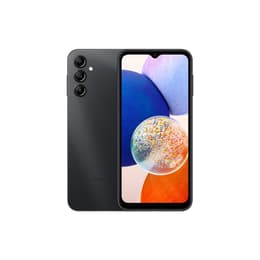
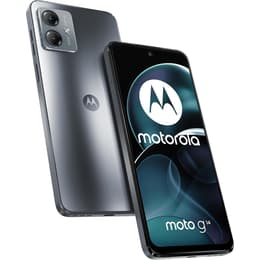

Galaxy A14 Vs Motorola Moto G14

Galaxy A14
Galaxy A14
Starting at

Refurbished price:£81.00

Versus £269.00 new

See options
Motorola Moto G14
Motorola Moto G14
See options

Ratings

The Samsung Galaxy A14 and the Motorola Moto G14, both released in 2023, are smartphones designed for users seeking essential functionality. While sharing a similar release timeframe and operating system (Android), they present distinct approaches to features like display technology, camera capabilities, and overall software support. This comparison aims to highlight these differences to help users determine which device best suits their individual needs.

Scores

Durability

When considering the long-term usability of these devices, several factors contribute to their expected lifespan, including software support and physical resilience.

  • Software Updates: The Samsung Galaxy A14 typically receives two major Android OS updates and four years of security updates, offering a longer period of software relevance. The Motorola Moto G14 is generally committed to one major Android update and three years of security updates.
  • Build Quality: Both smartphones feature plastic constructions for their frames and backs. The Moto G14 includes an IP52 rating, indicating splash resistance, which offers a degree of protection against light water exposure. The Galaxy A14 does not officially specify an IP rating.
  • Practical Lifespan: Users prioritizing extended software support and the latest Android features for a longer duration may find the Galaxy A14 more appealing. The Moto G14, while durable for everyday use, will likely see its software support conclude sooner.

Year of Release

2023

2023

Compatible with latest Update

No

Yes

OS

Android

Android

Foldable

No

No

Performance

Both the Galaxy A14 and Moto G14 are equipped to handle daily smartphone tasks, though their underlying hardware leads to subtle differences in responsiveness and multitasking capabilities.

  • Everyday Responsiveness: Both devices offer sufficient performance for common activities such as web browsing, social media, and using messaging applications. Users can expect smooth navigation through interfaces and quick loading of typical apps.
  • Multitasking and Storage: The Moto G14 typically comes with 4GB of RAM and 128GB of internal storage. The Galaxy A14 offers configurations with 4GB or 6GB of RAM and 64GB or 128GB of storage, with some variants utilizing faster UFS 2.2 storage. The additional RAM options on the Galaxy A14 may provide a slightly smoother experience when switching between multiple demanding applications. Both support expandable storage via microSD cards.
  • Battery Endurance: Both smartphones are powered by 5000 mAh batteries, designed to provide a full day of use for most users. Real-world usage reports suggest that both can last through a day of moderate to heavy use, with some users potentially extending the Moto G14's battery life into a second day under lighter usage conditions.

Memory (GB)

4 GB

4 GB

Screen quality

The visual experience on both the Galaxy A14 and Moto G14 is delivered through large, high-resolution displays, though with some distinctions in panel technology and refresh rates.

  • Display Technology and Clarity: The Galaxy A14 features a 6.6-inch PLS LCD display, while the Moto G14 uses a 6.5-inch IPS LCD panel. Both offer Full HD+ resolutions (1080 x 2408 pixels for A14, 1080 x 2400 pixels for G14), resulting in sharp and clear visuals for text and images.
  • Refresh Rate: The Galaxy A14 5G variant offers a 90Hz refresh rate, providing a smoother scrolling experience. The Galaxy A14 4G variant and the Moto G14 both feature a standard 60Hz refresh rate.
  • Brightness and Viewing: Both LCD panels provide adequate brightness for indoor use. While suitable for general viewing, they may present challenges with visibility under direct sunlight compared to higher-end display technologies.

Resolution

1080 x 2408

1080 x 2400

Screen type

PLS LCD

IPS LCD

Audiovisual

Both the Galaxy A14 and Moto G14 are equipped with capable camera systems for their segment, focusing on capturing everyday moments, but they differ in secondary lenses and audio output.

  • Main Camera Performance: Both devices feature a 50MP main camera, capable of capturing detailed photos in well-lit conditions. User experiences suggest that while good for simple shots, performance in low-light scenarios may be limited, with some noise and loss of detail.
  • Secondary Cameras and Video: The Galaxy A14 5G includes a 2MP depth sensor and a 2MP macro camera, with some 4G variants offering a 5MP ultrawide lens. The Moto G14 features a 2MP macro camera. Both record video at 1080p resolution at 30 frames per second.
  • Front Camera and Audio: The Galaxy A14 has a 13MP front-facing camera, while the Moto G14 has an 8MP front camera. For audio, the Moto G14 stands out with stereo speakers, which can enhance the media consumption experience. The Galaxy A14 typically features a single loudspeaker.

Main camera

50 megapixels

50 megapixels

Front camera

13 megapixels

8 megapixels

Miscellaneous

Beyond core features, several practical elements contribute to the overall user experience, including connectivity, physical design, and additional functionalities.

  • Connectivity: The Samsung Galaxy A14 is available in both 4G and 5G variants, offering users the choice for faster network speeds. The Motorola Moto G14 is a 4G-only device. Both support Wi-Fi 5 and Bluetooth (v5.1 for A14, v5.0 for G14).
  • Ports and Sensors: Both smartphones include a USB-C port for charging and data transfer, and a 3.5mm headphone jack. They also feature side-mounted fingerprint sensors for secure unlocking.
  • Design and Handling: With similar screen sizes (6.6 inches for A14, 6.5 inches for G14), both devices have comparable dimensions and weights, making them generally comfortable to handle for their size. The Moto G14's IP52 splash-resistant design offers an extra layer of protection against minor liquid exposure.

Weight

201 g

177 g

Screen size (in)

6.6

6.5

Mobile network

4G

4G

SIM card

Dual Physical SIM

Dual Physical SIM

Carrier compatibility

Unlocked

Unlocked

User feedback for the Samsung Galaxy A14 often highlights its reliable performance for daily tasks and the benefit of longer software support, particularly for those who keep their devices for several years. The optional 5G connectivity in some models is also a frequently praised aspect, offering faster data speeds where available. Some users, however, note that the 4G variant's display refresh rate is standard 60Hz, and the lack of an ultrawide camera on some A14 models can be a point of criticism.

The Motorola Moto G14 receives positive remarks for its inclusion of stereo speakers, providing a more immersive audio experience for media consumption. Its splash-resistant design is also a valued feature for users seeking a bit more durability in everyday scenarios. Common concerns for the Moto G14 revolve around its shorter software update commitment and the absence of an ultrawide camera across all variants.

Users prioritizing extended software longevity, potential 5G connectivity, and a slightly better front camera may find the Samsung Galaxy A14 to be a more suitable choice. Conversely, individuals who value enhanced audio through stereo speakers, splash resistance, and a consistent storage option might lean towards the Motorola Moto G14. Both devices represent solid options for those seeking a quality-assured refurbished smartphone, offering an eco-friendly alternative to purchasing new. The decision ultimately depends on which specific features and long-term support aspects align best with individual user priorities.

See all articles

Our recent comparisons