Galaxy A14 Vs Galaxy A16

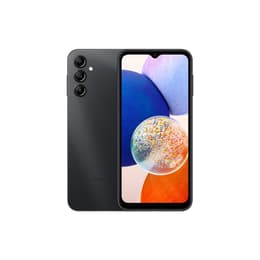
Galaxy A14
Galaxy A14
Starting at

Refurbished price:£81.00

Versus £269.00 new

See options
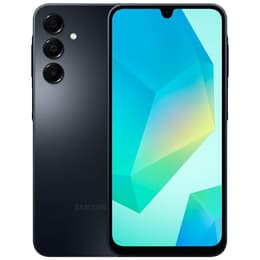
Galaxy A16
Galaxy A16
Starting at

Refurbished price:£100.62

Versus £206.96 new

See options

Ratings

The Samsung Galaxy A14 (released in early 2023) and the Samsung Galaxy A16 (released in late 2024/early 2025) are both smartphones designed for everyday use within Samsung's A-series. While they share a similar design philosophy, the Galaxy A16 introduces notable advancements in display technology, software support longevity, and charging capabilities, building upon the foundation set by its predecessor.

Scores

Durability

When considering the long-term usability of these devices, their release timelines and software support policies are key factors.

  • Release and Support: The Galaxy A14, launched in early 2023, originally ran on Android 13 and was promised two major Android OS upgrades, concluding with Android 15, and four years of security updates, expected to last until early 2027. In contrast, the Galaxy A16, released in late 2024 and early 2025, launched with Android 14 and benefits from a significantly extended support policy, offering six major Android OS upgrades and six years of security updates, ensuring support until October 2030. [1, 6, 7, 9, 10, 12, 13, 16, 27]
  • Software Longevity: Users prioritizing the longest possible software and security update lifespan will find the Galaxy A16 to be a more future-proof option, receiving updates for several years longer than the Galaxy A14. [1, 6, 9, 11, 16, 25, 26]
  • Practical Lifespan: Both devices are constructed with durable materials, typically featuring plastic backs and frames. The Galaxy A16 introduces an IP54 rating for basic splash and dust resistance, a feature not present on the Galaxy A14, offering a slight edge in everyday durability. [14, 17, 25]

Year of Release

2023

2024

Compatible with latest Update

No

Yes

OS

Android

Android

Foldable

No

No

Performance

The performance of both the Galaxy A14 and A16 is tailored for general daily tasks, with some distinctions in their responsiveness.

  • Processor Capabilities: The Galaxy A14 is equipped with processors like the MediaTek Dimensity 700 or Exynos 1330, depending on the region and variant. The Galaxy A16 features newer chipsets such as the MediaTek Helio G99 (4G variant) or the MediaTek Dimensity 6300/Exynos 1330 (5G variants). While both handle common applications and multitasking, the A16's newer processors generally offer a slightly more refined experience for everyday use. [1, 7, 9, 18, 22]
  • System Responsiveness: User experiences indicate that the Galaxy A14 can exhibit occasional stutters and lags, particularly when opening apps or during animations. The Galaxy A16, while not a powerhouse, generally provides smoother performance for basic activities like social media browsing and streaming, though heavy multitasking or demanding games may still lead to slowdowns, especially on models with lower RAM configurations. [5, 15, 17, 18, 19, 27]
  • Storage and RAM: Both models offer various RAM options, typically starting from 4GB, and internal storage options of 64GB or 128GB for the A14, and 128GB or 256GB for the A16. Both support expandable storage via a microSD card, with the A16 supporting up to 1.5TB, offering ample space for media and applications. [1, 2, 3, 6, 9, 13]

Memory (GB)

4 GB

4 GB

Screen quality

The visual experience differs significantly between these two Samsung smartphones, primarily due to their display technologies.

  • Display Technology: The Galaxy A14 features a 6.6-inch PLS LCD display. The Galaxy A16 upgrades to a 6.7-inch Super AMOLED panel. This change means the A16 offers deeper blacks, higher contrast, and more vibrant colors compared to the A14's LCD screen. [1, 2, 3, 6, 7, 9, 17, 18, 29]
  • Resolution and Brightness: Both devices offer Full HD+ resolutions (1080x2408 for A14, 1080x2340 for A16), providing clear visuals for typical viewing. However, the A16's Super AMOLED display boasts significantly higher peak brightness, making it more comfortable to view outdoors in bright conditions compared to the A14's LCD, which users report can be dim in sunlight. [2, 3, 7, 17, 22, 29]
  • Refresh Rate: Both the Galaxy A14 5G and Galaxy A16 feature a 90Hz refresh rate, contributing to smoother scrolling and a more fluid user interface experience than standard 60Hz displays. Some reports suggest the A16 5G might offer an adaptive 120Hz refresh rate in certain regions, further enhancing smoothness. [2, 7, 9, 17, 18, 27, 29]

Resolution

1080 x 2408

1080 x 2340

Screen type

PLS LCD

Super AMOLED

Audiovisual

Both the Galaxy A14 and A16 are equipped with multi-camera systems, focusing on essential photography capabilities.

  • Main Camera Performance: Both phones feature a 50-megapixel main rear camera, which performs well in bright daylight conditions, capturing decent detail and vibrant colors. However, both struggle with low-light photography, producing images with more noise and less detail. [2, 5, 6, 7, 13, 14, 17, 19, 22, 23, 25, 27, 29]
  • Secondary Lenses and Video: The Galaxy A14 typically includes 2-megapixel macro and depth sensors, with the 5G variant often lacking an ultrawide lens. The Galaxy A16 improves upon this by including a 5-megapixel ultrawide camera, alongside a 2-megapixel macro sensor. User feedback suggests that the secondary macro lenses on both devices offer limited utility, and the ultrawide on the A16, while present, is considered basic. Both devices are limited to 1080p at 30 frames per second for video recording, without advanced features like 4K or optical image stabilization. [1, 5, 6, 7, 13, 14, 15, 17, 18, 19, 22, 23, 25, 29]
  • Front Camera and Audio: Both phones are equipped with a 13-megapixel front-facing camera capable of capturing good selfies in adequate lighting. For audio, both devices feature a single bottom-firing speaker, which provides clear sound for media consumption but lacks the immersive experience of stereo speakers. [1, 5, 15, 19, 22, 25]

Main camera

50 megapixels

50 megapixels

Front camera

13 megapixels

13 megapixels

Miscellaneous

Beyond core specifications, several practical features and design elements differentiate these two smartphones.

  • Connectivity and Ports: Both the Galaxy A14 and A16 support 5G connectivity (on their respective 5G variants), Wi-Fi, Bluetooth, and NFC for contactless payments. They both retain a 3.5mm headphone jack and utilize a USB Type-C port for charging and data transfer. [2, 7, 13, 15, 27]
  • Security and Sensors: Both devices feature a side-mounted fingerprint sensor for secure unlocking. The Galaxy A16 also includes an IP54 rating, providing a degree of protection against dust and splashes, which is an upgrade over the A14. [7, 14, 17, 25]
  • Design and Handling: The Galaxy A14 measures 167.7 x 78 x 9.1 mm and weighs around 204 grams. The Galaxy A16 is slightly larger with a 6.7-inch display but maintains a similar thickness and weight, making both devices feel substantial in hand. Both feature plastic builds, with the A16 sometimes described as having a 'Glastic' finish that mimics glass. [7, 13, 17, 23, 25]

Weight

201 g

200 g

Screen size (in)

6.6

6.7

Mobile network

4G

4G

SIM card

Dual Physical SIM

Dual Physical SIM

Carrier compatibility

Unlocked

Unlocked

User feedback for the Galaxy A14 often praises its long battery life and the reliability of its main camera in good lighting conditions. Common criticisms include its slower performance, the LCD display's limited outdoor visibility, and the absence of an ultrawide camera on the 5G model. Users appreciate its solid foundation for essential smartphone functions. [5, 22, 23, 27]

The Galaxy A16 receives commendation for its vibrant Super AMOLED display, significantly extended software support, and improved charging speed. However, some users note that its performance, while adequate for daily tasks, can still experience stutters, and the secondary cameras are often considered subpar. The lack of stereo speakers and 4K video recording are also frequent points of discussion. [14, 15, 17, 19, 25]

Users prioritizing extended software longevity and a superior visual experience with a brighter, more vibrant screen may find the Galaxy A16 better suited to their needs. Its IP54 rating also offers an added layer of protection. Conversely, users seeking a dependable device for basic communication, web browsing, and photography in well-lit environments, and who do not require the absolute latest software updates, may find the Galaxy A14 to be a practical choice. Both models offer a solid foundation for everyday use, and opting for a quality-assured refurbished option for either device presents a sustainable choice for consumers.

See all articles

Our recent comparisons