
Samsung
Compare models
Differences at a glance
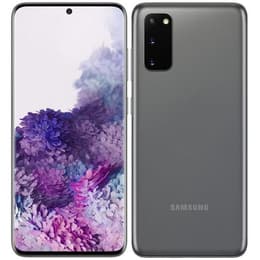
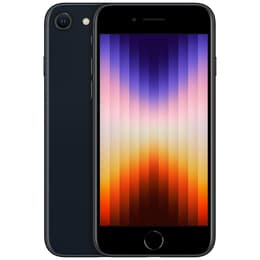
The Samsung Galaxy S20 5G, released in February 2020, and the Apple iPhone SE (2022), launched in March 2022, represent distinct approaches to smartphone design and functionality. While both offer 5G connectivity, they cater to different user preferences through their operating systems, form factors, and feature sets. The Galaxy S20 5G runs on the Android platform, offering a larger display and a versatile multi-camera system, whereas the iPhone SE (2022) operates on iOS, providing a compact design with a focus on core performance and a streamlined user experience.
Colour
Storage
When considering the longevity of these devices, their respective release timelines and software support policies are key factors. The Galaxy S20 5G, being an Android device from 2020, has received several major Android updates since its launch. Samsung typically provides three to four major OS updates for its flagship devices, meaning its primary software update cycle is nearing its end. The iPhone SE (2022), released two years later, benefits from Apple's generally longer software support, often extending to five or six years from its release date.
Year of Release
Compatible with latest Update
OS
Foldable
The performance of a smartphone is largely determined by its internal components and how efficiently its operating system utilizes them. Both the Galaxy S20 5G and the iPhone SE (2022) were equipped with high-performing processors for their respective release periods, offering smooth operation for daily tasks.
The visual experience on a smartphone is heavily influenced by its display technology, resolution, and overall brightness. The Galaxy S20 5G and iPhone SE (2022) offer distinct display characteristics that cater to different user preferences.
Resolution
Screen type
The camera systems on these two smartphones offer different capabilities, reflecting their respective design philosophies and target audiences. Both are capable of capturing quality images and videos, but with varying levels of versatility and advanced features.
Main camera
Front camera
Beyond core performance and display, several practical elements contribute to the overall user experience, including connectivity, physical design, and unique features.
Weight
Screen size (in)
Mobile network
SIM card
Carrier compatibility
Connector
The Samsung Galaxy S20 5G and the iPhone SE (2022) offer distinct experiences, each with its own set of strengths. Users often praise the Galaxy S20 5G for its expansive and vibrant AMOLED display, versatile camera system with optical zoom, and the flexibility of the Android operating system. However, some users have noted that its battery life, especially when utilizing the 120Hz refresh rate and 5G, can be a concern, sometimes requiring more frequent charging.
The iPhone SE (2022) is frequently lauded for its compact size, powerful and efficient processor, and the long-term software support characteristic of Apple devices. Its familiar design with Touch ID is also a positive for many. Criticisms often point to its smaller, lower-resolution LCD display and the absence of advanced camera features like Night Mode or an ultra-wide lens.
Users prioritizing a large, high-refresh-rate OLED display, a multi-lens camera system for diverse photography, and the customization options of Android may find the Galaxy S20 5G better suited to their needs. Conversely, those who value a compact form factor, a powerful and future-proof processor for sustained performance, and the long-term software updates of iOS will likely prefer the iPhone SE (2022). Both devices are available as quality-assured refurbished options, providing a sustainable choice for consumers.