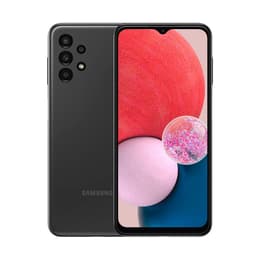
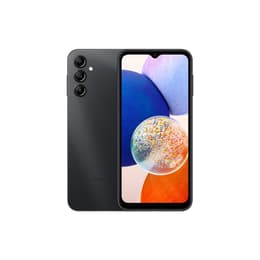
Galaxy A13 Vs Galaxy A14

Galaxy A13
Galaxy A13
Starting at

Refurbished price:£73.00

Versus £249.00 new

See options
Galaxy A14
Galaxy A14
Starting at

Refurbished price:£81.00

Versus £269.00 new

See options

Ratings

The Samsung Galaxy A13, released in March 2022, and the Samsung Galaxy A14, launched in early 2023, are both Android smartphones designed for users seeking essential features. While they share a similar design philosophy and operate on the Android platform with Samsung's One UI, the newer Galaxy A14 generally introduces enhancements in performance, display fluidity, and camera capabilities compared to its predecessor.

Scores

Durability

When considering the longevity of these devices, their release timelines and software support policies are key factors. Both models are built with plastic frames and backs, typical for their segment.

  • Release Timeline: The Galaxy A13 was released in March 2022, while the Galaxy A14 5G model launched in January 2023, and the 4G LTE model in February 2023. This means the A14 benefits from a later starting point for software updates.
  • OS Support Duration: Samsung typically provides several years of Android operating system updates and security patches for its Galaxy A series. The Galaxy A14, being a newer device, is expected to receive software support for a longer duration than the A13, potentially extending its practical lifespan by an additional year. The A13 launched with Android 12 and was upgradeable to Android 13, while the A14 launched with Android 13.
  • Durability Features: The Galaxy A13 features Corning Gorilla Glass 5 for screen protection, offering a degree of resistance against scratches and drops. Information regarding specific display protection for the Galaxy A14 is less consistently highlighted, though its build is also primarily plastic.

Year of Release

2022

2023

Compatible with latest Update

No

No

OS

Android

Android

Foldable

No

No

Performance

The real-world performance of a smartphone is influenced by its internal components, affecting how smoothly applications run and how efficiently power is managed. Both the Galaxy A13 and A14 are equipped with large batteries, but their processing capabilities differ.

  • Processor Capabilities: The Galaxy A13 typically uses an Exynos 850 processor or a MediaTek Helio G80 in some variants, which handles everyday tasks but can exhibit occasional stuttering and lag, especially with demanding applications or extensive multitasking. The Galaxy A14 5G often features a MediaTek Dimensity 700 processor, which generally offers a smoother user experience and better responsiveness for daily use and light gaming.
  • Multitasking and Responsiveness: Users of the Galaxy A13 may notice slower app loading times and less fluid transitions between applications. The Galaxy A14, particularly the 5G variant, provides a more capable experience for navigating the interface and managing multiple apps simultaneously, though it is not designed for intensive gaming.
  • Battery Behavior: Both devices are equipped with a 5,000mAh battery, which consistently delivers extended usage times. The Galaxy A13 can often last beyond a full day of moderate use, sometimes stretching to two days for light users. The Galaxy A14 also offers strong battery life, with many users reporting up to two days of use with moderate activity, attributed to its efficient components.

Memory (GB)

4 GB

4 GB

Screen quality

The display is a primary interface for smartphone interaction, and both the Galaxy A13 and A14 offer large screens suitable for media consumption, with some notable distinctions.

  • Display Technology and Resolution: Both phones feature a 6.6-inch PLS LCD display with a Full HD+ resolution (1080 x 2408 pixels), providing clear visuals for browsing and video playback. The A13's display has a pixel density of around 400 ppi.
  • Refresh Rate: The Galaxy A13 typically has a standard 60Hz refresh rate. The Galaxy A14 5G model, however, often includes a 90Hz refresh rate, which contributes to smoother scrolling and a more fluid visual experience, particularly noticeable during navigation and some gaming. The 4G variant of the A14 may retain a 60Hz refresh rate.
  • Brightness and Viewing Experience: Both displays offer decent brightness for indoor use. However, visibility in direct sunlight can be challenging for both models, as their peak brightness levels are not as high as more advanced displays.

Resolution

1080 x 2408

1080 x 2408

Screen type

PLS LCD

PLS LCD

Audiovisual

The camera systems on the Galaxy A13 and A14 are designed to capture everyday moments, with the A14 offering some improvements in specific areas.

  • Rear Camera System: Both devices feature a 50-megapixel main camera, capable of capturing detailed photos in good lighting conditions. The Galaxy A13 (4G variant) includes a 5-megapixel ultrawide camera, a 2-megapixel macro, and a 2-megapixel depth sensor. The Galaxy A14 5G often has a triple camera setup with a 50MP main sensor, a 2MP macro, and a 2MP depth sensor, sometimes omitting the ultrawide lens found on the A13 4G.
  • Front Camera and Video: The Galaxy A13 comes with an 8-megapixel front-facing camera. The Galaxy A14 features an upgraded 13-megapixel front camera, which can result in sharper selfies. Both phones are capable of recording video at 1080p resolution at 30 frames per second from both front and rear cameras.
  • Low-Light Performance: While the main 50MP sensors perform well in daylight, both devices show limitations in low-light conditions, with images potentially exhibiting more noise and less detail. Neither phone typically includes a dedicated night mode for significantly enhancing low-light photography.

Main camera

50 megapixels

50 megapixels

Front camera

8 megapixels

13 megapixels

Miscellaneous

Beyond core specifications, several practical elements contribute to the overall user experience, and these devices share many commonalities while having subtle differences.

  • Connectivity: The Galaxy A13 is available in both 4G and 5G variants, with the 5G model offering faster network speeds. The Galaxy A14 is also available in 4G and 5G versions, with the 5G model providing access to next-generation cellular networks. Both support common Wi-Fi standards and Bluetooth connectivity.
  • Ports and Sensors: Both phones retain a 3.5mm headphone jack, a feature appreciated by users with wired audio accessories. They charge via a USB-C port and include a side-mounted fingerprint sensor for secure unlocking.
  • Physical Characteristics: The Galaxy A13 measures approximately 165.1 x 76.4 x 8.8mm and weighs around 195g. The Galaxy A14 is slightly larger and heavier, measuring about 167.7 x 78 x 9.1mm and weighing around 201g. Both devices feature a plastic construction, with the A14 adopting a design aesthetic similar to Samsung's more premium phones.

Weight

195 g

201 g

Screen size (in)

6.6

6.6

Mobile network

4G

4G

SIM card

Dual Physical SIM

Dual Physical SIM

Carrier compatibility

Unlocked

Unlocked

User feedback for the Samsung Galaxy A13 often highlights its strong battery life and a display that is considered good for its segment. However, common criticisms point to its sluggish performance, particularly with multitasking and app loading, and a camera system that, while capable in good light, struggles in challenging conditions.

The Samsung Galaxy A14 generally receives praise for its improved screen quality, especially the 90Hz refresh rate on the 5G variant, and a more responsive overall performance for daily tasks. Its battery life is also consistently rated as excellent, and the upgraded front camera is a welcome addition. Some users still note that performance can be mediocre for demanding use and that the display can be difficult to view in bright sunlight.

Users prioritizing a smoother scrolling experience and slightly better overall performance for everyday applications may find the Galaxy A14, particularly the 5G model, better suited to their needs. Those who primarily require a device for basic communication, web browsing, and media consumption, and where performance is not a critical factor, might consider the Galaxy A13. Both devices offer robust battery life, making them suitable for users who need a phone to last through a busy day. For consumers looking for an eco-friendly and quality-assured option, both the Galaxy A13 and Galaxy A14 are available as refurbished products, providing a sustainable choice for their next smartphone.

See all articles

Our recent comparisons