
Galaxy A14 Vs Galaxy A15

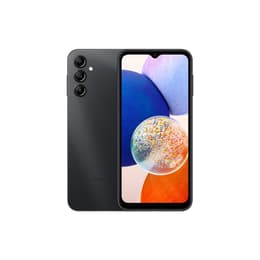
Galaxy A14
Galaxy A14
Starting at

Refurbished price:£81.00

Versus £269.00 new

See options
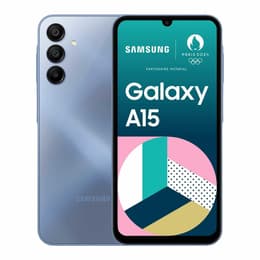
Galaxy A15
Galaxy A15
Starting at

Refurbished price:£88.00

Versus £169.00 new

See options

Ratings

The Samsung Galaxy A14, released in 2023, and the Samsung Galaxy A15, launched in 2024, are both entry-level smartphones designed to offer essential features for everyday use. While they share the same operating system, Android with Samsung's One UI, the Galaxy A15 introduces notable enhancements in its display technology and long-term software support, setting it apart from its predecessor.

Scores

Durability

When considering the longevity of these devices, several factors come into play, including software support and physical resilience.

  • Software Updates: The Galaxy A14 launched with Android 13 and is expected to receive two major OS upgrades, bringing it up to Android 15, along with four years of security updates, typically until early 2027. In contrast, the newer Galaxy A15 launched with Android 14 and benefits from a more extended commitment of four major OS upgrades, reaching Android 18, and five years of security updates, extending its support until around 2029.
  • Repairability: The Galaxy A14 5G has demonstrated a repairability score of 8 out of 10, partly due to design choices like an adhesive pull tab for the battery, which simplifies battery replacement. While specific scores for the A15 are less widely published, Samsung's general trend indicates a continued focus on repair-friendly designs for its A-series.
  • Build Materials: Both smartphones feature a construction primarily of plastic for their back panels and frames, with glass on the front. This common build for their segment provides a balance of durability and manufacturing considerations.

Year of Release

2023

2023

Compatible with latest Update

No

Yes

OS

Android

Android

Foldable

No

No

Performance

The performance of a smartphone is crucial for daily interactions, encompassing everything from app responsiveness to battery endurance.

  • Processor Capabilities: The Galaxy A14 is equipped to handle everyday tasks such as browsing, social media, and light applications. However, users engaging in more demanding apps or extensive multitasking might experience occasional slowdowns. The Galaxy A15 features a slightly more capable processor, offering a smoother experience for daily tasks and light gaming.
  • Storage and Multitasking: The Galaxy A14 typically offers base storage options of 64GB or 128GB. The Galaxy A15 generally starts with 128GB of internal storage, with options extending to 256GB, providing more space for apps and media. Both models support expandable storage via a microSD card.
  • Battery Life and Charging: Both devices are powered by a 5000 mAh battery, which consistently provides ample power for a full day or more of typical usage. For recharging, the Galaxy A14 supports 15W wired charging. The Galaxy A15 offers faster 25W wired charging, allowing for quicker power-ups.

Memory (GB)

4 GB

4 GB

Screen quality

The display is a primary interface for smartphone users, influencing everything from content consumption to daily navigation.

  • Display Technology and Clarity: The Galaxy A14 features a 6.6-inch PLS LCD display with a 1080 x 2408 pixel resolution. The Galaxy A15 upgrades to a 6.5-inch Super AMOLED display, offering a 1080 x 2340 pixel resolution. The Super AMOLED technology on the A15 provides more vibrant colors and deeper blacks compared to the LCD panel of the A14.
  • Refresh Rate and Brightness: The Galaxy A14 typically has a 60Hz refresh rate, though some 5G variants offer 90Hz. The Galaxy A15 consistently features a 90Hz refresh rate, contributing to smoother scrolling and a more fluid visual experience. In terms of brightness, the A15's display can reach up to 800 nits, improving visibility in bright outdoor conditions, whereas the A14's LCD can be dim in direct sunlight.
  • Screen Size and Viewing: The A14 has a slightly larger 6.6-inch screen, while the A15 is marginally smaller at 6.5 inches. Despite the minor size difference, the A15's superior display technology generally offers a more engaging viewing experience for media and everyday use.

Resolution

1080 x 2408

1080 x 2340

Screen type

PLS LCD

Super AMOLED

Audiovisual

The camera systems on both devices aim to capture everyday moments, with some key distinctions in their capabilities.

  • Rear Camera System: Both the Galaxy A14 and A15 feature a 50MP main camera, capable of capturing detailed images in good lighting conditions. The Galaxy A14 often includes a 2MP macro and 2MP depth sensor, with some 5G variants offering a 5MP ultrawide lens. The Galaxy A15 consistently includes a 5MP ultrawide lens and a 2MP macro lens. A notable upgrade on the A15's main camera is the inclusion of Optical Image Stabilization (OIS), which helps in producing clearer photos and more stable videos, especially in challenging conditions.
  • Photography Performance: In well-lit environments, both phones can produce satisfactory images. However, the Galaxy A15 generally offers better low-light performance and improved color accuracy compared to the A14. The A14's low-light photos can sometimes appear noisy or lack detail, and some variants do not include a dedicated night mode.
  • Video and Audio Recording: Both devices support video recording at up to 1080p resolution at 30 frames per second. The A15 tends to capture more detail and maintain better exposure and color accuracy in videos. For audio, both phones feature a single bottom-firing speaker, and both retain a 3.5mm headphone jack for wired audio connections.

Main camera

50 megapixels

50 megapixels

Front camera

13 megapixels

13 megapixels

Miscellaneous

Beyond core specifications, several practical features contribute to the overall user experience of a smartphone.

  • Connectivity: Both the Galaxy A14 and A15 support 5G connectivity (on their respective 5G variants), enabling faster mobile data speeds where available. They also include Wi-Fi 5 (802.11ac) for wireless internet and Bluetooth for connecting accessories (A14 with Bluetooth 5.1/5.2, A15 with Bluetooth 5.3). Both devices also feature NFC, allowing for convenient contactless payments.
  • Ports and Sensors: For physical connections, both smartphones are equipped with a USB-C port for charging and data transfer, and they retain the widely used 3.5mm headphone jack. Security is handled by a side-mounted fingerprint sensor on both models, offering a convenient and accessible method for unlocking the device.
  • Physical Design: The Galaxy A14 is slightly larger and heavier, measuring approximately 167.7 x 78 x 9.1mm and weighing around 201-202g. The Galaxy A15 offers a more compact design at 160.1 x 76.8 x 8.4mm and a weight of 200g, which can make it feel more comfortable to handle and carry. Both feature a plastic back and frame, with a glass front.

Weight

201 g

200 g

Screen size (in)

6.6

6.5

Mobile network

4G

4G

SIM card

Dual Physical SIM

Dual Physical SIM

Carrier compatibility

Unlocked

Unlocked

User feedback for the Galaxy A14 often highlights its robust battery life and its capability to handle essential daily tasks reliably for its segment. Common criticisms include its LCD display, which can struggle with brightness in direct sunlight, and a camera system that, while functional, may not excel in low-light conditions or offer an ultrawide lens on all variants.

The Galaxy A15 generally receives praise for its upgraded Super AMOLED display, which provides a more vibrant and brighter viewing experience, and its significantly longer software support policy. Users also appreciate the faster charging capability and the inclusion of Optical Image Stabilization (OIS) on the main camera. However, some users note that while improved, the overall performance might still feel constrained for very demanding applications or heavy multitasking, and it retains a single speaker.

Users prioritizing an extended software lifespan and a more visually engaging display for media consumption will find the Galaxy A15 well-suited to their needs. Its improved camera capabilities, particularly with OIS and a consistent ultrawide lens, also make it a stronger choice for casual photography. Conversely, individuals seeking a dependable device for basic communication and everyday apps, where maximum software longevity and display vibrancy are not the top priorities, may find the Galaxy A14 to be a practical option. Both devices offer a solid foundation for smartphone use, and choosing a quality-assured refurbished option can provide an eco-friendly alternative for either model.
See all articles

Our recent comparisons