
Compare models
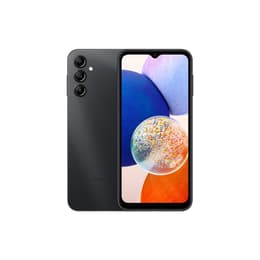
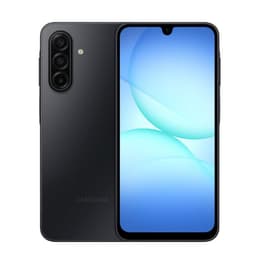
Galaxy A14 Vs Galaxy A17
- 1-year minimum warranty
- Free delivery on all items
- Free 30-day returns
Differences at a glance
The Samsung Galaxy A14 (2023) and Galaxy A17 (2025) represent successive iterations of Samsung's accessible smartphone family, designed to provide everyday functionality without unnecessary complexity. While both models serve similar daily communication and browsing needs, the newer Galaxy A17 introduces refined display tech, expanded software longevity, and improved charging speeds. Operating on contemporary versions of Android and Samsung's One UI interface, these devices offer straightforward user experiences tailored to practical, daily usage.
Available Models
Colour
Storage (GB)
Scores
Durability
When evaluating the lifespan and structural support of these two devices, several generational updates stand out in software longevity and physical build durability.
- Software support lifecycle: The Galaxy A17 benefits from an extended software update commitment spanning multiple years, ensuring longer access to security patches compared to the Galaxy A14.
- Expected practical lifespan: Due to its more recent release timeline and prolonged update schedule, the Galaxy A17 maintains relevance for a longer duration of daily operation.
- Repairability and build: Both models utilize durable plastics for their frames and backs, supporting standard repair procedures through authorized service networks or quality-assured refurbished options that extend device life sustainably.
Year of Release
2023
2025
OS
Android
Android
Foldable
No
No
Performance
Performance capabilities differ across these generations, impacting how smoothly everyday apps, multitasking, and casual games operate under typical conditions.
- System responsiveness: The Galaxy A17 handles routine application switching, web browsing, and multi-window tasks with increased fluidity thanks to an upgraded processor setup.
- Battery behavior: Both devices feature large 5000 mAh batteries capable of lasting a full day of standard use, though the Galaxy A17 supports faster wired charging speeds to reduce downtime.
- Storage capacity: Storage configurations on the Galaxy A17 start at higher baseline capacities, accommodating more local media and applications alongside expandable microSD card support found on both models.
Screen quality
Display technology sees a notable transition between these models, affecting outdoor visibility, visual clarity, and overall media consumption comfort.
- Display panel technology: The Galaxy A17 transitions to a vibrant Super AMOLED panel with deep contrast levels, whereas the Galaxy A14 relies on a standard LCD screen.
- Refresh rate and smoothness: The Galaxy A17 offers a fluid 90 Hz refresh rate for smoother scrolling through menus and web pages, matching the higher refresh variants of its predecessor.
- Brightness and viewing: Outdoor visibility is improved on the Galaxy A17 due to higher peak brightness outputs, making text and images easier to read under direct sunlight.
Resolution
1080 x 2408
1080x2340
Screen type
PLS LCD
Super AMOLED
Audiovisual
Optics and media playback capabilities vary moderately, influencing how each device captures daily moments and handles entertainment audio.
- Camera system versatility: Both smartphones feature a primary 50-megapixel main sensor and macro options, but the Galaxy A17 upgrades the secondary ultra-wide lens resolution for clearer landscape shots.
- Video and low-light performance: Everyday snapshot clarity is consistent in daylight, while processing updates on the Galaxy A17 yield slightly better balance in mixed lighting conditions.
- Audio and media output: Single loudspeaker setups on both devices deliver adequate volume for casual video watching, supplemented by clear microphone performance during voice calls.
Main camera
50 megapixels
50 megapixels
Miscellaneous
Practical daily features, connectivity standards, and physical handling characteristics shape the day-to-day usability of both smartphones.
- Connectivity and ports: Both models include USB Type-C ports and reliable wireless standards, with respective variants supporting regional 5G networks and modern Bluetooth pairing.
- Physical dimensions and handling: The Galaxy A17 features a slightly slimmer profile and lighter weight than the Galaxy A14, improving one-handed reach and pocket comfort.
- Security sensors: Side-mounted fingerprint scanners integrated into the power button provide quick and reliable biometric unlocking on both devices.
Weight
201 g
192 g
Screen size (in)
6.6
6.7
Mobile network
4G
5G
SIM card
Dual Physical SIM
Physical SIM
Carrier compatibility
Unlocked
Unlocked
What the community thinks
User discussions and community feedback indicate that both smartphones successfully meet the demands of practical, everyday communication without overwhelming users with complex features. Common praise points highlight the reliable battery longevity and straightforward interface, while frequent criticisms point toward the basic audio output and slower charging speeds on the older generation. Users prioritizing extended software support and a brighter, high-contrast display will find the Galaxy A17 well-suited to their needs. Conversely, users seeking a simple, fundamental communication tool for basic tasks often look toward the Galaxy A14 as an accessible entry point. Those exploring sustainable choices can also consider quality-assured refurbished options of either model as an eco-friendly alternative that reduces electronic waste. Ultimately, the decision rests on whether prolonged software backing and modern display technology align with individual usage priorities.