
Galaxy A56 Vs Google Pixel Fold

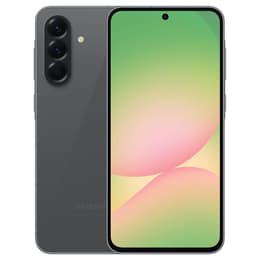
Galaxy A56
Galaxy A56
Starting at

Refurbished price:£274.00

Versus £422.50 new

See options
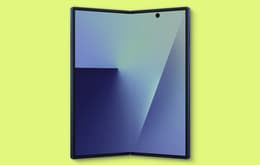
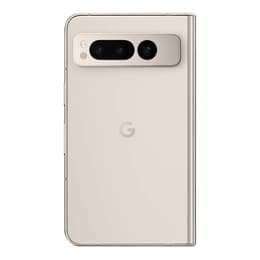
Google Pixel Fold
Google Pixel Fold
Starting at

Refurbished price:£371.00

Versus £1,499.00 new

See options

Ratings

The Samsung Galaxy A56, released in March 2025, is a traditional Android smartphone designed for a balanced user experience. In contrast, the Google Pixel Fold, launched in May 2023, represents a different approach as a foldable Android device. The primary distinction lies in their form factors, with the Galaxy A56 offering a conventional slab design and the Pixel Fold providing a compact phone that unfolds into a larger tablet-like display. Both devices run on the Android operating system, offering distinct software experiences tailored to their hardware.

Scores

Durability

The longevity of a smartphone is influenced by its physical resilience and the duration of its software support. These two devices present different profiles in this regard.

  • Release Timeline & Software Support: The Galaxy A56, being a newer device from March 2025, ships with Android 15 and is promised six major Android OS upgrades and an extended seven years of security updates, ensuring support until March 2032. The Google Pixel Fold, released in June 2023 with Android 13, receives five years of OS and security updates, with support expected until at least June 2028. This means the Galaxy A56 offers a longer guaranteed period of software updates.
  • Physical Durability: The Galaxy A56 features Corning Gorilla Glass Victus+ on both its front and back, coupled with an aluminum frame, and boasts an IP67 rating for dust and water resistance. The Pixel Fold incorporates Gorilla Glass Victus on its outer cover display and has a plastic protective layer on its internal folding screen, along with an IPX8 water resistance rating, indicating protection against submersion but not dust. The folding mechanism of the Pixel Fold introduces a different set of durability considerations compared to a rigid smartphone.
  • Repairability: The Galaxy A56 has a repairability score of 8.4 out of 10, suggesting it is relatively repair-friendly, though slightly less so than its predecessor. Information on the Pixel Fold's repairability score is not readily available, but foldable devices are generally more complex to disassemble and repair due to their intricate design.

Year of Release

2025

2023

Compatible with latest Update

Yes

Yes

OS

Android

Android

Foldable

No

Yes

Performance

The performance of these devices is shaped by their internal components and how they handle daily tasks and demanding applications.

  • Processor Capabilities: The Galaxy A56 is powered by a current-generation mid-range processor, which capably handles everyday use, content consumption, and photography. However, it may not be ideal for power users or extended heavy gaming sessions, where thermal efficiency could be a factor. The Google Pixel Fold utilizes a processor designed for flagship performance, enabling smooth multitasking and app usage. While generally capable, some users have noted that it can generate heat and consume battery more rapidly during intensive tasks like gaming.
  • Multitasking and Responsiveness: The Galaxy A56 offers 8GB or 12GB of RAM, providing sufficient capacity for typical multitasking and app switching. The Pixel Fold comes with 12GB of RAM, which supports its ability to run multiple applications simultaneously, particularly benefiting from the larger internal display for split-screen use.
  • Storage Options: The Galaxy A56 is available with 128GB or 256GB of internal storage. The Pixel Fold offers 256GB or 512GB of internal storage. Neither device supports expandable storage via a microSD card.
  • Battery Behavior: The Galaxy A56 is equipped with a 5000mAh battery, with user reports indicating nearly two days of usage with mixed activities and strong screen-on times. The Pixel Fold has a 4821mAh battery. User experiences vary, with some achieving a full day of use, while others find it requires more frequent charging, especially when the larger internal display is used extensively or for gaming.

Memory (GB)

8 GB

12 GB

Screen quality

The visual experience on a smartphone is largely defined by its display technology, resolution, and brightness capabilities.

  • Display Technology and Size: The Galaxy A56 features a single 6.7-inch Super AMOLED display. The Google Pixel Fold offers a dual-screen setup: a 5.8-inch OLED cover display and a 7.6-inch internal folding OLED display. The Pixel Fold's larger internal screen provides a more expansive viewing area when unfolded, akin to a small tablet.
  • Resolution and Clarity: The Galaxy A56's display has an FHD+ resolution of 2340x1080 pixels, providing clear and vibrant visuals. The Pixel Fold's cover display has a resolution of 1080x2092 pixels, while its internal folding display offers 1840x2208 pixels, both delivering sharp images. The Pixel Fold's cover screen also features a wider aspect ratio compared to some other foldable devices, which can make it feel more natural to use when folded.
  • Brightness and Refresh Rate: Both devices feature a 120Hz refresh rate, contributing to smooth scrolling and responsive interactions. The Galaxy A56's display can reach a peak brightness of 1900 nits (HDR) and 1200 nits (HBM), ensuring good visibility in various lighting conditions, including direct sunlight. The Pixel Fold's cover display achieves a peak brightness of 1550 nits, and its internal display reaches 1450 nits.

Resolution

1080 x 2340

1840 x 2208

Screen type

Super AMOLED

Foldable OLED

Audiovisual

The camera systems on both smartphones are designed to capture moments, but they approach photography with different strengths.

  • Rear Camera Systems: The Galaxy A56 features a triple-camera setup on the rear, consisting of a 50-megapixel main sensor with optical image stabilization (OIS), a 12-megapixel ultrawide lens, and a 5-megapixel macro lens. This configuration is noted for preserving detail, natural color accuracy, and well-balanced exposure in still photography. The Google Pixel Fold also has a triple rear camera system, including a 48-megapixel main sensor, a 10.8-megapixel ultrawide lens, and a 10.8-megapixel telephoto lens with 5x optical zoom. Pixel devices are generally recognized for their computational photography capabilities, offering features like Real Tone for accurate skin tones and Night Sight for improved low-light images.
  • Front and Inner Cameras: For selfies and video calls, the Galaxy A56 is equipped with a 12-megapixel front camera. The Pixel Fold has a 9.5-megapixel front camera on its cover display and an 8-megapixel camera on its internal folding display. The Pixel Fold's design allows for using the higher-quality rear cameras for selfies when unfolded.
  • Video Recording and Audio: Both devices are capable of recording video at 4K resolution at 30 frames per second. The Galaxy A56 offers sufficient stabilization and good autofocus speed. Details on microphone quality for calls and speaker output for media consumption are not extensively highlighted for either device in the provided information, but both are expected to offer standard performance for their respective categories. The Galaxy A56 includes stereo speakers.

Main camera

4K@30fps

48 megapixels

Front camera

13 megapixels

8 megapixels

Miscellaneous

Beyond the core features, several practical elements contribute to the overall user experience and daily functionality of these smartphones.

  • Connectivity and Ports: Both the Galaxy A56 and the Google Pixel Fold support 5G connectivity, Wi-Fi, and Bluetooth for wireless communication. The Galaxy A56 supports Wi-Fi 6 and Bluetooth 5.3, while the Pixel Fold supports Wi-Fi 802.11 ax (Wi-Fi 6) and Bluetooth 5.2. Both devices utilize a USB Type-C port for charging and data transfer. Neither device includes a traditional 3.5mm headphone jack.
  • Biometric Security: The Galaxy A56 features an under-display fingerprint sensor for secure unlocking. The Pixel Fold incorporates a fingerprint sensor, typically integrated into the power button, for biometric authentication.
  • Physical Characteristics: The Galaxy A56 measures 162.2 x 77.5 x 7.4 mm and weighs 198 grams, presenting a standard smartphone form factor. The Google Pixel Fold has distinct dimensions for its folded and unfolded states: 139.7 x 79.5 x 12.1mm when folded and 139.7 x 158.7 x 5.8mm when unfolded, with a weight of 283 grams. The Pixel Fold's weight and thickness when folded are notable, while its unfolded state offers a thinner profile.
  • Build Materials: The Galaxy A56 features an aluminum frame with Gorilla Glass Victus+ on both the front and back. The Pixel Fold uses Gorilla Glass Victus for its cover display and has a plastic protective layer on its internal folding screen.

Weight

197 g

283 g

Screen size (in)

6.5

7.6

Mobile network

5G

5G

SIM card

Dual Physical SIM + eSIM

Physical SIM + eSIM

Carrier compatibility

Unlocked

Unlocked

Connector

USB-C

USB-C

When evaluating the Samsung Galaxy A56 and the Google Pixel Fold, user feedback and core specifications highlight distinct strengths for different user needs.

The Galaxy A56 is frequently praised for its durable design, capable camera system, and impressive long-term software support, with users often noting its excellent battery life for everyday use. It is seen as a reliable device for content consumption and general smartphone tasks. Criticisms sometimes point to its performance not being optimized for the most demanding power users or heavy gaming, and its glossy back panel can attract fingerprints.

The Google Pixel Fold receives commendation for its innovative foldable form factor, offering a unique tablet-like experience in a portable design. Its camera system, benefiting from Google's computational photography, is also a strong point. Users appreciate the wider aspect ratio of its cover screen, making it more usable when folded. However, common concerns include inconsistent battery life, particularly with extensive use of the larger internal display, and the device's tendency to warm up during demanding tasks. The inherent fragility of foldable screens is also a consideration for some users.

Users prioritizing a conventional, highly durable smartphone with extensive software longevity and strong battery performance will find the Samsung Galaxy A56 well-suited to their needs. Its consistent performance for daily tasks and robust build make it a practical choice. Conversely, users who value innovation, a versatile dual-screen experience for productivity and media consumption, and Google's signature camera capabilities may lean towards the Google Pixel Fold. Its unique form factor offers a different way to interact with a smartphone, transforming into a larger display when needed.

For those considering either of these devices, exploring quality-assured refurbished options can provide an eco-friendly alternative, extending the life cycle of these technologies and making informed, sustainable choices.

See all articles

Our recent comparisons