Compare models
Galaxy A56 Vs Galaxy S25 Ultra
- 1-year minimum warranty
- Free delivery on all items
- Free 30-day returns
Differences at a glance
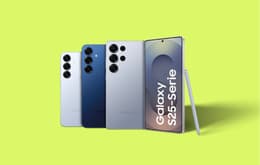
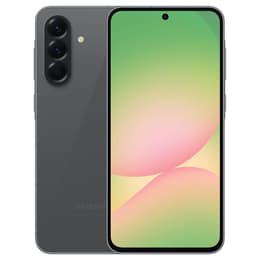
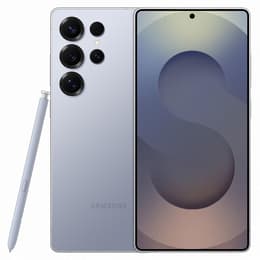
The Samsung Galaxy A56, released in March 2025, is positioned as a robust mid-range smartphone designed to offer a balanced experience for everyday use. In contrast, the Samsung Galaxy S25 Ultra, a flagship device launched in January 2025, is engineered for advanced performance, sophisticated photography, and a premium user experience. Both devices operate on the Android platform, but they cater to different user expectations regarding features and capabilities.
Available Models
Colour
Storage (GB)
Scores
Durability
When considering the longevity of these devices, both offer substantial software support, though with distinct timelines and physical resilience.
- Software Updates: The Galaxy A56 is expected to receive six major Android OS upgrades and six years of security updates from its release, ensuring a respectable period of current software features and security. The Galaxy S25 Ultra, as a flagship, benefits from an extended commitment, receiving seven years of both OS and security updates, providing a longer duration of software relevance.
- Build Durability: The Galaxy A56 features a robust design, often incorporating an aluminum frame with Gorilla Glass Victus+ on both the front and back, providing good resistance to daily wear and an IP67 rating for dust and water protection. The Galaxy S25 Ultra utilizes premium materials like a titanium frame and Gorilla Glass Armor 2 on both front and back, offering superior drop and scratch protection, along with an IP68 rating for enhanced water and dust resistance.
- Practical Lifespan: Users prioritizing the absolute longest software support and physical resilience will find the S25 Ultra designed for extended use. The A56 still offers a very respectable lifespan for most users, especially those who typically upgrade their devices every few years.
Year of Release
2025
2025
OS
Android
Android
Foldable
No
No
Performance
The performance capabilities of these two devices cater to different user demands, reflecting their respective market segments.
- Processor Capabilities: The Galaxy A56 is powered by a capable mid-range processor, the Exynos 1580, which handles daily tasks like browsing, social media, and light gaming smoothly. The Galaxy S25 Ultra is equipped with a significantly more powerful, current-generation processor, designed to excel in highly demanding scenarios such as intensive mobile gaming, professional-grade video editing, and seamless multitasking with numerous applications open simultaneously.
- System Responsiveness: While the A56 offers a responsive experience for most users, the S25 Ultra provides a noticeably faster and more efficient operation, particularly when pushing the device to its limits with heavy applications.
- Storage and RAM: The A56 typically comes with 8GB or 12GB of RAM and 128GB or 256GB of internal storage, which is ample for most users. The S25 Ultra offers higher configurations, starting with 12GB or 16GB of RAM and storage options from 256GB up to 1TB, utilizing faster storage technology for quicker app loading and data transfer.
Screen quality
Both Samsung devices offer excellent display technology, but the S25 Ultra provides a more premium visual experience.
- Display Technology and Resolution: The Galaxy A56 features a vibrant Super AMOLED display with a Full HD+ resolution (2340x1080 pixels), delivering rich colors and deep blacks suitable for media consumption and general use. The Galaxy S25 Ultra elevates this with a Dynamic AMOLED 2X display, offering a higher QHD+ resolution (3120x1440 pixels) for greater clarity and detail.
- Brightness and Refresh Rate: Both phones feature a 120Hz refresh rate for smooth scrolling and animations. The A56 offers a peak brightness of up to 1900 nits, ensuring good visibility outdoors. The S25 Ultra achieves significantly higher peak brightness, up to 2600 nits, making it even more comfortable to view in direct sunlight and enhancing HDR content. The S25 Ultra also features an LTPO display, allowing for a more dynamic refresh rate down to 1Hz for improved power efficiency.
- Screen Size and Viewing Experience: The A56 usually has a screen size around 6.7 inches. The S25 Ultra features a slightly larger display, typically around 6.9 inches, which, combined with its higher resolution and brightness, offers a more immersive viewing experience, especially for content creation or detailed work.
Resolution
1080x2340
1440x3120
Audiovisual
The camera systems on these two devices represent different tiers of photographic capability, with the S25 Ultra offering a more comprehensive and advanced setup.
- Main Camera System: The Galaxy A56 features a triple camera setup, typically including a 50MP main sensor with optical image stabilization (OIS), a 12MP ultrawide, and a 5MP macro lens, providing competent performance for everyday photography. The Galaxy S25 Ultra boasts a quad-camera system, highlighted by a 200MP main sensor with OIS, a 50MP ultrawide, a 50MP telephoto with 5x optical zoom, and a 10MP telephoto with 3x optical zoom, offering exceptional detail and versatility.
- Zoom and Low-Light Performance: The A56 supports up to 10x digital zoom, but clarity can diminish at higher magnifications. Its low-light performance is adequate for its class but may show more noise compared to flagship devices. The S25 Ultra excels with its multiple telephoto lenses, offering up to 100x digital zoom with impressive detail, and its larger sensors and advanced computational photography significantly enhance low-light performance, producing clearer and more detailed images.
- Video Recording and Front Camera: Both devices can record video, with the S25 Ultra offering higher resolutions and more advanced features like 8K recording and superior stabilization. For selfies, both typically feature a 12MP front camera, though the S25 Ultra's often includes autofocus for sharper results.
Miscellaneous
Beyond core performance, several practical features differentiate these two Samsung smartphones, influencing daily usability and specialized functions.
- Connectivity Options: Both devices support 5G connectivity for fast mobile data. The Galaxy A56 typically includes Wi-Fi 6 and Bluetooth 5.3. The Galaxy S25 Ultra, being a flagship, often features the latest connectivity standards like Wi-Fi 7 and Bluetooth 5.4, along with Ultra-Wideband (UWB) for enhanced spatial awareness and device tracking.
- Ports and Biometrics: Both utilize a USB-C port for charging and data transfer, though the S25 Ultra's port often supports faster data speeds (e.g., USB 3.2 or Thunderbolt). Both typically feature an in-display fingerprint sensor for secure unlocking, with the S25 Ultra often having a faster ultrasonic sensor compared to the A56's optical sensor. The S25 Ultra also integrates the S Pen stylus, offering precise input for notes, drawing, and navigation, a feature absent on the A56.
- Design and Handling: The Galaxy A56 generally has a comfortable, ergonomic design with a balanced weight of around 198 grams and dimensions that make it manageable for most users. The S25 Ultra is a larger and heavier device, typically around 218 grams, reflecting its premium build materials and larger display.
Weight
198 g
218 g
Screen size (in)
6.7
6.9
Mobile network
5G
5G
SIM card
Dual Physical SIM + eSIM
Dual Physical SIM
Carrier compatibility
Unlocked
Unlocked
What the community thinks
The Samsung Galaxy A56 and Galaxy S25 Ultra cater to distinct user needs, each excelling in its intended segment. Users frequently praise the A56 for its vibrant display, reliable camera performance for its class, and solid battery life, making it a strong all-rounder for daily tasks. Common criticisms sometimes point to its performance not matching flagship speeds for very intensive applications.
The Galaxy S25 Ultra, conversely, is consistently lauded for its unparalleled camera system, top-tier performance, and the versatility offered by the integrated S Pen. Users appreciate its bright, high-resolution display and extended software support. Some discussions suggest that while the S25 Ultra offers superior features, the A56 provides a significant portion of the flagship experience for general use.
Users prioritizing advanced photography capabilities, peak performance for demanding applications, and the longest possible software support will find the Galaxy S25 Ultra well-suited to their needs. For individuals who primarily use their phone for everyday tasks, social media, casual gaming, and value a balanced experience with good battery life, the Galaxy A56 presents a compelling option. Both devices, whether new or as a quality-assured refurbished option, offer a gateway to Samsung's Android ecosystem, allowing consumers to make informed and sustainable choices based on their specific requirements.