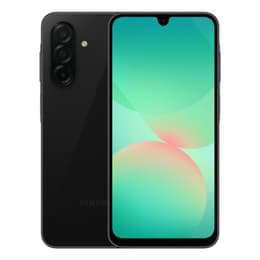

Compare models
Galaxy A17 Vs Galaxy A26
- 1-year minimum warranty
- Free delivery on all items
- Free 30-day returns
Differences at a glance
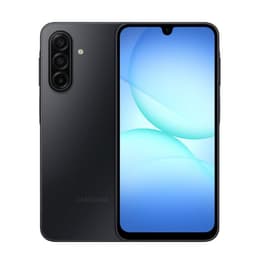
The Samsung Galaxy A17 (2025) and Samsung Galaxy A26 (2025) are mid-range Android smartphones designed for everyday mobile communication and productivity. While both devices share identical battery capacities and large screen layouts, they differ primarily in processing power, display fluidity, and water protection ratings. Both models operate on Android with Samsung's custom interface, providing a familiar software ecosystem for users transitioning between tiers.
Available Models
Colour
Storage (GB)
Scores
Durability
When examining hardware longevity and software support, both the Galaxy A17 and Galaxy A26 are built to remain functional for several years, though differences in build protection and release timelines influence their long-term resilience.
- Software longevity: Both devices benefit from long-term update commitments, ensuring regular security patches and system upgrades that keep the software secure and current over an extended lifecycle.
- Build durability: The Galaxy A26 features a higher dust and water resistance rating compared to the splash-resistant rating of the Galaxy A17, offering better protection against accidental liquid exposure.
- Expected lifespan: Both smartphones utilize durable front glass protection and reinforced internal frameworks designed to withstand typical daily wear and tear during regular multi-year usage.
Year of Release
2025
2024
OS
Android
Android
Foldable
No
No
Performance
Under daily workloads, the Galaxy A17 and Galaxy A26 handle routine tasks like web browsing, messaging, and media streaming smoothly, though their internal capabilities differ when managing heavier multitasking or demanding applications.
- Multitasking and processing: The Galaxy A26 provides additional headroom for demanding applications and switching between multiple open programs, whereas the Galaxy A17 manages standard daily routines efficiently.
- Storage and memory: Both models offer configurable tiers of internal storage and memory, with options to expand storage capacity using microSD cards for users who retain large offline media libraries.
- Battery behavior: Both devices integrate a standard 5000 mAh battery capacity that comfortably sustains a full day of mixed usage under typical conditions before requiring a recharge.
Screen quality
Visual consumption on both smartphones is handled by expansive display panels, though the Galaxy A26 introduces a faster refresh rate for smoother motion clarity during scrolling and navigation.
- Display fluidity: The Galaxy A26 features a high refresh rate panel that delivers smoother on-screen animations, while the Galaxy A17 utilizes a standard refresh rate suitable for typical viewing habits.
- Panel technology and clarity: Both phones utilize vibrant display technology with sharp resolution, offering deep contrast levels and clear text rendering for reading and media viewing.
- Outdoor visibility: High brightness modes on both screens enable comfortable readability when using the devices outside under direct sunlight or bright ambient lighting.
Resolution
1080x2340
1080 x 2340
Audiovisual
For photography and media recording, both smartphones feature versatile multi-lens rear arrays designed to capture everyday moments in diverse lighting conditions.
- Main camera performance: Both models include a primary high-resolution sensor equipped with optical image stabilization to minimize blur during handheld photo and video capture.
- Secondary lenses: Each device pairs the primary sensor with an ultra-wide lens for landscape shots and a macro lens for close-up photography.
- Media and audio output: Built-in microphone arrays and speaker systems on both models deliver clear voice calls and adequate sound output for casual video playback.
Miscellaneous
Practical daily usability is shaped by physical dimensions, connectivity standards, and biometric security features built into each chassis.
- Handling and design: Both handsets feature slim profiles and comfortable weight distribution, making them easy to hold and operate with one hand despite their large screen sizes.
- Biometric security: Each device incorporates a responsive side-mounted fingerprint sensor integrated into the power button alongside facial recognition options for quick unlocking.
- Connectivity: Both models support modern network bands, Wi-Fi standards, and Bluetooth pairing, ensuring reliable connections for wireless accessories and mobile data.
Weight
192 g
197 g
Screen size (in)
6.7
6.5
Mobile network
5G
5G
SIM card
Physical SIM
Dual Physical SIM
Carrier compatibility
Unlocked
Unlocked
Connector
USB-C
USB-C
What the community thinks
User feedback and community discussions highlight the reliable battery endurance and clear display quality of both the Galaxy A17 and Galaxy A26 as frequent points of praise. Common observations note that while both devices handle messaging and browsing without issue, users occasionally point out the desire for faster charging speeds during busy days. Choosing between the two models depends largely on individual workflow priorities and feature preferences.
Users prioritizing smoother on-screen motion and higher water resistance may prefer the Galaxy A26, while those seeking a straightforward, reliable daily device for core communication often find the Galaxy A17 well-suited to their needs. For consumers interested in a sustainable choice, a quality-assured refurbished option provides an eco-friendly alternative that extends device lifecycles without compromising on core performance capabilities. Reviewing these practical differences helps ensure a selection that aligns closely with personal daily usage habits.