
Compare models
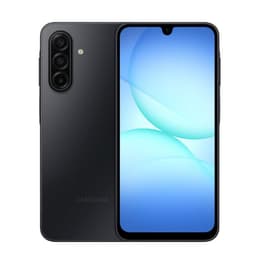
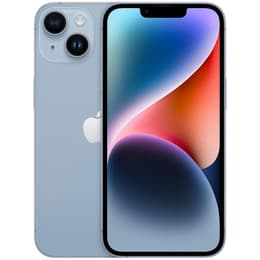
Galaxy A17 Vs iPhone 14
- 1-year minimum warranty
- Free delivery on all items
- Free 30-day returns
Differences at a glance
The Samsung Galaxy A17 (2025) and the Apple iPhone 14 (2022) are modern smartphones operating on distinct software ecosystems, catering to users with differing day-to-day priorities. While the iPhone 14 focuses on a streamlined mobile experience within the iOS platform, the Galaxy A17 provides a contemporary Android interface coupled with extended physical display space. These two devices represent alternative approaches to mobile technology, each emphasizing different architectural choices for everyday communication and media consumption.
Available Models
Colour
Storage (GB)
Scores
Durability
When examining longevity, both smartphones approach software support and physical resilience through different manufacturer roadmaps and update schedules.
- Software support timelines: The Galaxy A17 benefits from an extended multi-year update policy covering long-term Android system releases, whereas the iPhone 14 follows Apple's established pattern of providing iOS updates for several years following its initial market release.
- Build resilience: The iPhone 14 features front ceramic glass protection and water resistance engineering designed to withstand accidental submersion, while the Galaxy A17 incorporates standard dust and water splash protection alongside reinforced rear panel materials.
Year of Release
2025
2022
OS
Android
iOS
Foldable
No
No
Performance
Daily operation and hardware efficiency vary between the two models, influencing how each handles multitasking, loading times, and power consumption.
- Battery endurance: The Galaxy A17 incorporates a high-capacity battery designed to last through extensive daily use on a single charge, while the iPhone 14 relies on optimized power management to deliver consistent operational endurance throughout a standard day.
- System responsiveness: Both devices handle standard web browsing, messaging, and media streaming smoothly, though heavier applications and intensive processing tasks run with different thermal efficiencies due to their respective internal architectures.
- Multitasking capabilities: Memory configurations across these models allow users to switch between multiple open apps efficiently, though options for expandable local storage differ significantly depending on the device.
Screen quality
Visual output and display characteristics differ notably in size, panel technology, and refresh rate performance for outdoor and indoor viewing.
- Display panel technology: The Galaxy A17 utilizes a expansive Super AMOLED screen offering high contrast and deep black levels, while the iPhone 14 features a balanced OLED display known for accurate color reproduction and fine detail clarity.
- Refresh rate and smoothness: The Galaxy A17 incorporates a higher refresh rate capability for smoother scrolling through web pages and menus, whereas the iPhone 14 maintains a standard refresh rate paired with responsive touch recognition.
- Dimensions and viewing area: The Galaxy A17 provides a larger screen estate well-suited for reading and watching videos, while the iPhone 14 offers a more compact footprint that is easy to handle with one hand.
Resolution
1080x2340
1170 x 2532
Screen type
Super AMOLED
Super Retina XDR OLED
Audiovisual
Photography and media recording capabilities vary across the lens arrangements and audio systems built into each smartphone.
- Camera versatility: The iPhone 14 utilizes a dual-lens rear camera system optimized for low-light photography and stable video recording, while the Galaxy A17 features a multi-lens setup including a high-resolution primary sensor and dedicated lenses for wide-angle and close-up framing.
- Audio and media output: Both models provide clear built-in stereo speakers suitable for hands-free calls and casual media playback, alongside sensitive microphone arrays that capture voice input clearly during video calls.
Main camera
50 megapixels
12 megapixels
Miscellaneous
Practical physical traits, connectivity standards, and daily usability features define the structural design of both models.
- Connectivity and ports: The iPhone 14 utilizes a proprietary charging cable connection alongside modern wireless standards, whereas the Galaxy A17 employs a universal USB Type-C port for charging and data transfer alongside broad network connectivity options.
- Security and handling: The Galaxy A17 features a convenient side-mounted fingerprint sensor for quick unlocking, while the iPhone 14 relies on facial recognition technology embedded within the front display assembly.
Weight
192 g
172 g
Screen size (in)
6.7
6.1
Mobile network
5G
5G
SIM card
Physical SIM
Physical SIM + eSIM
Carrier compatibility
Unlocked
Unlocked
Connector
USB-C
Lightning
What the community thinks
User discussions and community feedback indicate that satisfaction with either device largely depends on individual platform preferences and daily use cases. Users prioritizing a larger display area, expandable storage options, and an open software environment often gravitate toward the Galaxy A17. Conversely, users seeking a compact device integrated tightly within a closed operating system ecosystem frequently prefer the iPhone 14. For those aiming to make an eco-friendly choice, selecting a quality-assured refurbished option provides a sustainable way to acquire these devices without supporting new manufacturing demand. Ultimately, evaluating personal habits regarding software familiarity and media consumption will guide the most appropriate device selection.