iPhone 13 mini Vs iPhone 14

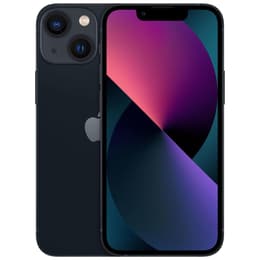
iPhone 13 mini
iPhone 13 mini
Starting at

Refurbished price:£185.00

Versus £649.00 new

See options
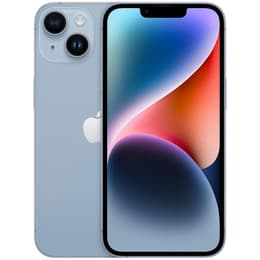
iPhone 14
iPhone 14
Starting at

Refurbished price:£229.00

Versus £599.00 new

See options

Ratings

The iPhone 13 Mini, released in September 2021, and the iPhone 14, launched in September 2022, represent different approaches within Apple's smartphone lineup. While both devices operate on the iOS platform and share a similar design language, the iPhone 13 Mini offers a compact form factor, whereas the iPhone 14 provides a larger display and introduces camera enhancements and additional safety features. Both models are powered by variations of the same processor, offering a consistent user experience with subtle differences in performance and capabilities.

Scores

Durability

The practical lifespan of a smartphone is influenced by its physical durability and the duration of software support it receives.

  • Release Timeline: The iPhone 13 Mini was released in September 2021, while the iPhone 14 followed a year later in September 2022. This difference in launch dates means the iPhone 14 will likely receive software updates for approximately one year longer than the iPhone 13 Mini. The iPhone 13 Mini was discontinued in September 2023, but it is still compatible with current iOS versions, including iOS 18.
  • Durability Features: Both models feature a Ceramic Shield front cover, designed to offer enhanced drop performance, and an aerospace-grade aluminum frame. They also share an IP68 rating for water and dust resistance, allowing submersion up to 6 meters for 30 minutes. User reports suggest the smaller size of the 13 Mini can contribute to its perceived durability in drops.
  • Software Longevity: Both devices are expected to receive several more years of iOS updates, ensuring access to new features and security patches. Batteries in both models are designed to retain 80% of their original capacity after 500 complete charge cycles under ideal conditions.

Year of Release

2021

2022

Compatible with latest Update

Yes

Yes

OS

iOS

iOS

Foldable

No

No

Performance

Performance in daily use is a key consideration, impacting how smoothly applications run and how efficiently tasks are handled.

  • Processor Capabilities: Both the iPhone 13 Mini and iPhone 14 are equipped with the A15 Bionic chip. However, the iPhone 14 utilizes a version of the A15 Bionic with a 5-core graphics processing unit (GPU), similar to the iPhone 13 Pro, while the iPhone 13 Mini features an A15 Bionic with a 4-core GPU. This difference means the iPhone 14 offers slightly more robust graphics performance, which can be noticeable in graphically intensive games or demanding applications.
  • System Responsiveness: For everyday tasks such as navigating the operating system, launching apps, and browsing the web, both devices offer a fluid and responsive experience. The processing power in both models ensures smooth multitasking and efficient handling of most applications.
  • Battery Behavior: The iPhone 14 generally offers longer battery life compared to the iPhone 13 Mini, attributed to its larger physical size allowing for a bigger battery capacity (3279 mAh for iPhone 14 vs. 2406 mAh for iPhone 13 Mini). Users of the iPhone 13 Mini often report it can last a full day with typical usage, while the iPhone 14 provides more headroom for extended use.

Memory (GB)

4 GB

6 GB

Screen quality

The display is the primary interface for interaction, and its quality significantly impacts the user experience.

  • Display Technology and Clarity: Both devices feature Super Retina XDR OLED displays, delivering deep blacks, vibrant colors, and excellent contrast. The iPhone 13 Mini has a 5.4-inch display with a resolution of 2340x1080 pixels (476 ppi), while the iPhone 14 has a larger 6.1-inch display with a resolution of 2532x1170 pixels (460 ppi). Both offer sharp text and detailed images.
  • Brightness and Refresh Rate: Both models achieve a typical maximum brightness of 800 nits and a peak HDR brightness of 1200 nits, ensuring good visibility in various lighting conditions. Both displays have a standard 60Hz refresh rate, providing a smooth visual experience for most content.
  • Screen Size and Viewing Experience: The iPhone 13 Mini's 5.4-inch screen is ideal for users who prefer a compact device for one-handed use and easy pocketability. The iPhone 14's 6.1-inch screen offers a more expansive viewing area, which can enhance media consumption and general browsing without being overly large.

Resolution

1080 x 2340

1170 x 2532

Screen type

Super Retina XDR OLED

Super Retina XDR OLED

Audiovisual

The camera systems on both devices are capable, but the newer iPhone 14 introduces several advancements.

  • Rear Camera System: Both phones feature a dual 12MP camera system with a Wide and an Ultra Wide lens. The iPhone 14's main Wide camera has a larger sensor and a wider aperture (f/1.5) compared to the iPhone 13 Mini's (f/1.6), allowing it to capture more light for improved low-light performance. Both main cameras include sensor-shift optical image stabilization. The iPhone 14 also benefits from the Photonic Engine, which enhances mid-to-low light photography.
  • Front Camera and Video: The iPhone 14 features an improved 12MP front camera with a wider f/1.9 aperture and autofocus, leading to better selfies and video calls. Both support Cinematic Mode, but the iPhone 14 extends this to 4K HDR at 30fps, while the 13 Mini supports 1080p at 30fps. The iPhone 14 also introduces Action Mode for smoother video recording during movement.
  • Audio Experience: Both devices offer stereo speakers for media consumption and clear microphone quality for calls and video recording.

Main camera

12 megapixels

12 megapixels

Front camera

12 megapixels

12 megapixels

Miscellaneous

Beyond core features, several practical elements contribute to the overall user experience and device utility.

  • Connectivity and Ports: Both the iPhone 13 Mini and iPhone 14 support 5G cellular connectivity, Wi-Fi 6, and NFC for mobile payments. The iPhone 14 features Bluetooth 5.3, a slight upgrade from the iPhone 13 Mini's Bluetooth 5.0. Both devices continue to use the Lightning port for charging and data transfer.
  • Sensors and Biometrics: Both models rely on Face ID for secure authentication and include standard sensors like an accelerometer, gyroscope, proximity sensor, and barometer. The iPhone 14 introduces Emergency SOS via satellite, a safety feature allowing communication in areas without cellular or Wi-Fi coverage.
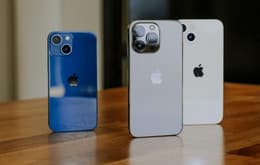
  • Physical Design and Handling: The iPhone 13 Mini is significantly smaller and lighter, measuring 131.5 x 64.2 x 7.65 mm and weighing 141 grams. This makes it highly suitable for one-handed operation and easy portability. The iPhone 14 is larger and heavier at 146.7 x 71.5 x 7.8 mm and 172 grams, offering a more substantial feel and a larger screen area.

Weight

140 g

172 g

Screen size (in)

5.4

6.1

Mobile network

5G

5G

SIM card

Physical SIM + eSIM

Physical SIM + eSIM

Carrier compatibility

Unlocked

Unlocked

Connector

Lightning

Lightning

Choosing between the iPhone 13 Mini and the iPhone 14 involves weighing priorities between a compact form factor and incremental upgrades in camera technology, battery life, and safety features. Users frequently praise the iPhone 13 Mini for its comfortable size and ease of use with one hand, often noting its surprising durability despite its small stature. Its main criticism often revolves around its comparatively shorter battery life for heavy users and the smaller screen size for media consumption or extensive multitasking.

The iPhone 14, on the other hand, is generally lauded for its improved camera capabilities, particularly in low light, and the addition of features like Action Mode for video and Emergency SOS via satellite. Its larger display and extended battery life are also common points of appreciation. Some users might find its performance gains over the 13 Mini to be subtle for everyday tasks, as both share the same core processor, albeit with a slightly different GPU configuration in the iPhone 14.

Users prioritizing a highly portable and pocket-friendly device that is easy to operate with one hand may find the iPhone 13 Mini better suited to their needs. It remains a capable smartphone for general use, photography, and communication. Conversely, users who value a larger display for media and browsing, desire enhanced camera features for photography and videography, or appreciate the added safety net of Emergency SOS via satellite, may lean towards the iPhone 14. Both devices offer a reliable iOS experience, and opting for a quality-assured refurbished option for either model can be an eco-friendly alternative to purchasing new.
See all articles

Our recent comparisons