
Galaxy A14 5G Vs Oppo Find X5

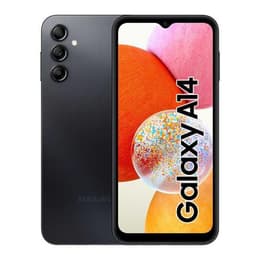
Galaxy A14 5G
Galaxy A14 5G
Starting at

Refurbished price:£80.00

Versus £289.00 new

See options
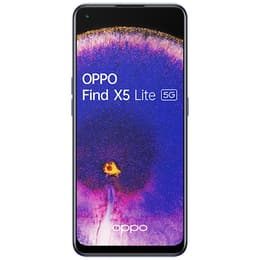
Oppo Find X5
Oppo Find X5
Starting at

Refurbished price:£296.00

Versus £816.65 new

See options

Ratings

The Samsung Galaxy A14 5G, released in January 2023, and the Oppo Find X5, launched in February 2022, represent different segments of the smartphone market. While the Galaxy A14 5G focuses on delivering essential features with 5G connectivity, the Oppo Find X5 offers a more advanced experience with a strong emphasis on display quality and camera capabilities. Both devices operate on the Android platform, but they cater to users with varying priorities regarding performance and premium features.

Scores

Durability

When considering the long-term usability of these devices, their release timelines and software support policies are key factors.

  • Release Timeline: The Oppo Find X5 was released in February 2022, making it approximately a year older than the Samsung Galaxy A14 5G, which launched in January 2023. This difference in age impacts their respective software support cycles.
  • Software Longevity: The Samsung Galaxy A14 5G is expected to receive two major Android OS updates, reaching Android 15, and four years of security updates, extending until 2027. The Oppo Find X5, launched with Android 12, was promised three years of Android version updates, taking it through to Android 15. This means both devices are likely to conclude their major OS updates around the same period, though the Galaxy A14 5G may receive security patches for a slightly longer duration.
  • Repairability: The Galaxy A14 5G boasts a high repairability score, noted for its ease of disassembly and a battery that can be replaced more simply due to the use of pull tabs. Information on the Oppo Find X5's repairability is less prominent, suggesting it may not offer the same level of user-friendly repair access.

Year of Release

2023

2022

Compatible with latest Update

Yes

Yes

OS

Android

Android

Foldable

No

No

Performance

The performance of a smartphone is crucial for daily operations, from app usage to multitasking and gaming. These two devices offer distinct experiences in this regard.

  • Processing Power: The Oppo Find X5 is equipped with a powerful processor, enabling it to handle demanding applications and graphically intensive games smoothly. Users can expect a responsive experience with minimal lag. The Samsung Galaxy A14 5G features a capable processor that manages everyday tasks efficiently, though heavy multitasking or high-end gaming might reveal its limitations compared to more powerful devices.
  • Storage and Multitasking: The Oppo Find X5 offers configurations with 8GB or 12GB of RAM and 128GB or 256GB of internal storage, without expandable storage. The Galaxy A14 5G comes with 4GB, 6GB, or 8GB of RAM and 64GB or 128GB of internal storage, with the added flexibility of expandable storage via a microSD card. For users who frequently switch between many applications, the higher RAM options on the Find X5 may provide a smoother multitasking experience.
  • Battery Behavior: Both phones feature large battery capacities, with the Galaxy A14 5G housing a 5000mAh battery and the Oppo Find X5 a 4800mAh battery. Users generally report that both devices can last through a full day of moderate to heavy use, with some light users extending usage into a second day. The Oppo Find X5 supports significantly faster wired charging at 80W, and also offers 30W wireless charging and 10W reverse wireless charging, allowing for quick power-ups. The Galaxy A14 5G supports 15W wired charging and does not offer wireless charging.

Memory (GB)

4 GB

8 GB

Screen quality

The visual experience is a primary interaction point for any smartphone, and these two models present different display technologies and capabilities.

  • Display Technology and Clarity: The Oppo Find X5 features a 6.55-inch AMOLED display, known for its deep blacks, vibrant colors, and excellent contrast. It offers a resolution of 1080x2400 pixels (FHD+). The Samsung Galaxy A14 5G comes with a 6.6-inch PLS LCD display, also with a 1080x2408 pixel (FHD+) resolution. While the LCD panel provides clear visuals, it does not achieve the same level of contrast and color depth as an AMOLED screen.
  • Refresh Rate and Brightness: The Find X5 offers a 120Hz refresh rate, contributing to smoother scrolling and more fluid animations, along with HDR10+ support and a peak brightness of up to 1000 nits for good outdoor visibility and HDR content viewing. The Galaxy A14 5G has a 90Hz refresh rate, which is an improvement over standard 60Hz displays, providing a noticeably smoother experience for its class. Its brightness levels are suitable for indoor use, but outdoor visibility in direct sunlight may be less optimal compared to the Find X5.
  • Screen Size and Protection: Both devices offer large screens, with the Galaxy A14 5G at 6.6 inches and the Find X5 at 6.55 inches. The Oppo Find X5's display is protected by Corning Gorilla Glass Victus, offering enhanced durability against scratches and drops. The Galaxy A14 5G's display protection is not as prominently highlighted in specifications.

Resolution

1080 x 2408

1080 x 2400

Screen type

PLS LCD

AMOLED

Audiovisual

For many users, camera performance is a significant factor in choosing a smartphone, and these two devices approach photography with different strengths.

  • Rear Camera Systems: The Oppo Find X5 features a versatile triple-camera setup, including a 50MP main sensor with optical image stabilization (OIS), a 50MP ultrawide lens, and a 13MP telephoto lens with 2x optical zoom. It benefits from a dedicated imaging neural processing unit (NPU) and Hasselblad color calibration, contributing to excellent image quality, especially in low-light conditions. The Samsung Galaxy A14 5G also has a triple-camera system, comprising a 50MP main sensor, a 2MP macro lens, and a 2MP depth sensor. Its main camera performs well in good lighting, capturing detailed images, but it lacks an ultrawide lens and struggles more in low-light environments.
  • Front Camera and Video Recording: The Find X5 is equipped with a 32MP front-facing camera, capable of capturing detailed selfies. It supports advanced video features, including 4K AI Night Video. The Galaxy A14 5G has a 13MP front camera that produces good results in well-lit conditions. Both devices are capable of recording video at 1080p resolution at 30 frames per second, but the Galaxy A14 5G lacks optical image stabilization for video, which can result in shakier footage.
  • Specialized Features: The Oppo Find X5's camera system is enhanced by its MariSilicon X NPU, which improves dynamic range and noise reduction, particularly for night photography and video. The Galaxy A14 5G's secondary macro and depth sensors offer limited practical utility for most users.

Main camera

50 megapixels

50 megapixels

Front camera

13 megapixels

32 megapixels

Miscellaneous

Beyond core performance and display, several practical features contribute to the overall user experience and device utility.

  • Connectivity and Ports: Both smartphones support 5G connectivity, ensuring access to faster mobile networks. The Oppo Find X5 supports Wi-Fi 6 and Bluetooth 5.2, and features a USB-C port for charging and data transfer, but it does not include a 3.5mm headphone jack. The Samsung Galaxy A14 5G supports Wi-Fi 5 and Bluetooth 5.2, and notably retains a 3.5mm headphone jack alongside its USB-C port. Both devices include NFC for contactless payments.
  • Biometric Security: The Oppo Find X5 utilizes an under-display optical fingerprint sensor for secure unlocking. The Galaxy A14 5G features a side-mounted fingerprint sensor integrated into the power button, which is generally fast and reliable. Both also offer face recognition capabilities.
  • Build Materials and Dimensions: The Oppo Find X5 has a premium build with an aluminum frame and a matte glass back, offering a comfortable feel in hand. It measures 160.3 x 72.6 x 8.7 mm and weighs 196g. The Galaxy A14 5G features a plastic back with a textured finish, which provides a good grip and a sturdy feel. Its dimensions are 167.7 x 78 x 9.1 mm, and it weighs around 204-205g, making it a slightly larger and heavier device. The Find X5 has an IP54 rating for splash resistance, while the Galaxy A14 5G does not have an official IP rating.

Weight

201 g

196 g

Screen size (in)

6.6

6.55

Mobile network

5G

5G

SIM card

Dual Physical SIM

Physical SIM + eSIM

Carrier compatibility

Unlocked

Unlocked

Connector

USB-C + Jack 3.5mm

USB-C

The Samsung Galaxy A14 5G and the Oppo Find X5 cater to different user needs and preferences, reflecting their respective positions in the smartphone market. User feedback for the Galaxy A14 5G often praises its long battery life, decent display for its category, and solid main camera performance in good lighting conditions. Criticisms sometimes point to its performance being less fluid for demanding tasks and the limited utility of its secondary cameras. The Oppo Find X5, on the other hand, receives commendation for its impressive AMOLED display, powerful performance, and excellent camera system, particularly its low-light capabilities and fast charging speeds. Some users note the ColorOS interface as a minor point of contention and the absence of an IP68 water resistance rating.

Users prioritizing a smooth and vibrant visual experience, robust camera features for diverse photography, and very fast charging will find the Oppo Find X5 well-suited to their needs. Its premium build and powerful processing capabilities make it ideal for those who engage in mobile gaming, content creation, or heavy multitasking. Conversely, users who value extended battery life, expandable storage, and the convenience of a headphone jack, while still requiring 5G connectivity, may lean towards the Samsung Galaxy A14 5G. It serves as a reliable daily driver for essential smartphone functions and moderate usage. Both devices offer compelling features, and for those looking for a more sustainable choice, considering a quality-assured refurbished option for either model can provide excellent value and contribute to reducing electronic waste.


See all articles

Our recent comparisons