iPhone 11 Vs Oppo Find X5

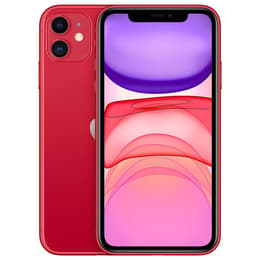
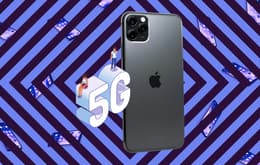
iPhone 11
iPhone 11
Starting at

Refurbished price:£123.00

Versus £489.00 new

See options
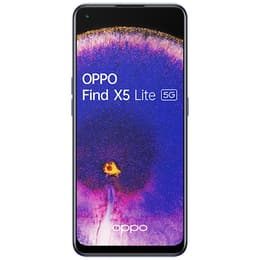
Oppo Find X5
Oppo Find X5
Starting at

Refurbished price:£298.00

Versus £816.65 new

See options

Ratings

The iPhone 11, released in September 2019, and the Oppo Find X5, launched in February 2022, represent different approaches to smartphone design and functionality from their respective manufacturers. While the iPhone 11 operates on Apple's iOS ecosystem, the Oppo Find X5 runs on Android with Oppo's ColorOS overlay. Key differentiators between these two devices include their display technologies, camera systems, and overall performance capabilities, reflecting their distinct release timelines and target user experiences.

Scores

Durability

The expected practical lifespan of a smartphone is influenced by its release timeline, software support, and physical durability.

  • Release Timeline and OS Support: The iPhone 11, launched in 2019, is anticipated to receive major iOS updates until late 2026, with security updates potentially extending beyond that. Most iPhones typically receive 5 to 7 years of major iOS updates. The Oppo Find X5, released in 2022, is expected to receive three years of Android version updates, which would take it through Android 15.
  • Repairability: The iPhone 11 has a reported repairability score of around 4.6 to 6 out of 10, indicating a moderate level of repair difficulty. The Oppo Find X5 does not have a widely published iFixit score, but its design includes a glass rear and lacks the IP68 water resistance found in its Pro variant, suggesting a similar or potentially more challenging repair process for certain components.
  • Physical Durability: Both devices feature glass on their front and back. The iPhone 11 has an aluminum frame and is rated IP68 for water and dust resistance, allowing submersion up to 2 meters for 30 minutes. The Oppo Find X5 features Gorilla Glass for display protection and an aluminum frame, with an IP54 rating, offering protection against dust and splashes.

Year of Release

2019

2022

Compatible with latest Update

Yes

Yes

OS

iOS

Android

Foldable

No

No

Performance

Performance in daily use, from app handling to multitasking, varies between these two devices due to their different internal components and software optimizations.

  • System Responsiveness: The iPhone 11, powered by its A13 Bionic chip, provides smooth performance for everyday tasks and many demanding applications. The Oppo Find X5, featuring a current-generation processor, offers excellent system performance with short loading and response times, handling demanding apps and multitasking smoothly.
  • Battery Behavior: The iPhone 11, with a reported 3110 mAh battery, generally offers good battery life, often lasting a full day for many users, with around 11 hours of web browsing or 17 hours of video playback. The Oppo Find X5 includes a larger 4800 mAh battery, which typically lasts a full day and can extend into a second day for moderate users, providing approximately 14-15 hours of video playback.
  • Charging Capabilities: The iPhone 11 supports standard charging, and while it is compatible with faster charging, a fast charger was not included in its original packaging. The Oppo Find X5 supports 80W wired fast charging, capable of reaching a full charge in about 34-40 minutes, and also offers 30W wireless charging and 10W reverse wireless charging.

Memory (GB)

4 GB

8 GB

Screen quality

The visual experience on both devices is shaped by their display technology, resolution, and refresh rates.

  • Display Technology and Clarity: The iPhone 11 features a 6.1-inch Liquid Retina HD display, which is an IPS LCD panel with a resolution of 1792 x 828 pixels, resulting in a pixel density of 326 ppi. The Oppo Find X5 boasts a 6.55-inch AMOLED display with a higher resolution of 2400 x 1080 pixels (FHD+), offering a pixel density of 402 ppi and the ability to display 1 billion colors.
  • Brightness and Refresh Rate: The iPhone 11 provides a maximum typical brightness of 625 nits and a standard 60Hz refresh rate. The Oppo Find X5 offers a brighter viewing experience with up to 1000 nits of brightness and a smoother visual experience thanks to its 120Hz refresh rate.
  • Viewing Experience: The iPhone 11's LCD panel offers accurate color reproduction and wide viewing angles. The Oppo Find X5's AMOLED display delivers deep blacks, vibrant colors, and high contrast, enhanced by HDR10+ support for compatible content.

Resolution

828 x 1792

1080 x 2400

Screen type

Liquid Retina IPS LCD

AMOLED

Audiovisual

Both smartphones offer capable camera systems, but they differ in their configurations and specialized features for photography and videography.

  • Rear Camera System: The iPhone 11 features a dual 12MP camera setup, including a wide-angle lens with an f/1.8 aperture and an ultra-wide-angle lens with an f/2.4 aperture and a 120-degree field of view. The Oppo Find X5 comes with a triple rear camera system, featuring a 50MP main sensor (f/1.8 with OIS), a 50MP ultrawide sensor (f/2.2), and a 13MP telephoto lens offering 2x optical zoom.
  • Low-Light and Photography Features: The iPhone 11 introduced Night mode for its wide lens, significantly improving low-light photography. The Oppo Find X5 benefits from a dedicated MariSilicon X Neural Processing Unit (NPU) and a partnership with Hasselblad, enhancing its imaging capabilities, particularly for 4K Ultra Night Video and overall color calibration.
  • Video Recording Quality: Both devices are capable of recording 4K video at up to 60 frames per second. The Oppo Find X5's MariSilicon X NPU is designed to improve video quality, especially in challenging low-light conditions.

Main camera

12 megapixels

50 megapixels

Front camera

12 megapixels

32 megapixels

Miscellaneous

Beyond core features, several practical elements contribute to the overall user experience and daily convenience of these devices.

  • Connectivity: The iPhone 11 supports 4G LTE and Wi-Fi 6 (802.11ax) for wireless communication. The Oppo Find X5 offers more advanced connectivity with 5G support, along with Wi-Fi 6 and Bluetooth 5.2.
  • Ports and Biometrics: The iPhone 11 uses Apple's proprietary Lightning port for charging and data transfer and relies on Face ID for secure authentication. The Oppo Find X5 features a USB-C port and offers both an in-display fingerprint sensor and face unlock for security. Neither device includes a traditional 3.5mm headphone jack.
  • Design and Handling: The iPhone 11 measures 150.9 x 75.7 x 8.3 mm and weighs 194g. The Oppo Find X5 is slightly larger and heavier at 160.3 x 72.6 x 8.7 mm and 196g, featuring a glass rear and an aluminum frame.

Weight

194 g

196 g

Screen size (in)

6.1

6.55

Mobile network

4G

5G

SIM card

Physical SIM + eSIM

Physical SIM + eSIM

Carrier compatibility

Unlocked

Unlocked

Connector

Lightning

USB-C

User sentiment for the iPhone 11 often praises its reliable performance, capable camera system (especially with the introduction of Night mode), and consistent software experience. Common criticisms sometimes point to its LCD display compared to OLED panels on more premium devices, and the absence of a fast charger in the box. For the Oppo Find X5, users frequently highlight its vibrant AMOLED display with a high refresh rate, rapid charging speeds, and advanced camera features, particularly its low-light video capabilities. Some users have noted the ColorOS interface as a point of personal preference and the lack of IP68 water resistance on this specific model as a potential drawback.

Users prioritizing a long-term software support cycle within the Apple ecosystem and a straightforward user experience may find the iPhone 11 well-suited to their needs. Its robust build and consistent performance make it a practical choice for everyday use. Conversely, users who value a more modern display with a higher refresh rate, faster charging technology, and advanced Android customization options might lean towards the Oppo Find X5. Its focus on camera innovation and 5G connectivity also makes it appealing for those seeking more contemporary features.

For those considering either device, exploring quality-assured refurbished options can provide an eco-friendly alternative, extending the life cycle of these products while offering a more sustainable choice.


See all articles

Our recent comparisons