
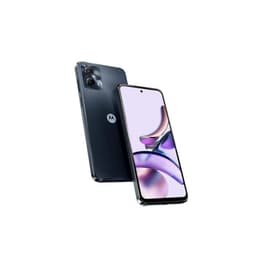

Galaxy S20 5G Vs Motorola Moto G13

Galaxy S20 5G
Galaxy S20 5G
Starting at

Refurbished price:£133.00

Versus £899.00 new

See options
Motorola Moto G13
Motorola Moto G13
Starting at

Refurbished price:£99.00

Versus £166.76 new

See options

Ratings

The Samsung Galaxy S20 5G, released in March 2020, and the Motorola Moto G13, launched in January 2023, represent different segments of the smartphone market. While the Galaxy S20 5G was a flagship device at its release, the Moto G13 is positioned as a more accessible option. Key differentiators include display technology, processing power, and camera capabilities, reflecting their respective market focuses and release timelines. Both devices operate on the Android platform, offering a familiar user experience.

Scores

Durability

The expected lifespan and software support differ significantly between these two devices due to their release dates and original market positioning.

  • Software Updates: The Galaxy S20 5G, having been released in 2020, has received its last major Android operating system update, typically ending its official software support cycle around early 2024. The Moto G13, released in 2023, launched with Android 13 and is expected to receive at least one major OS update, providing a longer period of current software features and security patches.
  • Build Quality & Durability: The Galaxy S20 5G features a more premium construction with Gorilla Glass 6 on both the front and back, coupled with an aluminum frame and an IP68 rating for significant water and dust resistance. The Moto G13 utilizes a plastic body with a glass front protected by Panda Glass and offers a water-repellent design with an IP52 rating, providing basic splash protection.
  • Practical Lifespan: Users prioritizing the latest software and robust physical protection may find the Moto G13 offers a longer practical lifespan for software, while the Galaxy S20 5G's superior build quality might offer better physical resilience over time, especially if considering a quality-assured refurbished option.

Year of Release

2020

2023

Compatible with latest Update

No

No

OS

Android

Android

Foldable

No

No

Performance

Performance is a key area where these two smartphones exhibit notable differences, influencing how smoothly they handle various tasks.

  • Processing Power: The Galaxy S20 5G is equipped with a high-end processor from its release year, enabling it to handle demanding applications, complex multitasking, and graphic-intensive games with considerable ease and responsiveness. The Moto G13 features a processor designed for everyday tasks, providing smooth performance for general use, social media, and lighter gaming, though it may show limitations with more intensive applications.
  • Multitasking & Storage: The Galaxy S20 5G typically comes with more RAM, contributing to a more fluid multitasking experience and quicker app switching. It also offers 128GB of internal storage, expandable via microSD. The Moto G13 usually includes 4GB of RAM and offers 64GB or 128GB storage options, also expandable with a microSD card, which is suitable for most users but may require more frequent storage management for those with extensive media libraries.
  • Battery Behavior: The Moto G13 houses a larger 5000 mAh battery, which, combined with its less power-intensive components, generally translates to extended usage times, often lasting more than a day for moderate users. The Galaxy S20 5G has a 4000 mAh battery, which, while supporting faster wired and wireless charging, may require more frequent charging for heavy users due to its more powerful display and processor.

Memory (GB)

12 GB

4 GB

Screen quality

The visual experience offered by these devices varies significantly due to their display technologies and specifications.

  • Display Technology & Resolution: The Galaxy S20 5G features a 6.2-inch Dynamic AMOLED 2X display with a high resolution of 1440 x 3200 pixels, delivering deep blacks, vibrant colors, and sharp detail. The Moto G13 comes with a larger 6.5-inch IPS LCD screen, offering a resolution of 720 x 1600 pixels, which provides clear visuals for everyday content consumption.
  • Refresh Rate & Brightness: The Galaxy S20 5G supports a 120Hz refresh rate at a lower resolution, providing exceptionally smooth scrolling and a responsive feel, along with high peak brightness for excellent outdoor visibility. The Moto G13 offers a 90Hz refresh rate, which enhances smoothness over standard 60Hz displays, and a brightness level suitable for most indoor and outdoor conditions.
  • Viewing Experience: Users prioritizing a premium, highly detailed, and fluid visual experience, especially for media consumption and gaming, will find the Galaxy S20 5G's display more immersive. The Moto G13 provides a larger screen real estate with a smoother-than-average refresh rate, making it a practical choice for general browsing and video viewing.

Resolution

1440 x 3200

720 x 1600

Screen type

Dynamic AMOLED 2X

IPS LCD

Audiovisual

The camera systems on the Galaxy S20 5G and Moto G13 are designed for different photographic needs and expectations.

  • Rear Camera Capabilities: The Galaxy S20 5G boasts a versatile triple-camera setup, including a 12 MP wide lens with optical image stabilization (OIS), a 64 MP telephoto lens with 3x hybrid optical zoom and OIS, and a 12 MP ultrawide lens. This configuration allows for detailed photos across various scenarios, including impressive zoom capabilities and 8K video recording. The Moto G13 features a 50 MP main camera with phase detection autofocus (PDAF), complemented by 2 MP macro and 2 MP depth sensors. It is capable of capturing detailed everyday photos and 1080p video.
  • Front Camera & Low-Light Performance: The Galaxy S20 5G includes a 10 MP front camera, capable of capturing high-quality selfies and video calls. Its larger sensors and advanced processing contribute to better low-light photography. The Moto G13 has an 8 MP front camera, suitable for clear selfies and video calls in good lighting conditions, though its low-light performance is more modest.
  • Audio Experience: The Galaxy S20 5G offers a robust audio experience, often praised for its speaker output and microphone quality for calls and recordings. The Moto G13 features dual stereo speakers with Dolby Atmos support, enhancing the media consumption experience with improved sound clarity.

Main camera

12 megapixels

50 megapixels

Front camera

10 megapixels

8 megapixels

Miscellaneous

Beyond core specifications, several practical features and design elements differentiate these two smartphones.

  • Connectivity & Ports: The Galaxy S20 5G supports 5G connectivity across sub-6 bands, with some variants also supporting mmWave, along with Wi-Fi 6 for faster wireless internet. It features a USB-C port but omits a 3.5mm headphone jack. The Moto G13 offers 4G LTE connectivity and Wi-Fi 5, which are sufficient for most current network needs. It includes both a USB-C port and a 3.5mm headphone jack, catering to users who prefer wired audio.
  • Security & Biometrics: The Galaxy S20 5G incorporates an ultrasonic fingerprint sensor embedded under the display, alongside face recognition for secure unlocking. The Moto G13 features a side-mounted fingerprint sensor integrated into the power button, offering convenient and quick access, in addition to face unlock.
  • Design & Handling: The Galaxy S20 5G has a compact design, weighing 163g, making it comfortable for one-handed use. The Moto G13 is slightly larger and heavier at 183g, providing a more expansive screen for content, though it might feel less compact in hand. Both devices offer NFC for contactless payments.

Weight

163 g

183 g

Screen size (in)

6.2

6.5

Mobile network

5G

4G

SIM card

Dual Physical SIM

Dual Physical SIM

Carrier compatibility

Unlocked

Unlocked

The Samsung Galaxy S20 5G and Motorola Moto G13 cater to distinct user preferences, reflecting their different market positions and release years. Users often praise the Galaxy S20 5G for its vibrant display, powerful performance, and versatile camera system, which was considered top-tier at its launch. Some common criticisms, however, included its battery life for heavy users and the absence of a headphone jack. The Moto G13, on the other hand, is frequently lauded for its long-lasting battery, smooth 90Hz display, and the inclusion of a 3.5mm headphone jack, making it a practical choice for everyday communication and media consumption. Criticisms sometimes point to its more modest processing power and lower display resolution compared to higher-end devices.

Users prioritizing a premium visual experience, advanced camera features, and robust performance for demanding applications may find the Galaxy S20 5G more aligned with their needs. Its compact form factor and high-end build quality also appeal to those seeking a more refined device. Conversely, individuals who value extended battery life, a larger screen for general use, and the convenience of a headphone jack will likely find the Moto G13 to be a more suitable option. It offers a reliable experience for daily tasks and media consumption without focusing on flagship-level specifications. Both devices, especially when considering a quality-assured refurbished option, provide an eco-friendly alternative for consumers looking to make informed and sustainable choices.


See all articles

Our recent comparisons