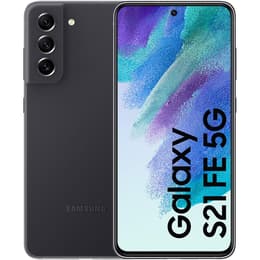
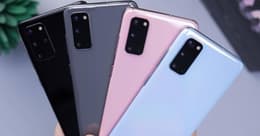
Galaxy S20 5G Vs Galaxy S21 FE 5G

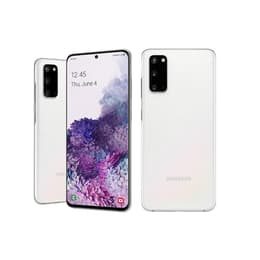
Galaxy S20 5G
Galaxy S20 5G
Starting at

Refurbished price:£132.00

Versus £899.00 new

See options
Galaxy S21 FE 5G
Galaxy S21 FE 5G
Starting at

Refurbished price:£123.00

Versus £759.00 new

See options

Ratings

The Samsung Galaxy S20 5G, released in February 2020, and the Samsung Galaxy S21 FE 5G, launched in January 2022, are both Android-based smartphones from Samsung's Galaxy series. While the Galaxy S20 5G was part of the flagship lineup, the S21 FE 5G was introduced as a 'Fan Edition' model, offering a selection of popular features from its flagship counterpart. The primary distinctions between these two devices lie in their release timelines, software support longevity, and subtle differences in their camera systems and build materials.

Scores

Durability

The lifespan of a smartphone is influenced by its physical durability and the duration of software support it receives. These two Galaxy models present different expectations in this regard.

  • Release Timeline: The Galaxy S20 5G was released in February 2020, making it an older device compared to the Galaxy S21 FE 5G, which launched in January 2022. This two-year difference impacts their respective software support cycles.
  • Software Longevity: The Galaxy S20 5G series concluded its software update journey around March/April 2025, having received approximately five years of security updates and three major Android OS upgrades. In contrast, the Galaxy S21 FE 5G is expected to receive four major Android OS updates, potentially up to Android 16, and around four to five years of security patches, with its security update schedule transitioning to quarterly in late 2025. This means the S21 FE 5G offers a longer period of official software support.
  • Repairability: The Galaxy S20 5G has a repairability score of 7.0 out of 10, with accessible battery and screen components, though adhesive is used for the back cover and battery. The Galaxy S21 FE 5G scores slightly higher at 7.5 out of 10, noted for its relatively straightforward disassembly, though the battery is tightly glued.

Year of Release

2020

2022

Compatible with latest Update

No

Yes

OS

Android

Android

Foldable

No

No

Performance

Both devices are designed to handle daily tasks efficiently, but their internal components offer varying levels of responsiveness and power for more demanding applications.

  • System Responsiveness: The Galaxy S20 5G, equipped with its original processor, provides smooth performance for everyday use and multitasking. Users have noted its snappy operation, especially with a fresh battery. The Galaxy S21 FE 5G, featuring a newer generation processor, offers enhanced capabilities for demanding apps and gaming, contributing to an overall fluid user experience.
  • Battery Behavior: The Galaxy S20 5G comes with a 4000mAh battery. User experiences suggest that its battery life can be good, particularly if the battery is new or well-maintained. The Galaxy S21 FE 5G has a larger 4500mAh battery. However, some users report average battery life, lasting a full day with moderate use but draining quickly with heavy gaming.
  • Storage and Multitasking: The Galaxy S20 5G typically comes with 12GB of RAM and 128GB of internal storage, with the added flexibility of a microSD card slot for expansion up to 1TB. The Galaxy S21 FE 5G offers configurations with 6GB or 8GB of RAM and 128GB or 256GB of internal storage, but it does not include a microSD card slot.

Memory (GB)

12 GB

8 GB

Screen quality

The visual experience on both smartphones is characterized by vibrant displays, though there are differences in size and resolution.

  • Display Technology and Clarity: Both models feature a Dynamic AMOLED 2X display, known for deep blacks and vibrant colors. The Galaxy S20 5G offers a 6.2-inch display with a resolution of 1440x3200 pixels, resulting in a high pixel density. The Galaxy S21 FE 5G has a slightly larger 6.4-inch display with a resolution of 1080x2400 pixels.
  • Refresh Rate and Brightness: Both devices support a 120Hz refresh rate, contributing to smoother scrolling and a more fluid visual experience. They also offer high brightness levels, which aids in outdoor visibility.
  • Screen Protection: The Galaxy S20 5G features Corning Gorilla Glass 6 for display protection. The newer Galaxy S21 FE 5G is equipped with Corning Gorilla Glass Victus, offering enhanced durability against scratches and drops.

Resolution

1440 x 3200

1080 x 2340

Screen type

Dynamic AMOLED 2X

Dynamic AMOLED 2X

Audiovisual

Both smartphones provide versatile camera systems capable of capturing a range of photos and videos, with some distinctions in sensor configurations and front camera capabilities.

  • Rear Camera System: The Galaxy S20 5G features a triple camera setup including a 12-megapixel wide-angle lens with optical image stabilization (OIS), a 64-megapixel telephoto lens with 3x hybrid optical zoom and OIS, and a 12-megapixel ultrawide lens. The Galaxy S21 FE 5G also has a triple rear camera system, comprising a 12-megapixel wide-angle lens with OIS, an 8-megapixel telephoto lens with 3x optical zoom and OIS, and a 12-megapixel ultrawide lens.
  • Photography Performance: Both devices are capable of good photography in various conditions. The S21 FE 5G is noted for its strong camera performance in both day and night settings. Some users of the S21 FE 5G have observed inconsistent color profiles between the ultrawide and main sensors.
  • Front Camera and Video: The Galaxy S20 5G is equipped with a 10-megapixel front camera. The Galaxy S21 FE 5G offers a higher resolution 32-megapixel front camera, which can be beneficial for detailed selfies and video calls. Both phones support 4K video recording at 30/60fps.
  • Audio Experience: Both models feature stereo speakers. The S20 5G's speakers have been a point of criticism for some users, who found them to be less impressive than previous models. The S21 FE 5G's speakers are generally considered decent.

Main camera

12 megapixels

12 megapixels

Front camera

10 megapixels

32 megapixels

Miscellaneous

Beyond core performance, several practical features and design elements differentiate these two Samsung Galaxy smartphones.

  • Connectivity and Ports: Both devices support 5G connectivity, Wi-Fi 6, and Bluetooth 5.0. Neither phone includes a 3.5mm headphone jack. Both utilize a USB Type-C port for charging and data transfer.
  • Physical Design and Materials: The Galaxy S20 5G measures 151.7 x 69.1 x 7.9 mm and weighs 163 grams, featuring a glass body with Gorilla Glass 6 on the front and back. The Galaxy S21 FE 5G is slightly larger and heavier at 155.7 x 74.5 x 7.9 mm and 177 grams, with a plastic back and an aluminum frame, while the front is protected by Gorilla Glass Victus. Both devices carry an IP68 rating for dust and water resistance.
  • Biometric Security: Both smartphones incorporate an in-display fingerprint sensor for secure unlocking. The S20 5G also supports face unlock.

Weight

163 g

177 g

Screen size (in)

6.2

6.4

Mobile network

5G

5G

SIM card

Dual Physical SIM

Physical SIM

Carrier compatibility

Unlocked

Unlocked

The Samsung Galaxy S20 5G and Galaxy S21 FE 5G cater to slightly different user priorities, reflecting their respective positions in Samsung's product lineup and release timelines.

For the Galaxy S20 5G, common praise points include its compact form factor and generally snappy performance, especially when equipped with a well-maintained battery. However, frequent criticisms have centered on its speakers, which some users found underwhelming, and the occurrence of screen issues like green lines. The most significant concern for potential users is the cessation of official software updates, which impacts long-term security and access to new Android features.

The Galaxy S21 FE 5G is often lauded for its vibrant display, capable camera system, and robust water resistance. On the other hand, some users have reported heating issues, particularly with the Exynos variant, and an average battery life that may require more frequent charging for heavy users. The absence of a microSD card slot and a dynamic refresh rate have also been noted as drawbacks.

Users prioritizing a more compact device with expandable storage and a higher-resolution display might find the Galaxy S20 5G appealing, provided they are comfortable with its discontinued software support. Conversely, those who value a longer software update commitment, a slightly larger and more durable display (Gorilla Glass Victus), and a higher-resolution front camera will likely find the Galaxy S21 FE 5G better suited to their needs. Both devices offer a quality-assured refurbished option, providing an eco-friendly alternative for consumers seeking reliable technology.
See all articles

Our recent comparisons