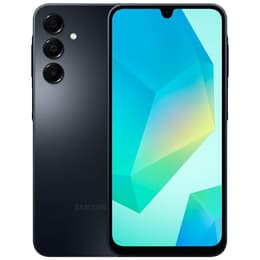
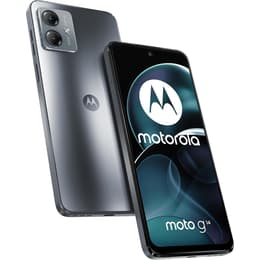

Galaxy A16 Vs Motorola Moto G14

Galaxy A16
Galaxy A16
Starting at

Refurbished price:£100.62

Versus £206.96 new

See options
Motorola Moto G14
Motorola Moto G14
See options

Ratings

The Samsung Galaxy A16 and the Motorola Moto G14 are both smartphones designed for everyday use, offering a balance of features for consumers seeking reliable mobile experiences. While the Moto G14 was released in mid-2023, the Galaxy A16 is a more recent offering, building upon Samsung's established A-series line. This difference in release timelines brings distinct advantages in terms of software longevity and hardware capabilities, influencing their overall user experience.

Scores

Durability

The practical lifespan of a smartphone is significantly influenced by its release date and the manufacturer's commitment to software updates.

  • Release Timeline: The Motorola Moto G14 was introduced in August 2023, making it a device from a previous generation. The Samsung Galaxy A16, being a newer model, benefits from a more recent launch, typically in late 2025 or early 2026, positioning it for a longer period of relevance.
  • Software Longevity: Samsung has a strong reputation for extended software support, with the Galaxy A16 expected to receive six years of major Android operating system upgrades and six years of security patches. In contrast, the Moto G14 launched with Android 13 and has received an update to Android 14, but its long-term software support is generally more limited, typically offering one to two major OS updates and a few years of security updates.
  • Durability Features: The Moto G14 features an IP52 rating, providing basic protection against dust and splashes. While specific details for the Galaxy A16's IP rating are not widely detailed, Samsung's A-series often includes some level of water and dust resistance, and as a newer model, it may incorporate more advanced protective materials or design elements.

Year of Release

2024

2023

Compatible with latest Update

Yes

Yes

OS

Android

Android

Foldable

No

No

Performance

Performance differences between these two devices stem primarily from their respective processors and system optimizations.

  • Everyday Responsiveness: The Motorola Moto G14 is equipped with a processor that handles daily tasks like browsing, social media, and light applications smoothly. However, users engaging in more demanding activities or extensive multitasking might notice occasional delays. The Galaxy A16, as a newer generation device, is expected to feature a more capable processor, offering a snappier and more consistent experience across a wider range of applications and multitasking scenarios.
  • Storage and Multitasking: Both devices typically offer 128GB of internal storage, often expandable via a microSD card, providing ample space for apps and media. The Moto G14 commonly comes with 4GB of RAM, which is sufficient for basic multitasking. The Galaxy A16 is likely to offer configurations with more RAM, potentially 6GB or 8GB, which contributes to smoother transitions between multiple open applications and better handling of memory-intensive tasks.
  • Battery Behavior: Both smartphones are equipped with large 5000 mAh batteries, designed to provide a full day of typical usage. The Moto G14 supports 15W wired charging. The Galaxy A16, following the trend of its predecessor, is likely to support faster charging speeds, potentially up to 25W, allowing for quicker power replenishment.

Memory (GB)

4 GB

4 GB

Screen quality

The visual experience on these phones is a key differentiator, primarily due to their display technologies.

  • Display Technology and Vibrancy: The Motorola Moto G14 features a 6.5-inch IPS LCD panel with Full HD+ resolution. This display provides clear visuals and accurate colors for general content consumption. The Samsung Galaxy A16 is expected to build on the A15's display, likely featuring a 6.5-inch Super AMOLED display. This technology offers deeper blacks, higher contrast, and more vibrant colors, enhancing the viewing experience, especially for videos and images.
  • Smoothness and Brightness: The Moto G14 has a standard 60Hz refresh rate, which is adequate for most users. The Galaxy A16 is anticipated to offer a smoother visual experience with a 90Hz refresh rate, making scrolling and animations appear more fluid. Additionally, the A16's expected Super AMOLED display typically achieves higher peak brightness levels, improving outdoor visibility compared to the Moto G14's LCD panel.
  • Clarity and Viewing Experience: Both devices offer Full HD+ resolution, ensuring sharp text and detailed images. The slightly higher pixel density often found in Samsung's AMOLED panels can contribute to a perception of greater clarity, particularly when viewing fine details.

Resolution

1080 x 2340

1080 x 2400

Screen type

Super AMOLED

IPS LCD

Audiovisual

Both devices offer capable camera systems for capturing everyday moments, though with some distinctions in their capabilities.

  • Main Camera Performance: The Motorola Moto G14 features a 50-megapixel main camera, capable of capturing detailed photos in good lighting conditions. It is accompanied by a 2-megapixel macro lens. The Samsung Galaxy A16 is also expected to feature a 50-megapixel main camera, likely with improvements in image processing and low-light performance compared to the Moto G14, drawing from Samsung's advancements in its A-series.
  • Versatility and Additional Lenses: The Galaxy A16 is likely to offer a more versatile camera setup, potentially including an ultrawide lens in addition to a macro lens, similar to its predecessor, the A15. This allows for capturing broader scenes and more creative shots. The Moto G14's secondary macro lens is suitable for close-up photography.
  • Video Recording and Selfie Camera: Both phones typically record video at 1080p resolution at 30 frames per second. For selfies, the Moto G14 has an 8-megapixel front camera, while the Galaxy A16 is expected to feature a 13-megapixel front camera, potentially offering more detail for video calls and self-portraits.

Main camera

50 megapixels

50 megapixels

Front camera

13 megapixels

8 megapixels

Miscellaneous

Beyond core specifications, several practical features contribute to the overall user experience and daily convenience.

  • Connectivity and Ports: The Motorola Moto G14 supports 4G LTE connectivity, Wi-Fi 5, and Bluetooth 5.0. It includes a 3.5mm headphone jack and a USB-C 2.0 port for charging and data transfer. The Samsung Galaxy A16 is expected to offer 5G connectivity, along with newer Wi-Fi standards (Wi-Fi 5 or 6) and Bluetooth 5.3, providing faster and more reliable wireless connections. It also retains the 3.5mm headphone jack and uses a USB-C port.
  • Biometric Security: Both devices feature side-mounted fingerprint sensors for secure and convenient unlocking. The Galaxy A16 may also incorporate face recognition technology.
  • Design and Handling: The Moto G14 has a plastic build and weighs 177 grams, with dimensions that make it comfortable to hold. The Galaxy A16 also features a plastic construction, and its dimensions and weight are expected to be similar, offering a familiar in-hand feel.

Weight

200 g

177 g

Screen size (in)

6.7

6.5

Mobile network

4G

4G

SIM card

Dual Physical SIM

Dual Physical SIM

Carrier compatibility

Unlocked

Unlocked

Connector

USB-C

USB-C + Jack 3.5mm

Choosing between the Samsung Galaxy A16 and the Motorola Moto G14 involves weighing the benefits of a newer, more supported device against a slightly older, yet still functional, option. Users frequently praise the Moto G14 for its solid battery life and clear display for its category. However, some users have noted its performance can be modest for more intensive tasks and its software update policy is less extensive.

The Galaxy A16, as a more recent release, is generally lauded for its expected long-term software support, vibrant display technology, and potentially more robust performance. While specific user feedback is still emerging for the A16, the A-series typically receives positive remarks for its overall balance of features and Samsung's ecosystem. Potential criticisms might revolve around its plastic build, which is common in this segment.

Users prioritizing long-term software support, a more vibrant display, and potentially smoother performance for a wider range of applications will find the Samsung Galaxy A16 well-suited to their needs. Its extended update policy makes it a compelling choice for those who keep their phones for several years. Conversely, users seeking a straightforward smartphone for essential tasks, with a focus on battery endurance and a functional camera, may find the Motorola Moto G14 to be a practical option, especially if they do not require the latest software features or cutting-edge performance.

For those considering either device, exploring quality-assured refurbished options can provide an eco-friendly alternative, offering a sustainable choice without compromising on functionality.

See all articles

Our recent comparisons