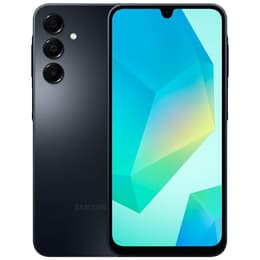
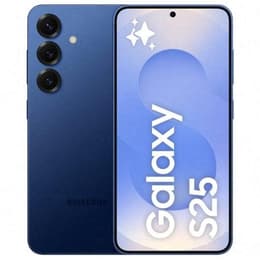
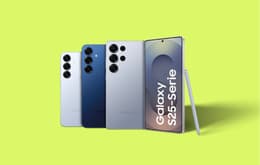
Galaxy A16 Vs Galaxy S25

Galaxy A16
Galaxy A16
Starting at

Refurbished price:£100.62

Versus £206.96 new

See options
Galaxy S25
Galaxy S25
Starting at

Refurbished price:£435.00

Versus £766.13 new

See options

Ratings

The Samsung Galaxy A16 and the Samsung Galaxy S25 represent distinct tiers within Samsung's smartphone lineup, released in late 2024 and early 2025, respectively. While both devices operate on the Android platform with Samsung's One UI, they cater to different user expectations regarding features and capabilities. The Galaxy A16 focuses on delivering essential smartphone functions with a strong emphasis on battery life and display quality, whereas the Galaxy S25 offers a premium experience with advanced processing power, sophisticated camera systems, and enhanced durability.

Scores

Durability

The longevity of a smartphone is influenced by its physical resilience and software support. Both the Galaxy A16 and Galaxy S25 offer substantial software commitments, though with some differences.

  • Software Support: The Galaxy A16 is designed to receive six years of Android operating system upgrades and security updates, ensuring it remains current with the latest features and protections for an extended period. The Galaxy S25, as a flagship device, is expected to offer an even longer support window, with seven years of OS updates and security patches.
  • Physical Durability: The Galaxy A16 typically features a plastic back and frame, offering a balance of durability and a lighter feel, and comes with an IP54 rating for dust and splash resistance. The Galaxy S25 incorporates more premium materials like glass (often Gorilla Glass Victus or Armor) and an aluminum or titanium frame, coupled with an IP68 rating for more robust water and dust resistance.
  • Expected Lifespan: Users can anticipate a practical lifespan of several years for both devices, with the Galaxy S25 potentially offering a slightly longer period of optimal performance due to its higher-end components and extended software support.

Year of Release

2024

2025

OS

Android

Android

Foldable

No

No

Performance

Performance is a key differentiator, with the Galaxy S25 built for demanding tasks and the Galaxy A16 providing reliable everyday functionality.

  • Processing Power: The Galaxy A16 is equipped with a mid-range processor, such as the MediaTek Helio G99 or Dimensity 6300/Exynos 1330, which handles daily applications, web browsing, and social media smoothly. The Galaxy S25 features a top-tier processor, like the Snapdragon 8 Elite for Galaxy, designed for intensive multitasking, advanced gaming, and on-device AI capabilities.
  • Multitasking and Responsiveness: The Galaxy A16 typically offers 4GB to 8GB of RAM, sufficient for managing multiple apps concurrently without significant slowdowns. The Galaxy S25 often comes with 8GB or 12GB of RAM, providing more headroom for heavy users who frequently switch between demanding applications or engage in high-performance activities.
  • Storage Options: Both devices offer various internal storage configurations, with the Galaxy A16 commonly starting at 128GB and offering expandable storage via a microSD card. The Galaxy S25 provides faster internal storage options, often starting at 128GB or 256GB, with some variants reaching up to 1TB, though typically without expandable storage.

Memory (GB)

4 GB

12 GB

Screen quality

The display experience varies significantly between these two models, impacting visual clarity, brightness, and smoothness.

  • Display Technology: The Galaxy A16 features a Super AMOLED display, known for its vibrant colors and deep blacks, offering a good viewing experience for media consumption. The Galaxy S25 utilizes a Dynamic AMOLED 2X display, which provides superior color accuracy, contrast, and energy efficiency.
  • Resolution and Brightness: Both phones typically offer Full HD+ resolution, ensuring sharp images and text. The Galaxy A16's display can reach up to 800 nits of peak brightness, making it visible in most outdoor conditions. The Galaxy S25 boasts significantly higher peak brightness, often exceeding 2500 nits, which greatly enhances outdoor visibility and HDR content viewing.
  • Refresh Rate: The Galaxy A16 comes with a 90Hz refresh rate, providing a smoother scrolling experience compared to standard 60Hz displays. The Galaxy S25 features an adaptive refresh rate that can scale from 1Hz to 120Hz, optimizing for both smooth motion and battery efficiency.

Resolution

1080 x 2340

1080x2340

Screen type

Super AMOLED

Dynamic LTPO AMOLED 2X

Audiovisual

Camera capabilities are a major point of distinction, with the Galaxy S25 offering a more advanced and versatile photography experience.

  • Rear Camera System: The Galaxy A16 typically includes a triple-camera setup with a 50MP main sensor, a 5MP ultrawide, and a 2MP macro lens, suitable for everyday photography in good lighting. The Galaxy S25 also features a triple-camera system, often with a 50MP main sensor, a 12MP ultrawide, and a 10MP telephoto lens with optical zoom, providing greater flexibility and detail.
  • Photography Performance: The Galaxy A16 captures clear and vibrant photos in well-lit environments, with decent performance for casual use. The Galaxy S25 excels in various lighting conditions, offering enhanced low-light performance, superior detail, and advanced computational photography features for professional-looking results.
  • Video Recording and Front Camera: Both devices support Full HD video recording, with the Galaxy S25 capable of higher resolutions like 8K. The Galaxy A16 has a 13MP front camera, while the Galaxy S25 typically features a 12MP front camera with advanced autofocus and better low-light capabilities for selfies and video calls.

Miscellaneous

Beyond core specifications, several practical elements contribute to the overall user experience of each device.

  • Connectivity and Ports: The Galaxy A16 supports 5G connectivity, Wi-Fi 5, and Bluetooth 5.3, and retains a 3.5mm headphone jack. The Galaxy S25 also offers 5G, but often includes newer standards like Wi-Fi 7 and Bluetooth 5.4, and typically omits the headphone jack, relying on its USB-C port for audio and charging.
  • Biometric Security: The Galaxy A16 usually features a side-mounted fingerprint sensor for secure unlocking. The Galaxy S25 incorporates an ultrasonic in-display fingerprint sensor, offering a seamless and advanced biometric security experience.
  • Design and Handling: The Galaxy A16 often has a slightly larger form factor with a plastic build, contributing to a comfortable grip and lighter weight. The Galaxy S25 typically features a more compact design with premium materials, providing a more refined in-hand feel, though it might be slightly heavier.

Weight

200 g

162 g

Screen size (in)

6.7

6.2

Mobile network

4G

5G

SIM card

Dual Physical SIM

Physical SIM + eSIM

Carrier compatibility

Unlocked

Unlocked

Choosing between the Samsung Galaxy A16 and the Galaxy S25 depends largely on individual priorities and usage patterns. The Galaxy A16, released in late 2024, is praised for its large, vibrant Super AMOLED display, long-lasting battery, and solid everyday performance, making it a reliable choice for users seeking essential smartphone functions without needing the most advanced features. Common feedback highlights its value for media consumption and general daily tasks.

The Galaxy S25, launched in early 2025, garners acclaim for its cutting-edge processor, exceptional camera system, and premium build quality, catering to users who demand top-tier performance for gaming, advanced photography, and intensive multitasking. User sentiment often points to its superior display and overall responsiveness as key advantages.

Users prioritizing extended battery life, a large display for media, and a dependable experience for daily communication and browsing may find the Galaxy A16 well-suited to their needs. Conversely, users who require the fastest processing speeds, advanced camera capabilities for creative pursuits, and a more durable, premium design will likely lean towards the Galaxy S25. Both devices offer a pathway to a quality smartphone experience, and considering a quality-assured refurbished option for either model can be an eco-friendly alternative for making an informed, sustainable choice.


See all articles

Our recent comparisons