
Galaxy Z Fold6 Vs Google Pixel 9

Galaxy Z Fold6
Galaxy Z Fold6
Starting at

Refurbished price:£524.00

Versus £1,685.59 new

See options
Google Pixel 9
Google Pixel 9
Starting at

Refurbished price:£330.00

Versus £892.46 new

See options

Ratings

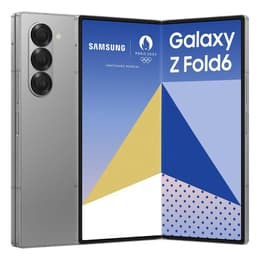
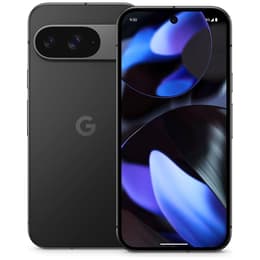
The Samsung Galaxy Z Fold6, released in July 2024, and the Google Pixel 9, launched in August 2024, represent distinct approaches to modern smartphone design. The Galaxy Z Fold6 offers a unique foldable form factor that transforms from a traditional smartphone into a larger tablet-like display, while the Google Pixel 9 maintains a conventional, compact slab design. Both devices operate on the Android platform, with each manufacturer providing their own software experience and feature sets.

Scores

Durability

The longevity of a smartphone is influenced by its physical resilience and the duration of software support it receives.

  • Release Timeline and Age: The Galaxy Z Fold6 became available in July 2024, making it slightly older than the Google Pixel 9, which was released in August 2024. This difference of approximately one month means the Pixel 9 will likely receive software updates for a marginally longer period.
  • OS Support Duration: Google has committed to providing seven years of software updates for the Pixel 9 series, ensuring support until Android 22. Samsung also offers a similar extended software support period for its flagship devices, including the Galaxy Z Fold6, aiming for comparable long-term usability.
  • Physical Durability: The Galaxy Z Fold6 features an IP48 rating for dust and water resistance, utilizing Corning Gorilla Glass Victus 2 on its cover screen and back panel, and ultra-thin flexible glass for its inner display. Some durability tests have noted potential for dust ingress into the hinge mechanism. The Pixel 9 carries an IP68 rating, indicating a higher level of dust and water protection, and also uses Gorilla Glass Victus 2 for both its front and back. Google claims the Pixel 9 series is twice as durable as its predecessor due to internal architecture improvements.

Year of Release

2024

2024

Compatible with latest Update

Yes

Yes

OS

Android

Android

Foldable

Yes

No

Performance

Performance in both devices is driven by their respective processors, influencing how smoothly applications run and how efficiently tasks are handled.

  • Processor Capabilities: The Galaxy Z Fold6 is equipped with a processor designed for high-end performance, enabling it to handle demanding applications, intensive multitasking, and graphic-rich gaming with fluidity. The Pixel 9 features Google's custom-designed processor, which focuses on integrating artificial intelligence and machine learning for a responsive user experience and efficient handling of everyday tasks.
  • Multitasking and Responsiveness: The Galaxy Z Fold6, with its foldable display, is optimized for advanced multitasking, allowing users to run multiple applications simultaneously across its larger internal screen. The Pixel 9 also offers smooth multitasking and system responsiveness, benefiting from its integrated hardware and software design.
  • Storage and RAM: Both devices offer various storage configurations, typically starting from 128GB or 256GB, and include ample RAM (12GB or more) to support efficient application switching and background processes.

Memory (GB)

12 GB

12 GB

Screen quality

The visual experience on these devices differs significantly due to their distinct display technologies and form factors.

  • Display Technology and Size: The Galaxy Z Fold6 features two Dynamic AMOLED 2X displays: a 7.6-inch foldable inner screen and a 6.3-inch cover screen. The inner display offers a large, expansive canvas when unfolded, while the cover screen provides a more traditional smartphone experience. The Pixel 9 has a single 6.3-inch Actua OLED display.
  • Resolution and Clarity: The Z Fold6's inner display has a resolution of 1856 x 2160 pixels, and its cover screen is 2376 x 968 pixels. The Pixel 9's display offers a 1080 x 2424 pixel resolution. Both provide clear and sharp visuals for typical viewing distances.
  • Brightness and Refresh Rate: Both devices feature high peak brightness levels, with the Z Fold6 reaching up to 2600 nits and the Pixel 9 up to 2700 nits, ensuring good visibility in various lighting conditions. The Z Fold6's displays offer an adaptive refresh rate up to 120Hz, with the cover screen capable of dynamically adjusting from 1Hz to 120Hz. The Pixel 9 also supports a 120Hz refresh rate, providing smooth scrolling and animations, though its display switches between 60Hz and 120Hz without the same granularity as LTPO panels.

Resolution

1856 x 2160

1080 x 2424

Screen type

Foldable Dynamic LTPO AMOLED 2X

OLED

Audiovisual

Both smartphones offer advanced camera systems, though their configurations and photographic strengths vary.

  • Rear Camera Systems: The Galaxy Z Fold6 features a versatile triple-camera setup on the rear, including a 50 MP wide-angle lens with optical image stabilization (OIS), a 12 MP ultra-wide lens, and a 10 MP telephoto lens with 3x optical zoom and OIS. The Pixel 9 comes with a dual-camera system, comprising a 50 MP main camera with OIS and a 48 MP ultra-wide lens with macro autofocus. The base Pixel 9 model does not include a dedicated telephoto lens.
  • Photography Features: The Z Fold6 includes features like Super HDR, Nightography for low-light conditions, Pro mode for manual controls, and AI editing tools such as Generative Edit. The Pixel 9 is known for its computational photography, offering features like Super Res Zoom (digital up to 8x), Macro Focus, Night Sight, Astrophotography, Portrait Mode, and various AI-powered enhancements like 'Add Me' and 'Magic Eraser'.
  • Video Capabilities and Selfie Cameras: Both devices support high-resolution video recording, with the Z Fold6 capable of 8K 30fps and 4K 60fps video. The Pixel 9 offers 4K 60fps video recording and advanced video stabilization features. For selfies, the Z Fold6 has a 10 MP camera on its cover screen and a 4 MP under-display camera on the main screen. The Pixel 9 features a 10.5 MP front-facing camera with autofocus.

Main camera

50 megapixels

50 megapixels

Front camera

4 megapixels

10.5 megapixels

Miscellaneous

Beyond core features, several practical elements contribute to the overall user experience and device utility.

  • Connectivity and Ports: Both the Galaxy Z Fold6 and the Google Pixel 9 support 5G connectivity, Wi-Fi 6e (Z Fold6) or Wi-Fi 7 (Pixel 9), and Bluetooth 5.3 for wireless connections. The Z Fold6 uses a USB-C port (USB 3.2), while the Pixel 9 also features a USB-C port.
  • Biometric Security: The Galaxy Z Fold6 incorporates a side-mounted fingerprint scanner and facial recognition. The Pixel 9 also includes a fingerprint reader, though some users have noted occasional struggles with its speed.
  • Design and Handling: The Z Fold6 weighs 239g and has dimensions that change significantly when folded (153.5 x 68.1 x 12.1 mm) versus unfolded (153.5 x 132.6 x 5.6 mm). Its design aims for a more natural bar-type viewing experience on the cover screen. The Pixel 9 is a more compact device, weighing 198g with dimensions of 152.8 x 72.0 x 8.5 mm. The Pixel 9 features a flat back and a distinct camera block design.

Weight

239 g

198 g

Screen size (in)

7.6

6.3

Mobile network

5G

5G

SIM card

Dual Physical SIM + eSIM

Physical SIM + eSIM

Carrier compatibility

Unlocked

Unlocked

The Samsung Galaxy Z Fold6 and Google Pixel 9 cater to different user preferences, each excelling in specific areas. User feedback for the Galaxy Z Fold6 often praises its innovative foldable display, which offers a large screen for productivity and media consumption, making it suitable for those who desire a tablet-like experience in a portable form factor. Its refined design and S Pen support are also frequently highlighted as positive aspects. However, some users express concerns regarding the durability of the foldable screen and the hinge, as well as the camera performance not always matching that of traditional flagship phones.

The Google Pixel 9 is generally lauded for its exceptional camera capabilities, particularly its computational photography features that consistently produce high-quality images in various conditions. Users appreciate its clean Android experience, long-term software support, and the integration of AI features. Criticisms sometimes point to the absence of a telephoto lens on the base model and occasional inconsistencies with certain AI features or the fingerprint reader.

Users prioritizing a versatile, large-screen experience for multitasking and media, along with S Pen functionality, may find the Galaxy Z Fold6 well-suited to their needs. Conversely, individuals who value a compact, traditional smartphone form factor with a strong emphasis on photography, a pure Android experience, and extended software longevity will likely lean towards the Google Pixel 9. Both devices offer compelling features, and for those considering a more sustainable choice, quality-assured refurbished options are available, providing an eco-friendly alternative to new purchases.


See all articles

Our recent comparisons