
Google Pixel 9 Vs iPhone 13

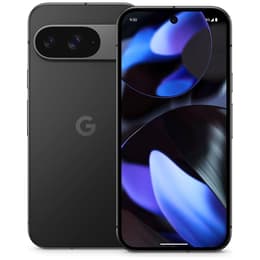
Google Pixel 9
Google Pixel 9
Starting at

Refurbished price:£330.00

Versus £892.46 new

See options
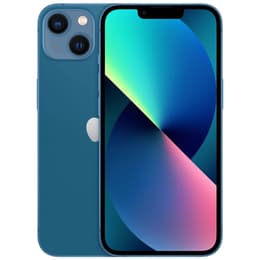
iPhone 13
iPhone 13
Starting at

Refurbished price:£205.00

Versus £599.00 new

See options

Ratings

The Google Pixel 9, released in August 2024, and the Apple iPhone 13, launched in September 2021, represent different generations and operating systems within the smartphone market. While both devices offer a premium smartphone experience, the Pixel 9 introduces more recent hardware advancements and a focus on artificial intelligence, contrasting with the iPhone 13's established iOS ecosystem and robust performance for its time. Both devices aim to provide a seamless user experience, but they cater to slightly different priorities in terms of software longevity and hardware capabilities.

Scores

Durability

When considering the long-term usability of these devices, their release timelines and software support policies are key factors.

  • Software Longevity: The Google Pixel 9 benefits from Google's commitment to extended software support, offering seven years of OS upgrades from its August 2024 release. In contrast, the iPhone 13, released in September 2021, typically receives iOS updates for approximately five to six years from its launch date, meaning its software support will conclude sooner than the Pixel 9's.
  • Durability Features: Both devices feature robust build quality. The iPhone 13 includes a Ceramic Shield front cover and an IP68 rating for water and dust resistance, allowing submersion up to 6 meters for 30 minutes. The Pixel 9 enhances its durability with Corning Gorilla Glass Victus 2 and is also expected to carry an IP68 rating, offering comparable protection against environmental elements.
  • Practical Lifespan: Users can expect both phones to remain functional for several years beyond their official software support, though the Pixel 9's longer update cycle provides a more extended period of access to the latest features and security patches. The availability of quality-assured refurbished options for both models further extends their practical lifespan, offering an eco-friendly alternative for consumers.

Year of Release

2024

2021

Compatible with latest Update

Yes

Yes

OS

Android

iOS

Foldable

No

No

Performance

Performance is a core aspect of any smartphone, influencing how smoothly applications run and how efficiently daily tasks are handled.

  • Processing Power: The Google Pixel 9 is equipped with the Tensor G4 processor, designed to handle demanding applications and advanced on-device AI features efficiently. The iPhone 13 features the A15 Bionic chip, which, for its release generation, delivered strong performance for multitasking, gaming, and general usage.
  • Multitasking and Responsiveness: With 12GB of RAM, the Pixel 9 offers substantial capacity for running multiple applications simultaneously and managing complex operations without slowdowns. The iPhone 13, with 4GB of RAM, provides a responsive experience within the iOS ecosystem, optimized for efficient memory management.
  • Battery Behavior: The Pixel 9 houses a 4700 mAh battery, which, combined with the Tensor G4's efficiency, is designed to provide all-day power, with users reporting 18-20 hours of mixed use and 10-12 hours under heavy usage. The iPhone 13, with a 3227 mAh battery, also offers improved battery life compared to its predecessor, providing up to 19 hours of video playback.

Memory (GB)

12 GB

4 GB

Screen quality

The display is the primary interface for user interaction, and both devices offer vibrant viewing experiences with distinct characteristics.

  • Display Technology and Clarity: Both the Pixel 9 and iPhone 13 feature OLED displays, known for their deep blacks and vibrant colors. The iPhone 13's 6.1-inch Super Retina XDR OLED display has a resolution of 1170x2532 pixels, resulting in a pixel density of approximately 460 ppi. The Pixel 9 features a slightly larger 6.3-inch OLED display with a resolution of 1080 x 2424 pixels.
  • Brightness and Outdoor Visibility: The Pixel 9 boasts a high peak brightness of 2700 nits, making it highly visible even in bright outdoor conditions. The iPhone 13 offers a typical brightness of 800 nits and a peak HDR brightness of 1200 nits, providing good visibility in various lighting environments.
  • Refresh Rate and Smoothness: The Pixel 9 is expected to feature a higher refresh rate, likely 120Hz, contributing to smoother scrolling and more fluid animations. The iPhone 13 maintains a standard 60Hz refresh rate, which is suitable for everyday use but does not offer the same level of visual fluidity as higher refresh rate displays.

Resolution

1080 x 2424

1170 x 2532

Screen type

OLED

Super Retina XDR OLED

Audiovisual

Both smartphones offer capable camera systems, but they approach photography with different strengths and features.

  • Main Camera System: The Google Pixel 9 features a 50MP Octa PD wide camera with an f/1.68 aperture and optical image stabilization, alongside a 48MP Quad PD ultrawide camera with a 123° field of view and autofocus. The iPhone 13 is equipped with a dual 12MP camera system, including a wide camera with an f/1.6 aperture and sensor-shift optical image stabilization, and an ultrawide camera with an f/2.4 aperture.
  • Photography Performance: The Pixel 9's camera system, leveraging Google's computational photography, is designed for detailed images and improved low-light performance, especially with its higher-resolution ultrawide sensor. The iPhone 13 offers features like Cinematic Mode for video, Smart HDR 4, and Night mode, providing strong performance in various lighting conditions and creative video options.
  • Front-Facing Camera: The Pixel 9 includes a 10.5MP front camera with autofocus, enhancing clarity for selfies and video calls. The iPhone 13 features a 12MP TrueDepth front camera, capable of Portrait mode and Cinematic mode video recording.

Main camera

50 megapixels

12 megapixels

Front camera

10.5 megapixels

12 megapixels

Miscellaneous

Beyond core specifications, several practical elements contribute to the overall user experience and daily convenience.

  • Connectivity Standards: The Google Pixel 9 supports Wi-Fi 7 and Bluetooth 5.3, offering the latest in wireless connectivity for faster speeds and improved efficiency. It also introduces Satellite SOS for emergency communication in areas without cellular service. The iPhone 13 supports Wi-Fi 6 and Bluetooth 5.0, providing reliable and fast wireless connections.
  • Ports and Biometrics: The Pixel 9 utilizes a USB-C 3.2 port for charging and data transfer, and features an ultrasonic fingerprint sensor for secure unlocking. The iPhone 13 uses a Lightning port (USB 2.0) and relies on Face ID for biometric authentication.
  • Design and Handling: The Pixel 9 adopts a design with flat edges, similar to some contemporary smartphones, and measures 152.8 x 72 x 8.5 mm, weighing 198g. The iPhone 13 has dimensions of 146.7 x 71.5 x 7.65 mm and weighs 174g, offering a slightly more compact and lighter form factor.

Weight

198 g

173 g

Screen size (in)

6.3

6.1

Mobile network

5G

5G

SIM card

Physical SIM + eSIM

Physical SIM + eSIM

Carrier compatibility

Unlocked

Unlocked

Connector

USB-C

Lightning

The Google Pixel 9 and iPhone 13 cater to different user preferences, largely due to their generational gap and distinct operating systems. Users often praise the Pixel series for its advanced computational photography and seamless integration with Google's AI services. The Pixel 9, in particular, has been noted for its significantly improved battery life compared to previous Pixel models, with many users finding it reliably lasts a full day even with heavy use. Its longer software support commitment is also a frequent point of appreciation.

On the other hand, the iPhone 13 is often lauded for its consistent performance, the robust and user-friendly iOS ecosystem, and its strong privacy features. Users frequently highlight its reliable camera performance and the overall polish of its software experience. Some common criticisms of the iPhone 13, particularly in comparison to newer models, include its 60Hz display refresh rate and the continued use of the Lightning port. For the Pixel 9, while its AI capabilities are a strong suit, some users might find its charging speed to be slower compared to some competitors.

Users prioritizing the latest hardware, extended software support, and advanced AI features, particularly within the Android ecosystem, may find the Google Pixel 9 well-suited to their needs. Its enhanced battery life and updated camera system make it a compelling choice for those seeking a modern Android flagship. Conversely, users who value the established iOS platform, a slightly more compact design, and a proven track record of consistent performance may lean toward the iPhone 13. Both devices offer a quality experience, and choosing between them often comes down to individual preference for operating system and specific feature priorities. For those considering either device, exploring quality-assured refurbished options can provide a sustainable choice without compromising on functionality.


See all articles

Our recent comparisons