
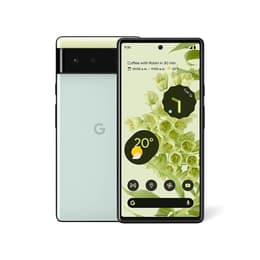

Galaxy A16 5G Vs Google Pixel 6

Galaxy A16 5G
Galaxy A16 5G
Starting at

Refurbished price:£103.00

Versus £205.87 new

See options
Google Pixel 6
Google Pixel 6
Starting at

Refurbished price:£101.00

Versus £649.99 new

See options

Ratings

The Samsung Galaxy A16 5G and the Google Pixel 6 are distinct smartphones, released in October 2024 and October 2021, respectively. While the Galaxy A16 5G focuses on extended software support and a large, vibrant display, the Google Pixel 6 is recognized for its advanced camera capabilities and a streamlined Android experience. Both devices operate on the Android platform, with the Galaxy A16 5G featuring Samsung's One UI 6.1 and the Pixel 6 offering a pure Android interface.

Scores

Durability

The longevity of a smartphone is influenced by its build quality and the duration of software support it receives.

  • Software Support: The Samsung Galaxy A16 5G was launched with Android 14 and is notable for its commitment to six major OS updates and six years of security updates, extending its support until October 2030. In contrast, the Google Pixel 6, released with Android 12, is upgradable to Android 16 and typically receives five years of security updates from its launch, which would conclude around October 2026. [2, 4, 11, 15, 17, 25]
  • Build Materials: The Galaxy A16 5G features a plastic frame and a material Samsung refers to as "Glastic" on both its front and back, designed to mimic the appearance of glass. It also offers IP54 dust and water resistance, providing protection against splashes and limited dust ingress. The Pixel 6 presents a more robust construction with Gorilla Glass Victus protecting the display and Gorilla Glass 6 on the back, alongside an IP68 rating for more comprehensive dust and water protection. [2, 7, 8, 11, 30, 31]
  • Practical Lifespan: Users prioritizing the longest possible software update cycle will find the Galaxy A16 5G appealing due to its extended support. The Pixel 6, while having a shorter official support window remaining, benefits from its more premium build materials, which may contribute to its physical durability over time.

Year of Release

2024

2021

Compatible with latest Update

Yes

Yes

OS

Android

Android

Foldable

No

No

Performance

Performance in daily use is a key differentiator, impacting how smoothly applications run and how efficiently the device manages power.

  • Storage and Expandability: Both devices offer internal storage options of 128GB and 256GB. The Samsung Galaxy A16 5G provides an advantage with expandable memory via a microSD card, allowing users to increase storage capacity. The Google Pixel 6 does not offer expandable storage. [1, 8, 10, 11, 15, 29]
  • Battery Performance: The Galaxy A16 5G is equipped with a 5000mAh battery, which users report can last for at least two full days with light to moderate usage, and achieved nearly 14 hours in video playback tests. The Pixel 6 has a 4614mAh battery, with user experiences varying; some report all-day battery life, while others note below-average endurance, particularly with heavy 5G usage or gaming. [2, 5, 6, 7, 9, 11, 13, 16, 19, 32, 34, 37, 38, 45]
  • System Responsiveness: The Galaxy A16 5G is powered by a budget-friendly processor that handles basic activities and light multitasking smoothly, though some users have reported occasional stuttering or lag, especially with the 4GB RAM variant. The Google Pixel 6 features a custom-designed processor that delivers fast and fluid performance, handling demanding applications and multitasking with ease, and is noted for its strong gaming capabilities. [1, 2, 4, 5, 7, 8, 9, 10, 11, 12, 15, 18, 22, 25, 31, 35, 38, 41, 42]

Memory (GB)

4 GB

8 GB

Screen quality

The display is the primary interface for user interaction, and differences in technology and specifications can significantly affect the viewing experience.

  • Display Technology and Clarity: The Samsung Galaxy A16 5G features a 6.7-inch Super AMOLED display, known for its vibrant colors, deep blacks, and high contrast. It offers an FHD+ resolution of 1080 x 2340 pixels. The Google Pixel 6 comes with a 6.4-inch OLED display, also providing rich colors and deep blacks, with an FHD+ resolution of 1080 x 2400 pixels. [1, 3, 4, 5, 8, 9, 11, 12, 14, 15, 25, 27, 29, 31, 45]
  • Refresh Rate and Brightness: Both devices feature a 90Hz refresh rate, contributing to smoother scrolling and a more responsive feel during navigation. The Galaxy A16 5G has a peak brightness of 800 nits, which may present challenges for outdoor visibility in bright sunlight. The Pixel 6 supports HDR10+, enhancing contrast and color in compatible content, though specific peak brightness levels are not consistently highlighted in available information. [1, 3, 4, 5, 11, 14, 18, 25, 27, 29, 31, 45]
  • Viewing Experience: The larger screen of the Galaxy A16 5G offers a more expansive canvas for media consumption and multitasking. The Pixel 6's slightly smaller display, combined with its OLED technology and HDR10+ support, provides a clear and immersive viewing experience, particularly for high-quality video content.

Resolution

1080 x 2340

1080 x 2400

Screen type

Super AMOLED

AMOLED

Audiovisual

Camera performance is a critical aspect for many users, with both hardware and software playing significant roles in image and video quality.

  • Rear Camera Systems: The Samsung Galaxy A16 5G is equipped with a triple-camera setup, including a 50MP main sensor, a 5MP ultrawide lens, and a 2MP macro camera. The Google Pixel 6 features a dual-camera system with a 50MP main sensor and a 12MP ultrawide lens. The Pixel 6 is particularly noted for its computational photography, enhancing image quality. [2, 4, 5, 8, 9, 10, 11, 12, 16, 23, 24, 28, 30, 31]
  • Photography Performance: The Galaxy A16 5G's main camera delivers solid photos in good lighting, though its ultrawide camera is considered less detailed. Low-light images can appear muddy, and the device lacks a dedicated night mode. The Pixel 6 excels in photography, especially in low-light conditions, with its Night Sight mode producing impressive results. Users praise the Pixel 6 for its sharp, clear, and color-accurate images, often highlighting its HDR capabilities. [2, 16, 18, 20, 21, 22, 24, 33, 36, 38]
  • Video and Audio: The Galaxy A16 5G supports 1080p video recording at 30 frames per second, with electronic image stabilization, and some sources indicate 4K video capability with decent stabilization. The Pixel 6 also offers strong video recording capabilities. For audio, the Galaxy A16 5G has bottom-ported speakers and lacks stereo sound, with some users reporting issues with speaker quality. Specific details on the Pixel 6's speaker quality are less prominent in reviews. [2, 11, 16, 18, 20, 36, 42, 45]

Main camera

50 megapixels

50 megapixels

Front camera

13 megapixels

8 megapixels

Miscellaneous

Beyond core features, several practical elements contribute to the overall user experience and device utility.

  • Connectivity and Ports: Both smartphones support 5G connectivity, along with modern Wi-Fi and Bluetooth standards. The Samsung Galaxy A16 5G uses Wi-Fi 802.11 ac and Bluetooth 5.3, while the Google Pixel 6 supports Wi-Fi 802.11 a/b/g/n/ac/ax and Bluetooth 5.2. Both devices feature a USB Type-C port for charging and data transfer. The Galaxy A16 5G notably lacks a 3.5mm headphone jack, a feature also absent on the Pixel 6. [1, 4, 8, 11, 16, 31, 44]
  • Biometric Security and Sensors: The Galaxy A16 5G incorporates a side-mounted fingerprint scanner, along with standard sensors like an accelerometer, gyroscope, and proximity sensor. The Pixel 6 utilizes an in-display fingerprint sensor, which has received mixed feedback regarding its speed and reliability, though updates have improved its performance. It also includes a comprehensive suite of sensors, such as a barometer and magnetometer. [5, 8, 11, 21, 27, 31, 38, 40]
  • Design and Handling: The Galaxy A16 5G measures 164.4 x 77.9 x 7.9mm and weighs 200g, offering a larger profile. The Pixel 6 is slightly more compact at 158.6 x 74.8 x 8.9mm and weighs 207g. The Pixel 6 features a distinctive design with a horizontal camera bar and metal rails, contributing to a premium feel, while the Galaxy A16 5G has a more conventional design with plastic construction. [2, 4, 8, 11, 31]

Weight

200 g

207 g

Screen size (in)

6.7

6.4

Mobile network

5G

5G

SIM card

Dual Physical SIM

Physical SIM + eSIM

Carrier compatibility

Unlocked

Unlocked

The Samsung Galaxy A16 5G and the Google Pixel 6 cater to different user priorities, each offering a distinct set of strengths and trade-offs. User feedback for the Galaxy A16 5G often praises its impressive battery life and the promise of extended software updates, making it a compelling choice for those seeking long-term support and endurance. However, some users have noted concerns regarding its performance, with reports of occasional lag, and the camera system, particularly the ultrawide lens and low-light capabilities, receives mixed reviews. The absence of stereo speakers and its outdoor display brightness are also points of consideration for some. [1, 2, 11, 18, 19, 20, 25, 37, 41, 42, 45]

Conversely, the Google Pixel 6 is widely lauded for its exceptional camera performance, especially in challenging lighting conditions, and its fast, responsive operation. The clean and intuitive Android experience is another frequently highlighted positive. Criticisms often revolve around inconsistent battery life reports and the in-display fingerprint sensor's reliability, which some users found finicky, though software updates have addressed some of these issues. The ultrawide camera, while present, is sometimes seen as a step down from the main sensor. [6, 7, 13, 21, 22, 24, 26, 32, 33, 34, 35, 36, 38, 40]

Users prioritizing a top-tier camera experience, a fluid operating system, and robust performance for demanding applications may find the Google Pixel 6 well-suited to their needs. Those who value extended software longevity, a large and vibrant display for media, and exceptional battery life for prolonged use, along with expandable storage, may lean towards the Samsung Galaxy A16 5G. Both devices offer compelling features, and considering a quality-assured refurbished option for either model can be an eco-friendly alternative for consumers.


See all articles

Our recent comparisons





